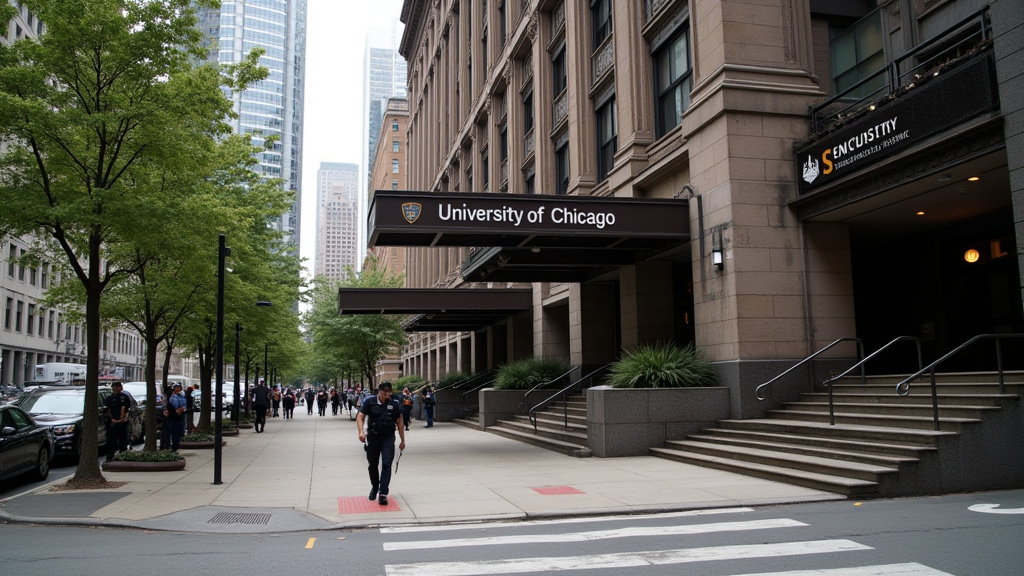
Authorities are currently navigating a complex investigation following a reported assault at an off-campus fraternity party associated with the University of Chicago. This incident has ignited a wider conversation regarding student safety protocols, the jurisdictional boundaries between private university security and municipal law enforcement, and the broader culture of Greek life in high-pressure academic environments. While the investigation remains ongoing, the gravity of the claim has prompted swift engagement from campus leadership and local officials, underscoring the university’s commitment to addressing allegations of misconduct.
The Anatomy of the Investigation
The investigation, which involves the collaboration of the University of Chicago Police Department (UCPD) and the Chicago Police Department (CPD), centers on an event held at an off-campus residential location. Because the party took place outside of university-owned housing, the legal and procedural landscape becomes significantly more intricate. Law enforcement agencies are tasked with gathering witness testimony, physical evidence, and digital logs to reconstruct the timeline of events.
For the university, the priority is twofold: cooperating with law enforcement and ensuring the safety of the student body. The institution’s Title IX office, which handles allegations of sexual misconduct and assault, has been signaled to play a critical role in parallel with the criminal inquiry. This dual-track approach is standard but often presents hurdles for victims who must navigate both the emotional stress of the criminal process and the administrative requirements of university-led disciplinary hearings.
Jurisdiction and the ‘Off-Campus’ Challenge



One of the most persistent hurdles in this case is the ‘off-campus’ nature of the fraternity event. Universities often struggle with the extent of their authority over student organizations that operate private houses. While the University of Chicago maintains strict codes of conduct that extend to student groups regardless of location, enforcement becomes difficult when properties are privately owned or leased.
This incident highlights a systemic issue in American higher education: the ‘gray zone’ of responsibility. When a fraternity hosts a function at an off-campus venue, the university’s ability to impose immediate supervision is limited. Consequently, student groups often operate with a degree of autonomy that can obfuscate accountability. Legal experts observing the case note that the investigation will likely hinge on whether the university officially sanctioned the event, which would shift the liability framework significantly.
Institutional Culture and Greek Life Reform
The University of Chicago, known for its rigorous academic culture, is no stranger to the intersection of student social life and serious conduct issues. Following national trends, the university has been under increasing pressure to re-evaluate the role of Greek life on campus. This investigation serves as a flashpoint for critics who argue that fraternity culture, even at prestigious institutions, fosters environments where misconduct can occur with impunity.
Administrative responses to such events are often scrutinized for their perceived speed and transparency. Students, faculty, and advocacy groups are demanding not just a summary of the investigation, but a comprehensive review of safety policies surrounding social events. The challenge for the administration is to balance the preservation of student traditions—if the university chooses to support them—with the absolute necessity of maintaining a secure environment. The administration’s response to this specific allegation will likely set a precedent for how future social event protocols are drafted and enforced.
The Psychological Impact on the Student Body
Beyond the legal and administrative machinations, the event has had a palpable impact on the campus community. Reports of assault—particularly those involving peer-to-peer misconduct within social organizations—trigger significant trauma and anxiety among the student body. The psychological toll of living in a community where one’s safety is called into question can disrupt the academic focus that defines the university experience.
Support services, including counseling centers and victim advocacy resources, are currently seeing an uptick in engagement. Experts emphasize that the period following such a report is critical for campus health; it is a time when the administration must demonstrate visible, empathetic leadership. Failure to do so often leads to a breakdown in trust between students and the university, which can take years to repair.
Future Implications and Policy Shifts
Looking ahead, this investigation is expected to trigger a wave of policy revisions. If the investigation concludes that safety protocols were bypassed, the university may move toward stricter oversight of off-campus events. This could include mandatory registration for all social gatherings, increased UCPD patrols in neighborhoods with high densities of student housing, or even the suspension of specific chapters pending a comprehensive safety audit.
The broader lesson for the UChicago community, and other universities nationwide, is that the era of ‘hands-off’ oversight regarding student life is likely coming to an end. As public scrutiny of campus safety increases, institutions are finding that they are held accountable for the actions of their students, whether those actions occur within the ivory tower or at a house party blocks away.