The Chicago Zoning Board of Appeals (ZBA) convened on October 16, 2026, marking a critical juncture in the city’s ongoing effort to balance rapid urban densification with historical neighborhood preservation. As part of the city’s regular regulatory review process, the board scrutinized several high-stakes applications for zoning variances and special use permits, which dictate the physical and economic trajectory of neighborhoods across the metropolitan area. The October 16 session served as a microcosm of the current tensions within the Chicago Department of Planning and Development (DPD), highlighting how the city administration is recalibrating its approach to land use in a post-pandemic economic environment.
Key Highlights
- Regulatory Oversight: The ZBA addressed multiple petitions for zoning variances, evaluating whether proposed developments met the stringent hardship criteria required by the Chicago Municipal Code.
- Transit-Oriented Development (TOD): A significant portion of the hearing was dedicated to evaluating how current density bonuses align with the city’s commitment to transit-oriented development goals.
- Public Testimony Integration: The board facilitated procedural opportunities for community stakeholders to voice concerns regarding shadow impact, traffic congestion, and infrastructure load for proposed variances.
- Administrative Precedent: Rulings made during the October 16 session established clear administrative guidelines for future developers seeking relief from current floor-area-ratio (FAR) restrictions.
The Anatomy of Regulatory Approval
The Chicago Zoning Board of Appeals functions as the quasi-judicial body responsible for granting relief from the strict application of the city’s zoning ordinance. On October 16, 2026, the board’s docket illustrated the persistent complexity of navigating the interplay between the Chicago Municipal Code and the practical realities of modern construction.
The Mechanics of the ZBA
At its core, the ZBA does not create zoning law; rather, it provides an essential safety valve for the regulatory framework. When a property owner seeks to build a project that does not conform to the existing zoning designation—whether due to lot shape, size, or intended use—they must apply for a variation. During the October 16 session, the board reviewed these applications not merely as architectural proposals, but as legal arguments. The applicants bore the burden of proving that compliance with the ordinance would create a ‘practical difficulty’ or ‘particular hardship’ not caused by the developer themselves. This distinction is vital: the board is not tasked with approving projects based on aesthetic merit, but based on strict legal compliance with established zoning criteria.
Transit-Oriented Development (TOD) and Density



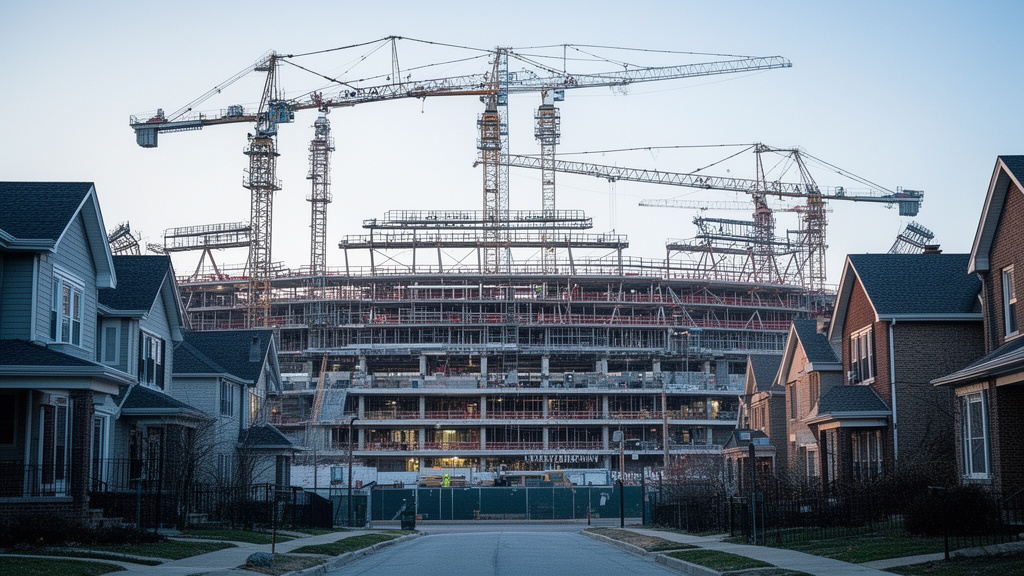
A primary theme of the October 16 proceedings was the careful balancing of Transit-Oriented Development (TOD) mandates. Chicago’s current zoning strategy relies heavily on the premise that increasing density near public transit hubs will alleviate traffic and increase housing supply. However, the ZBA’s deliberations revealed a growing friction between developers seeking to maximize unit counts and neighborhood residents concerned about the ‘canyon effect’—the loss of natural light and the straining of existing sewage and power grids. The board’s decisions regarding side-yard setbacks and parking reductions reflected a cautious, case-by-case approach rather than a broad, sweeping policy update, signaling that the DPD intends to maintain granular control over individual block development.
The Intersection of Legal Hardship and Urban Planning
Secondary to the technical permits, the October 16 meeting underscored the evolving role of the Office of the Zoning Administrator. The interaction between the board and the Zoning Administrator’s office serves as a gatekeeper function that prevents the city from ‘spot zoning,’ a practice that can lead to legal liability. By requiring detailed affidavits and traffic impact studies, the ZBA ensures that each variance—whether a reduction in rear yard setbacks or an increase in building height—is anchored in documented necessity.
This evidentiary standard is crucial for stakeholders to understand. The October 16 hearing demonstrated that, without robust data supporting the ‘hardship’ argument, even projects backed by significant capital investment face high probability of rejection or, at minimum, lengthy deferrals. For investors and developers, this means the pre-application phase has become as critical as the hearing itself. The ZBA is increasingly intolerant of incomplete applications, requiring clear, distinct evidence that the zoning ordinance, as currently written, acts as an unreasonable barrier to the reasonable use of the property.
Historical Context and Future Forecasting
Looking beyond the specific permits of October 16, 2026, the meeting highlights a broader trend: the modernization of Chicago’s zoning tools. Historically, zoning boards were reactive entities. The current iteration of the ZBA is beginning to act with a more proactive awareness of city-wide climate goals. We are seeing a shift where ‘sustainability variances’—requests to modify zoning to accommodate green infrastructure like permeable pavement or rooftop solar arrays—are becoming more common. The ZBA’s openness to these variances suggests a potential for future code amendments that would institutionalize these green features, effectively making the variance process obsolete for sustainable development in the coming decade.
FAQ: People Also Ask
Q: What is the primary purpose of the Chicago Zoning Board of Appeals?
A: The ZBA is a quasi-judicial body that hears appeals for variations, special uses, and other zoning-related relief. It allows property owners to request exemptions from the Chicago Municipal Code when strict adherence causes a ‘particular hardship.’
Q: How does the public participate in ZBA meetings?
A: Interested parties and community members can provide testimony during public hearings. The process typically requires registration and adherence to strict time limits. Documentation of support or opposition can also be submitted to the board for the record prior to the hearing date.
Q: Does the ZBA have the power to change city zoning laws?
A: No. The ZBA does not have legislative power. It cannot change the zoning map or amend the text of the Chicago Zoning Ordinance. Those powers reside with the Chicago City Council. The ZBA is limited to interpreting and granting relief from existing laws on a case-by-case basis.
Q: What happens if the ZBA denies an application?
A: If the ZBA denies a variance or special use application, the applicant typically has limited avenues for recourse. They may appeal the decision through the court system (administrative review), or they may revise their project and re-apply if the changes address the specific reasons for the board’s previous denial.