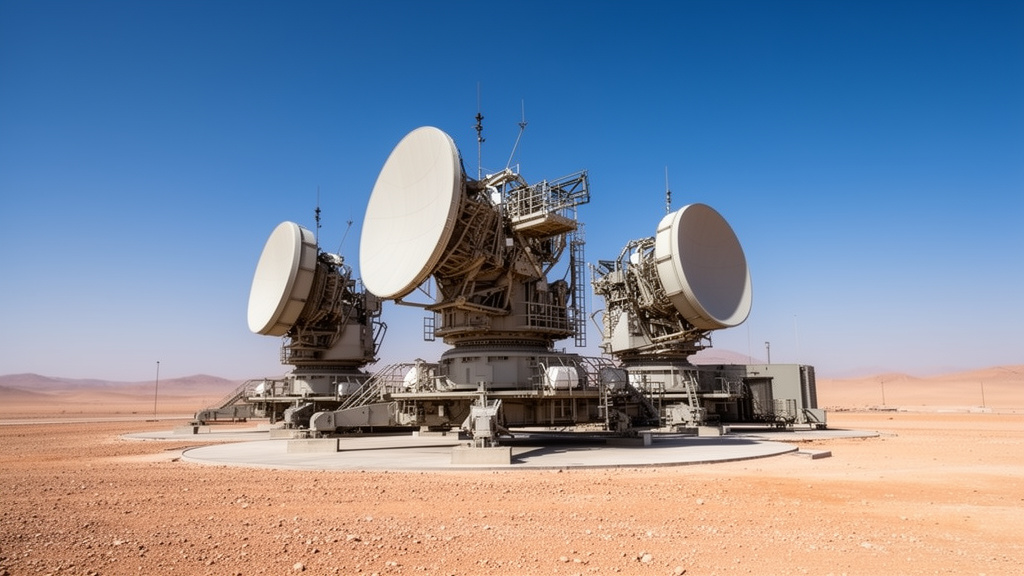
Northeastern University professor Josep Jornet, in partnership with NASA’s Jet Propulsion Laboratory (JPL), is developing the ‘TeraLink’ satellite project to test sub-terahertz wireless communications in space, a critical step toward establishing global 6G network capabilities. By leveraging the vacuum of space to bypass the atmospheric interference that typically limits high-frequency signals, this project aims to create the backbone for hyper-fast, low-latency communication networks that will define the next decade of digital infrastructure.
Key Highlights
- Sub-Terahertz Breakthrough: The project focuses on utilizing the 100 GHz to 1 THz frequency spectrum, promising data transfer speeds significantly faster than current 5G networks.
- Strategic Partnership: The collaboration between Josep Jornet’s research team at Northeastern University and NASA JPL merges academic innovation with the rigorous testing capabilities of space-hardened infrastructure.
- Solving Atmospheric Limitations: Unlike terrestrial sub-terahertz waves, which are absorbed by oxygen and water vapor, the space-to-space link strategy allows for long-distance high-bandwidth transmission.
- 6G Foundation: TeraLink is a foundational engineering effort, proving the viability of high-frequency relay stations needed to support the future of the global 6G ecosystem.
The Race for Tera-Speed: Paving the Way for 6G
The telecommunications industry is currently standing at the threshold of a generational shift. As 5G adoption reaches maturity, global research centers and space agencies are already pivoting toward 6G. However, the path to 6G is paved with significant physical hurdles. The primary challenge lies in the frequency spectrum. To achieve the order-of-magnitude speed increases required for 6G, engineers must move into the sub-terahertz range (100 GHz to 1 THz). While these frequencies offer massive bandwidth, they suffer from extreme atmospheric attenuation—essentially, the air itself absorbs the signal over relatively short distances.
The Vacuum Advantage
This is where the TeraLink project, led by Professor Josep Jornet, changes the paradigm. By moving these transmission links into space, where there is no atmosphere to impede the signal, the researchers can leverage the full potential of these high-frequency bands. The goal is to establish an orbital architecture where satellites can communicate with each other using THz links, creating a “space-based fiber-optic” network that circles the globe. This approach effectively treats the vacuum of space as the ultimate transmission medium, side-stepping the terrestrial “last mile” bottleneck that has historically plagued wireless expansion.
The Northeastern and NASA Synergy




The partnership between Northeastern University and NASA’s Jet Propulsion Laboratory (JPL) is not merely about theoretical physics; it is a rigorous engineering exercise. NASA JPL brings the necessary expertise in space-hardened electronics, thermal management, and orbital mechanics, while Jornet’s team at Northeastern provides the specialized knowledge in THz channel modeling and networking protocols. The project involves launching small-scale experimental payloads—CubeSats—to test the feasibility of these links in low-Earth orbit. These tests focus on signal stability, beam steering (the ability to accurately point the signal at a moving target in space), and energy efficiency—three of the most critical factors for long-term orbital deployment.
Technical Challenges: Precision and Energy
The engineering difficulties of transmitting data at sub-terahertz frequencies from space are immense. At 100 GHz+, the wavelengths are so small that beamforming requires extreme precision. Even a minute deviation in the satellite’s orientation could result in a “miss,” breaking the connection. Furthermore, these high-frequency transceivers are historically power-hungry. Jornet’s team is actively working on new antenna designs and signal processing algorithms that can maintain high throughput while keeping the power consumption low enough to run on solar-powered satellite batteries. This balance is crucial; if the power requirements are too high, the cost of operation becomes prohibitive, negating the benefits of the speed boost.
Economic and Global Impact
Why does 6G matter for the average consumer and global industry? Beyond just faster downloads on personal devices, this technology is the backbone for the next wave of industrial automation. Autonomous vehicles, massive-scale IoT (Internet of Things) deployments in agriculture, and real-time remote surgery all require the kind of ultra-low latency and high-capacity data flow that 6G promises. By establishing this infrastructure in space, companies like SpaceX, OneWeb, and potential new entrants will have a blueprint for creating a truly global network. It democratizes access, ensuring that rural or underdeveloped regions can access high-speed data without the need for laying thousands of miles of expensive undersea or transcontinental fiber-optic cable.
The Future of Non-Terrestrial Networks (NTN)
TeraLink represents a vital component of the broader “Non-Terrestrial Network” (NTN) concept. As mobile networks integrate satellite components, the industry is moving toward a hybrid model where a user’s device seamlessly transitions between ground-based cell towers and orbiting satellites. The research Jornet is conducting provides the fundamental mathematical and physical “handshake” protocols that will allow these handoffs to happen in milliseconds. As these systems scale, we are likely to see the emergence of a new economy based on the “space-as-a-service” model, where data throughput, rather than just physical hardware, becomes the primary commodity being traded in the telecommunications market.
FAQ: People Also Ask
Q: What makes sub-terahertz frequencies different from 5G?
A: 5G typically operates in sub-6 GHz and millimeter-wave (24 GHz – 100 GHz) bands. Sub-terahertz frequencies (100 GHz to 1 THz) provide vastly wider bandwidth, which allows for significantly higher data speeds and lower latency, essential for the next-gen applications of 6G.
Q: Why can’t we use sub-terahertz on the ground right now?
A: On the ground, sub-terahertz waves are easily blocked by walls, trees, rain, and even oxygen molecules in the air. Their range is extremely limited, making them impractical for wide-area terrestrial networks. Space is the only environment where they can travel long distances efficiently.
Q: What is the primary role of NASA JPL in the TeraLink project?
A: NASA JPL provides the infrastructure, testing facilities, and aerospace expertise required to develop and launch satellites capable of handling these high-frequency communications in the harsh, high-radiation, and vacuum environment of space.
Q: When will we see 6G networks using this technology?
A: While 6G standards are still being defined, researchers anticipate initial deployments of 6G-compatible infrastructure around 2030. Projects like TeraLink are essential research phases that will inform the technical standards for that upcoming era.