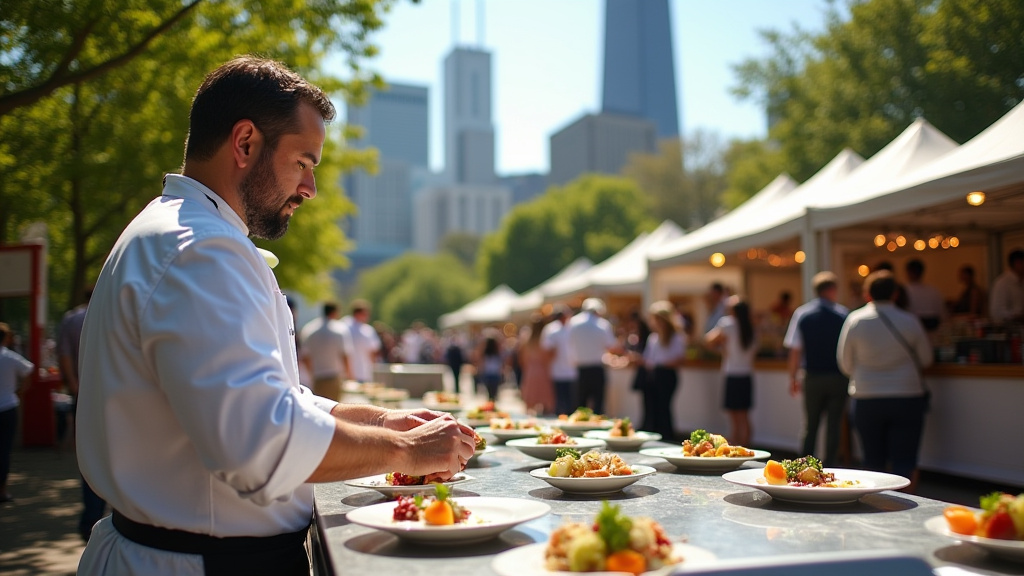
Chicago Gourmet, the crown jewel of the city’s culinary calendar, has officially announced a massive structural pivot for its 2026 iteration. In a strategic departure from its traditional central festival grounds, the event will launch an expansive, 18-day “Dine Around Series” running from September 1 through September 18. This massive activation, powered by Invesco QQQ, aims to decentralize the festival experience, pushing engagement directly into the heart of Chicago’s diverse neighborhoods by partnering with nearly 80 local restaurants. This move represents a significant evolution for the Illinois Restaurant Association-backed event, prioritizing localized economic impact over centralized attendance models.
Key Highlights
- Dates: The inaugural ‘Dine Around Series’ is scheduled to run from September 1, 2026, through September 18, 2026.
- Scale: The expansion includes nearly 80 participating local restaurants across various Chicago neighborhoods.
- Partnership: The event is officially powered by Invesco QQQ, continuing their commitment to financial and lifestyle programming.
- Experience: Guests can access exclusive, limited-time menus at participating venues and enter a sweepstakes for a premier VIP festival experience.
The Decentralized Culinary Revolution
The announcement of the 2026 Dine Around Series signals a fundamental shift in how large-scale food festivals operate in a post-pandemic urban landscape. By moving away from a single, high-traffic location, Chicago Gourmet is effectively democratizing access to high-end dining. For nearly two decades, the festival operated as a concentrated, ticketed experience; however, the new 18-day structure reflects a deliberate strategy to integrate the festival into the daily rhythm of the city.
By distributing nearly 80 participating establishments across Chicago’s myriad neighborhoods, organizers are attempting to solve the “festival fatigue” often associated with monolithic events. This isn’t just about dining; it is about infrastructure. The series encourages residents and tourists alike to explore culinary corridors that might otherwise be overlooked, potentially creating a sustained economic ripple effect for small, independent restaurateurs who traditionally wouldn’t be able to staff a booth at a centralized festival site. The partnership with Invesco QQQ, a major financial entity, underscores the seriousness of this pivot, suggesting that the event aims to quantify its success not just in ticket sales, but in transaction volume and community engagement across the city’s vast geography.
Historical Context: From Millennium Park to the Neighborhoods

Since its inception in 2008, Chicago Gourmet has served as the marquee showcase for the Illinois Restaurant Association. Initially designed to highlight the city’s prestige on the global culinary stage, the event became synonymous with the towering skyline and the manicured lawns of Millennium Park. For years, the success of the festival was measured by its ability to concentrate the city’s elite talent in one singular location. However, changing consumer behaviors—specifically a growing preference for hyper-local experiences and the desire for extended event timelines—have forced a reevaluation of this model. The 2026 expansion is the logical conclusion of recent attempts to bring the festival to the people, rather than asking the people to travel to a single, high-security zone. It mirrors a broader trend seen in cities like New York and London, where “Restaurant Weeks” have successfully extended their footprint to capture more of the hospitality market share.
The Economic Impact of the ‘Dine Around’ Model
Economic analysts tracking the hospitality sector are closely watching this 18-day experiment. The traditional festival model is highly efficient for organizers but often creates a “silo” effect, where revenue is concentrated in a specific area for a very short duration. By stretching the event over nearly three weeks, Chicago Gourmet is flattening the demand curve. Participating restaurants will benefit from a sustained increase in foot traffic during what is typically a shoulder season in the industry (early September).
Furthermore, the integration of an Invesco QQQ-backed sweepstakes serves as a powerful funnel, driving data collection and customer loyalty. This is not just a food promotion; it is a sophisticated marketing mechanism designed to incentivize repeat visits. Each exclusive menu offered at the participating 80 restaurants acts as a “call to action,” encouraging patrons to visit multiple venues to maximize their sweepstakes entries. This gamification of dining is expected to drive significant incremental revenue for neighborhood spots that rely on recurring local traffic rather than one-off tourist bursts.
Future Predictions: The New Normal for Festivals?
Will this Dine Around model become the new industry standard? It is highly likely. As major festivals face rising costs for venue rentals, security, and staffing, the decentralized model offers a leaner operating structure. By shifting the burden of event hosting to the restaurants themselves, the organizers effectively turn 80 venues into 80 “micro-festivals.”
Looking toward 2027 and beyond, expect to see more sponsorships like Invesco QQQ’s, which prioritize digital reach and engagement over physical, single-location signage. If the 2026 Chicago Gourmet series proves successful, it will likely provide a blueprint for other major cities looking to revitalize their downtowns and neighborhood corridors simultaneously. The future of food media and events is not in the tent; it is in the dining room.
FAQ: People Also Ask
Q: What are the exact dates for the 2026 Chicago Gourmet Dine Around Series?
A: The series is scheduled to run for 18 days, beginning on September 1, 2026, and concluding on September 18, 2026.
Q: How many restaurants are participating in this new series?
A: The event features nearly 80 local restaurants throughout Chicago, representing a diverse range of neighborhoods and culinary styles.
Q: Is there a cost to participate in the Dine Around Series?
A: The series functions similarly to Restaurant Week programs; while there is no entry fee to participate in the festival itself, guests are responsible for the cost of the exclusive menu items they order at the participating restaurants. The sweepstakes component is integrated into the dining experience.