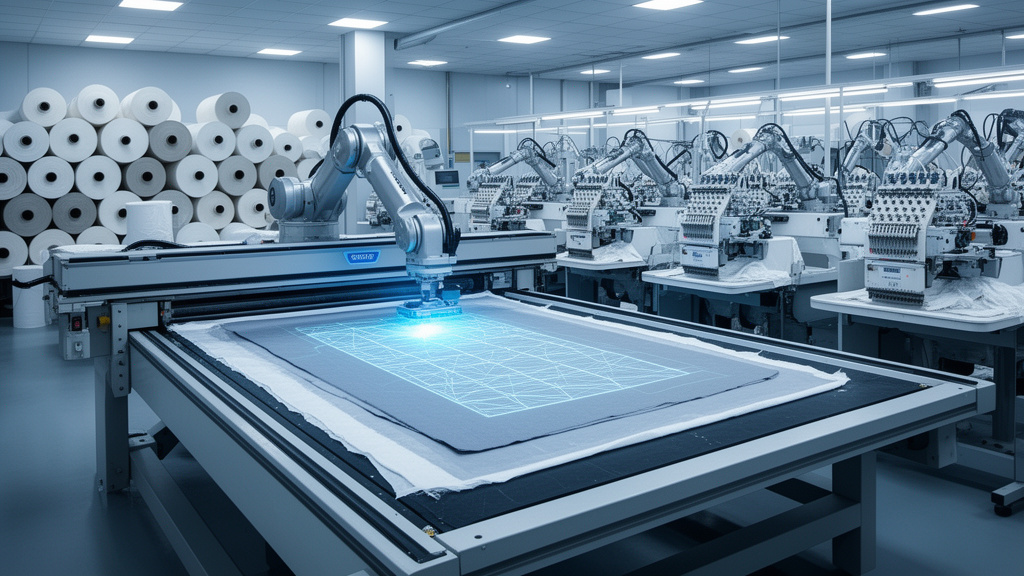
South Korea’s Electronics and Telecommunications Research Institute (ETRI) has unveiled a groundbreaking electronic skin technology that bypasses the need for traditional cleanroom manufacturing. This innovation promises to significantly reduce production costs and accelerate the development of next-generation wearable and robotic devices.
Key Highlights:
- ETRI’s new electronic skin does not require a cleanroom for manufacturing.
- The technology utilizes a novel material deposition process.
- This development could drastically cut production costs for advanced electronics.
- The electronic skin boasts high flexibility and durability.
- Applications range from advanced prosthetics to smart textiles.
Revolutionizing Manufacturing: The Cleanroom-Free Future of Electronic Skin
The development of advanced electronic components has long been shackled by the stringent and expensive requirements of cleanroom environments. These sterile facilities, essential for preventing contamination during delicate manufacturing processes, add substantial costs and time to production. ETRI’s latest breakthrough directly addresses this bottleneck by introducing an electronic skin that can be fabricated without these specialized, costly settings. This pivot in manufacturing methodology is poised to democratize access to sophisticated electronic materials, paving the way for widespread adoption across various industries.
Material Innovation and Deposition Techniques
At the heart of ETRI’s innovation lies a proprietary material deposition technique. Unlike conventional methods that rely on vacuum chambers and meticulously controlled atmospheres, ETRI’s process is designed to be robust against environmental contaminants. The institute has developed new methods for applying thin films of conductive and semiconductive materials onto flexible substrates, maintaining the integrity and performance required for sensitive electronic functions. This not only simplifies the manufacturing pipeline but also opens doors for more distributed and on-demand production models. The research team specifically focused on creating a process that is less susceptible to particulate contamination, a common hurdle in standard laboratory or factory settings.
Cost Reduction and Market Accessibility




The elimination of cleanroom dependency translates directly into significant cost savings. Manufacturing of electronic skin, particularly for high-resolution or high-density circuitry, can incur millions of dollars in infrastructure and operational expenses for cleanrooms. By circumventing this necessity, ETRI’s technology can reduce the capital expenditure and ongoing maintenance costs associated with production. This cost-effectiveness is crucial for enabling wider market penetration, especially for startups and smaller enterprises that might be deterred by the high entry barriers of traditional semiconductor manufacturing. Cheaper production could also lead to more affordable end-products, such as advanced prosthetics or integrated health monitoring systems, making these technologies accessible to a broader population.
Enhanced Flexibility and Durability
Beyond manufacturing advantages, ETRI’s electronic skin is engineered for superior physical properties. The material exhibits remarkable flexibility, allowing it to conform to complex, non-flat surfaces such as human skin or irregular robotic appendages. This conformability is critical for applications requiring seamless integration and natural interaction. Furthermore, the electronic skin has demonstrated impressive durability, withstanding repeated stretching, bending, and environmental exposure without compromising its electrical performance. This resilience is achieved through the careful selection of base materials and the innovative bonding techniques employed during the cleanroom-free fabrication process, ensuring longevity in real-world applications.
Diverse Applications Across Industries
The implications of ETRI’s development extend across a multitude of sectors. In healthcare, the flexible and conformable nature of the electronic skin makes it ideal for creating advanced prosthetic limbs that provide sensory feedback, or for developing wearable biosensors that can continuously monitor vital signs like heart rate, temperature, and glucose levels non-invasively. For the robotics industry, this technology can equip robots with a more sensitive and responsive ‘touch,’ improving their dexterity and ability to interact safely with their environment. The automotive and aerospace sectors could also benefit from lightweight, integrated sensors for structural health monitoring. Even in consumer electronics, the potential for truly wearable, imperceptible smart devices is now closer to reality.
FAQ: People Also Ask
What is electronic skin?
Electronic skin, or e-skin, is a flexible, stretchable material embedded with electronic sensors designed to mimic the properties and functions of human skin. It can detect pressure, temperature, and strain, and can be integrated into wearable devices, robots, and prosthetics.
Why are cleanrooms traditionally necessary for electronic manufacturing?
Cleanrooms are essential for preventing microscopic contaminants, such as dust particles and microbes, from interfering with the delicate manufacturing processes of sensitive electronic components. Contamination can lead to device failure and reduced performance.
How does ETRI’s technology differ from traditional electronic skin?
The primary difference is ETRI’s ability to manufacture its electronic skin without requiring a cleanroom environment. This is achieved through novel material deposition techniques that are less sensitive to environmental impurities, significantly reducing manufacturing costs and complexity.
What are the potential benefits of cleanroom-free electronic skin?
The benefits include drastically reduced production costs, faster development cycles, increased accessibility for smaller companies, and the potential for more affordable and widespread adoption of advanced electronic technologies.
What types of applications can benefit from this new electronic skin?
Applications span healthcare (prosthetics, biosensors), robotics (enhanced dexterity and sensing), automotive (integrated sensors), and consumer electronics (truly wearable smart devices).