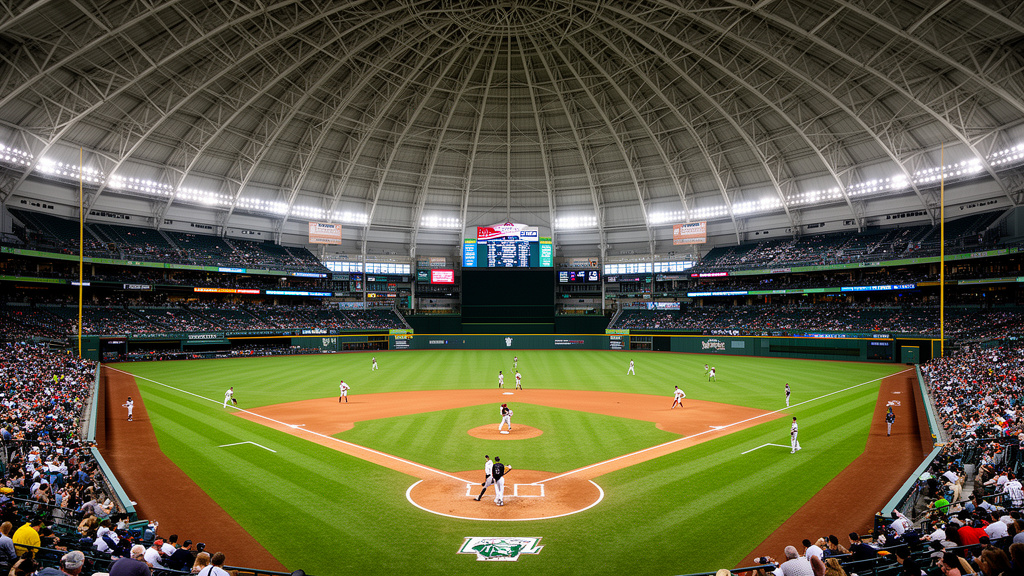
Major League Baseball (MLB) has officially announced that the highly anticipated final game of the series between the Chicago Cubs and the Boston Red Sox, originally scheduled to take place at Fenway Park, has been relocated to Tropicana Field. The decision, driven by severe weather conditions currently impacting the Northeast coast, mandates that the game be played at the neutral site in St. Petersburg, Florida. This emergency scheduling change aims to prioritize player safety, stadium staff, and the integrity of the game, while mitigating the risks posed by the predicted meteorological event.
Key Highlights
- Venue Shift: The game has been officially moved from Fenway Park in Boston to Tropicana Field in St. Petersburg.
- Cause: Severe weather warnings along the Northeast corridor necessitated the immediate scheduling change.
- Neutral Site Status: The Tampa Bay Rays are serving as the hosts for this neutral site matchup, ensuring the game proceeds as planned for national broadcast.
- Fan Safety: All original ticket holders for the Fenway Park matchup are advised to consult team communications regarding refund protocols and ticket reissues.
Relocation Logistics and the Anatomy of an MLB Emergency
When a major professional sports league decides to move a scheduled event on short notice, the logistical undertaking is immense. Moving a game from Boston to St. Petersburg is not merely about changing the location on the schedule; it involves the coordinated movement of two professional baseball organizations, their support staff, travel arrangements, broadcast equipment, and security personnel.
The Atmospheric Catalyst
The meteorology behind this decision is rooted in the significant storm systems currently tracking up the East Coast. Meteorologists and local authorities identified a high probability of unsafe conditions, including high winds, heavy precipitation, and potential flooding, that would have compromised the outdoor environment of Fenway Park. For MLB, the threshold for postponement or relocation is determined by player safety and the ability to maintain field conditions that allow for a fair contest. When the weather forecast indicated that the window for play would be severely hampered by the storm, the league office—in conjunction with the clubs—moved swiftly to secure an indoor alternative.
Tropicana Field as a Neutral Venue
Selecting Tropicana Field provides a distinct advantage: the dome. As one of the few climate-controlled, fixed-roof stadiums in the league, the ‘Trop’ offers the certainty required for Major League Baseball to avoid a complete postponement. By utilizing a neutral site, the league avoids the ‘lost’ game scenario, which would create significant scheduling headaches later in the season.
In this arrangement, the Tampa Bay Rays organization acts as the operational host. While the Cubs and Red Sox retain their designations as the ‘visiting’ and ‘home’ teams for statistical and rule-based purposes (such as batting order and the bottom of the ninth inning), the infrastructure of Tropicana Field supports the event. This includes the utilization of local grounds crews, stadium security, and the integration of broadcast feeds that will be beamed out to the respective regional sports networks.
The Hidden Complexity of Neutral Site Games


Neutral site games are rare in the MLB regular season, usually reserved for international series or extreme weather contingencies. The complexity lies in the parity of the game day experience. For the traveling teams, the routine of a road trip is abruptly altered. Players, who are creatures of habit, are forced into new hotel accommodations, new clubhouse layouts, and a different field surface (in this case, artificial turf at Tropicana Field versus the grass at Fenway).
Furthermore, the broadcast logistics require a massive effort. The production crews that were set to operate in Boston must now facilitate the broadcast from a foreign location. Equipment must be re-routed, and technical teams must recalibrate their cameras and audio setups to match the lighting and acoustics of Tropicana Field. It is a testament to the league’s operational efficiency that such a shift can occur within a 48-hour window.
Historical Context: MLB’s Relocation Precedents
This move joins a select history of MLB emergency relocations. Historically, the league has utilized neutral sites or relocated games during events like Hurricane Ian or other major severe weather crises. In 2017, the Houston Astros and Texas Rangers relocated games to Tropicana Field during Hurricane Harvey. These events serve as the blueprint for the current situation. The league’s priority remains the same: complete the schedule while ensuring the safety of those involved. While these games often lack the atmosphere of a home crowd, they provide the competitive opportunity for teams to continue their season without a prolonged disruption that could impact playoff positioning.
For the players, the shift to Tropicana Field introduces a tactical change. The turf at the Trop is notoriously fast and plays differently than the historic grass at Fenway. Managers will likely adjust their lineups, perhaps favoring defensive speed over raw power, and utilizing the bullpen differently, knowing that the controlled environment changes the carry of the ball.
As the sports world watches this game unfold, the focus will be on how these two powerhouse organizations adapt to the sudden change in environment. It is a unique ‘home’ game for the Red Sox—in the sense that they are the team originally playing at home—but in a building that belongs to the Rays. It creates a fascinating narrative layer to the Sunday contest, one that adds to the lore of a season defined by adaptability.
FAQ: People Also Ask
Q: What happens to tickets purchased for the original Fenway Park game?
A: MLB and the Boston Red Sox will issue specific instructions to season ticket holders and single-game buyers. Typically, these involve full refunds or credits for future games. Fans are urged to check the official Red Sox website and their email for direct communication regarding the specific refund process for this relocated event.
Q: How does this affect the game’s official statistics?
A: The game remains a standard MLB regular-season contest. All statistics, including home runs, strikeouts, and errors, will count toward the official season totals for both the Chicago Cubs and the Boston Red Sox.
Q: Will the game be broadcasted as usual?
A: Yes, the game is still scheduled for its original time slot, and local broadcast networks for both teams are expected to carry the game from the new location. Viewers should check local listings, as some adjustments to pre-game and post-game coverage may occur due to the logistics of the move.
Q: Why was Tropicana Field specifically chosen?
A: Tropicana Field was selected primarily due to its roof, which guarantees that the game will not be affected by the weather. Additionally, its existing infrastructure is fully prepared to handle the broadcasting and operational requirements of an MLB game on short notice.