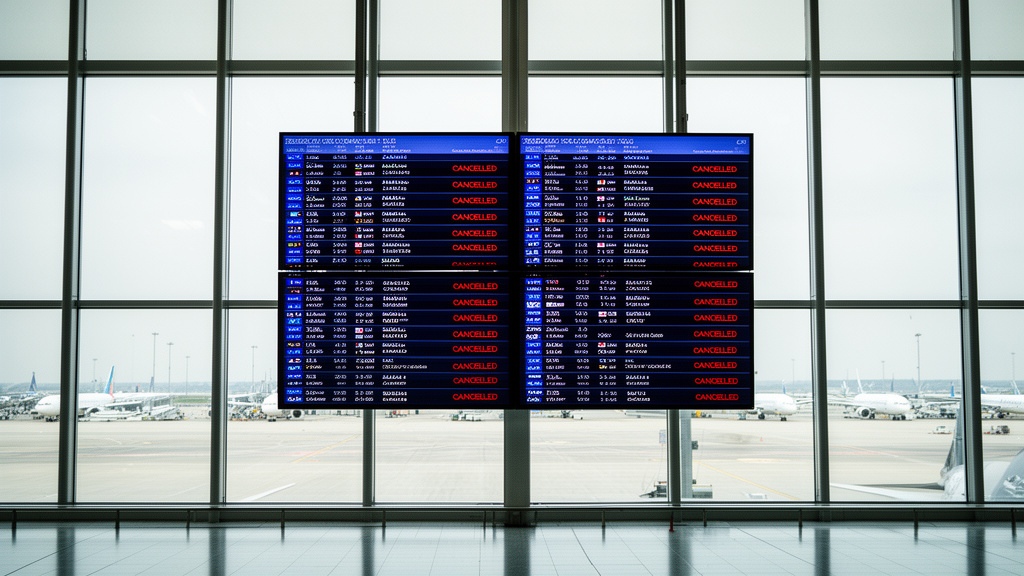
In a decisive move to maintain the safety of the national airspace, the Federal Aviation Administration (FAA) has ordered a mandatory nationwide ground stop for all U.S. departures. The drastic action follows the detection of critical, cascading communication failures within regional air traffic control (ATC) systems, which serve as the backbone for safe aircraft separation and navigation. The order, which effectively brings the American aviation network to a standstill, comes as federal technicians scramble to isolate and repair the technical anomalies.
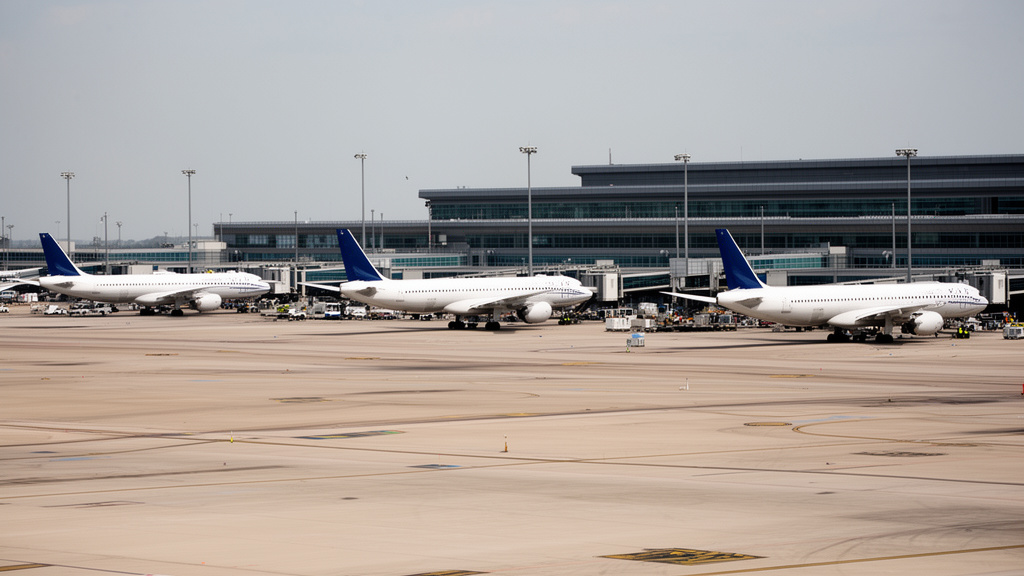
Transportation Secretary Sean Duffy, overseeing the crisis response, confirmed that the issue is not localized to a single sector but represents a systemic challenge across the regional architecture. As of this hour, airports across the country, including major hubs like Chicago O’Hare, are experiencing absolute gridlock, with aircraft holding on taxiways and passengers facing indefinite delays.
Key Highlights
- Nationwide Scope: The FAA ground stop encompasses all U.S. airports, preventing departing flights from taking off while managing the safe landing of aircraft already in the air.
- Critical Tech Failure: The root cause has been identified as a malfunction within the regional air traffic control communications network, essential for pilot-to-controller data transmission.
- Leadership Response: Transportation Secretary Sean Duffy has mobilized emergency technical teams to address the failure, though no immediate timeline for resumption has been established.
- Airport Gridlock: Major transportation hubs, notably Chicago O’Hare, are reporting significant congestion as ground crews manage aircraft that have been forced to return to gates or remain at terminal bays.
The Anatomy of the Air Traffic Crisis
The decision to implement a nationwide ground stop is a rare, high-stakes measure reserved only for situations where the safety of flight separation cannot be guaranteed. Modern air traffic control relies on a complex, interconnected web of regional centers that communicate constantly with one another and with cockpits. When this communication chain is compromised, the ability of controllers to provide pilots with critical safety data—such as weather updates, altitude clearances, and traffic conflict alerts—is severely diminished.
The Technical Breakdown
According to early reports from federal authorities, the disruption stems from a significant failure in the data dissemination protocols that regional centers use to coordinate air traffic flow. Unlike localized radar outages, which can sometimes be bypassed with secondary radar systems, this specific communications issue affects the ability of controllers to ‘hand off’ aircraft to neighboring sectors securely. Without this continuous stream of data, the margin for human error increases exponentially, making the FAA’s decision to ground flights not just a logistical necessity, but a vital safety mandate.
The View from the Tarmac: Chicago O’Hare
At Chicago O’Hare, one of the world’s busiest airports, the situation is illustrative of the national impact. With no departures authorized, taxiways that typically facilitate a constant flow of traffic have become stagnant. Ground crews are working overtime to manage the physical congestion, while airlines struggle to accommodate passengers whose plans have been abruptly halted. This bottleneck effect is not just limited to the tarmac; it creates a domino effect. An aircraft grounded at O’Hare cannot fulfill its next leg, meaning the delay cascades through the entire network, affecting connecting flights in cities that may have been technically operational.
Economic and Logistical Fallout




The economic implications of a total ground stop are staggering. Beyond the immediate costs incurred by airlines—such as fuel burn, crew duty-time violations, and passenger re-accommodation expenses—there is a broader economic impact on the supply chain. Air freight, which is critical for time-sensitive materials, medical supplies, and perishable goods, is now effectively frozen.
Estimating the Impact
Economists tracking the aviation sector note that every hour of a nationwide ground stop results in millions of dollars in losses. Furthermore, the disruption tests the resilience of the U.S. transportation sector. Airlines are currently operating at high load factors, meaning there is little ‘slack’ in the system to absorb displaced passengers once the ground stop is lifted. Consequently, the aftermath of this event will likely result in a 24- to 48-hour recovery period as airlines work to reset their schedules and reposition crew members.
The Role of Regulatory Oversight
Secretary Sean Duffy’s involvement highlights the interagency cooperation required during such emergencies. The Department of Transportation is tasked with coordinating between the FAA, airline CEOs, and airport operators to ensure that communications are clear and that passenger welfare remains a priority. This incident will inevitably spark intense congressional scrutiny regarding the modernization of ATC technology and the redundancy protocols currently in place.
Historical Precedents and Future Resilience
This event is not occurring in a vacuum. The U.S. aviation industry has faced similar, albeit less expansive, technical failures in the past. These incidents have historically served as wake-up calls, emphasizing the urgent need to move away from legacy infrastructure—some of which dates back to the mid-20th century—and toward a fully digital, software-defined air traffic management system.
The Path Toward Modernization
As the industry recovers from this latest outage, the focus will shift from immediate crisis management to long-term prevention. Aviation experts argue that the solution lies in a more decentralized, cloud-native architecture that can isolate failures before they become national emergencies. Whether today’s outage serves as the catalyst for a fundamental technological overhaul of the FAA’s network remains a subject of intense debate among legislators and industry stakeholders.
FAQ: People Also Ask
Q: What exactly is a ‘ground stop,’ and why did the FAA issue one?
A: A ground stop is a traffic-management initiative that requires aircraft to remain on the ground. The FAA issues this when the safety of the National Airspace System is compromised—in this case, by communication failures—meaning controllers cannot safely manage or separate traffic in the air.
Q: Is there an estimated time for when flights will resume?
A: As of now, the FAA has not provided a specific time for the resumption of flights. Secretary Sean Duffy has stated that technical teams are working to resolve the failure, but the ‘all clear’ will only be given once system integrity is fully verified.
Q: How does this affect passengers currently in the air?
A: Aircraft currently in the air are generally allowed to complete their flights and land at their intended destinations. The ground stop primarily affects aircraft that are scheduled to depart. However, passengers may face extended waits on the tarmac or at terminal gates upon arrival due to airport congestion.
Q: Should passengers go to the airport if they have a flight today?
A: Travelers are strongly advised to check the status of their flight through their airline’s website or mobile app before heading to the airport. Even if the ground stop is lifted, massive backlogs are expected, and airlines will likely be managing a significant volume of re-bookings.