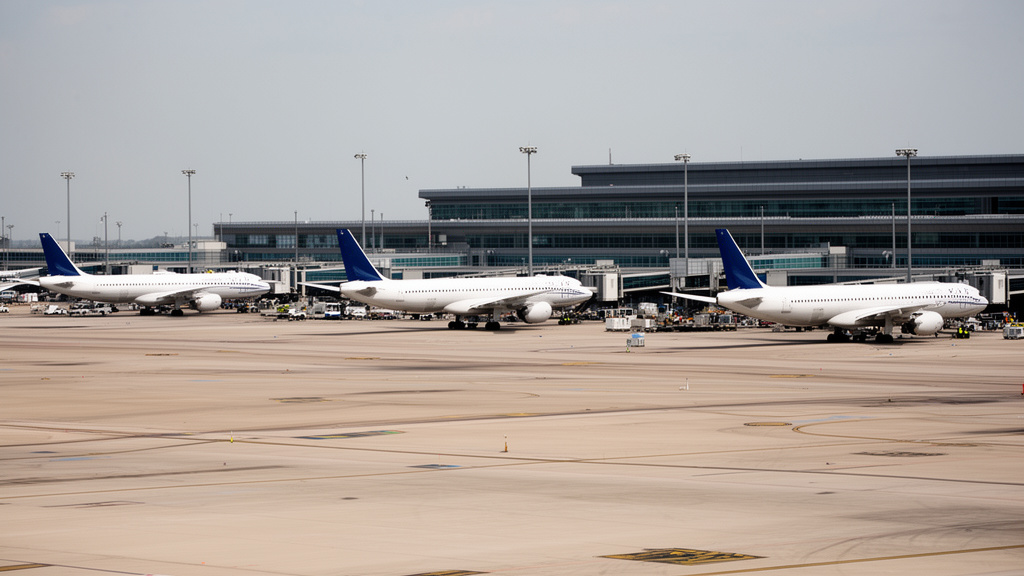
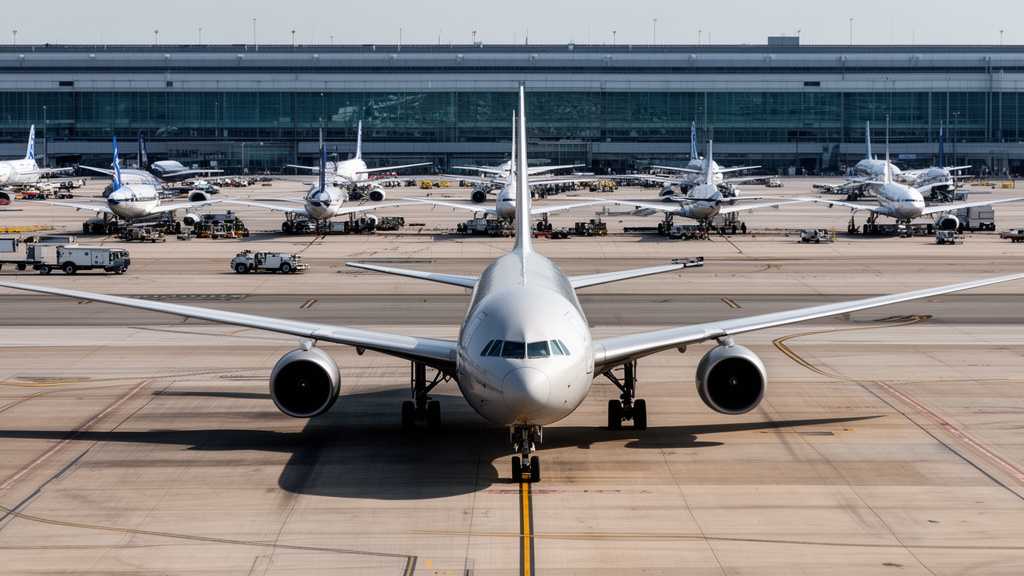
The skies over the United States went unnervingly quiet as the Federal Aviation Administration (FAA) issued a mandatory, nationwide ground stop for all domestic departures. The directive, which stemmed from a catastrophic communication failure within the Notice to Air Missions (NOTAM) system—the essential protocol used to alert pilots and flight crews of safety-critical hazards—left passengers stranded from coast to coast. Chicago’s aviation hubs, O’Hare International Airport (ORD) and Midway International Airport (MDW), were among the hardest hit, as the sudden FAA ground stop effectively paralyzed departures, while inbound flights were forced into a precarious, case-by-case management scenario.
Key Highlights
- Systemic Failure: The disruption was caused by an outage in the NOTAM (Notice to Air Missions) system, which provides real-time safety information to flight crews.
- Nationwide Impact: The FAA ordered a complete halt to all domestic flight departures across the U.S. to allow for a system reboot and data validation.
- Chicago Hubs Paralyzed: O’Hare and Midway International Airports experienced massive departure backlogs, with inbound arrivals managed under strict, limited capacity protocols.
- Operational Uncertainty: While flights already in the air were permitted to land, the inability to process new flight plans led to widespread cancellations and significant logistical cascading effects.
The Anatomy of the Aviation Infrastructure Collapse
The ripple effects of the FAA’s decision to ground all flights were felt immediately at Chicago’s airports, which function as two of the busiest transit points in the global aviation network. When the NOTAM system—the backbone of flight safety communications—suffered a catastrophic outage, the FAA was left with no choice but to implement a temporary nationwide pause. This was not a localized technical glitch; it was a fundamental breakdown in the dissemination of critical safety data. For a pilot to take off, they must receive updated NOTAMs, which include everything from runway closures to bird activity or temporary restricted airspace. Without this digital stream, the aviation system becomes blind, forcing regulators to prioritize safety over schedule efficiency.
The Role of Chicago’s Aviation Hubs




O’Hare and Midway serve as critical junctions for domestic air travel. When the FAA grounded operations, these airports became ground zero for the ensuing chaos. The specific geometry of Chicago’s traffic control responsibilities means that delays here often propagate throughout the national airspace system. As the outage dragged on, airport terminals turned into crowded waiting areas, with airlines struggling to rebook thousands of displaced passengers. The situation was compounded by the fact that the NOTAM system failure affected the primary server and its backup, leading to an investigation into why redundancy measures failed to prevent a total outage.
Infrastructure Vulnerability vs. Cybersecurity
In the immediate wake of the equipment outage, questions regarding the vulnerability of aging aviation infrastructure took center stage. While officials initially navigated the crisis as a technical failure, the magnitude of the disruption reignited the debate over the U.S. government’s ongoing efforts to modernize the National Airspace System. Critics have long argued that relying on legacy, decades-old code to manage modern flight patterns introduces unacceptable levels of risk. The incident highlighted the fragility of a system that must be 100% reliable at all times. While initial reviews suggested that there was no evidence of a cyberattack, the event served as a stark reminder of the potential for digital infrastructure to become a single point of failure for the national economy.
The Economic Ripple Effect
Beyond the logistical nightmare for travelers, the economic consequences of an FAA ground stop are immense. Airlines, already dealing with volatile labor markets and fuel costs, faced tens of thousands of flight delays and cancellations. For a hub like O’Hare, where tens of thousands of passengers pass through daily, the economic drag is measured in millions of dollars in lost productivity, rebooking costs, and compensation claims. Furthermore, the event underscored the tight coupling of the global supply chain with passenger aviation, as many domestic air cargo shipments were also grounded during the crisis.
FAQ: People Also Ask
Q: What is a NOTAM, and why did it cause a ground stop?
A: NOTAM stands for ‘Notice to Air Missions.’ It is an essential digital notification system that alerts pilots and ground crews to safety-related issues, such as runway conditions, temporary flight restrictions, or equipment failures. Because it is illegal and unsafe for a plane to depart without reviewing current NOTAMs, the failure of this system forced the FAA to halt departures.
Q: Were inbound flights at O’Hare and Midway grounded?
A: Not entirely. The FAA order primarily affected departures. Flights already airborne were allowed to continue to their destinations, including Chicago. However, inbound traffic was managed on a strict, case-by-case basis, leading to severe arrival delays and hold patterns in the sky as controllers managed traffic with reduced data capabilities.
Q: Was this event caused by a cyberattack?
A: While initial investigations caused significant speculation, officials stated that the root cause was a technical failure involving damaged database files within the NOTAM system. There was no immediate evidence of malicious intent or a cyberattack behind the equipment outage.
Q: How does this affect future travel safety?
A: This incident has accelerated calls for a comprehensive audit of the FAA’s technical infrastructure. The agency is under increased pressure to prioritize the modernization of its backup systems and redundancy protocols to ensure that a single server failure does not trigger another nationwide grounding of the U.S. aviation network.