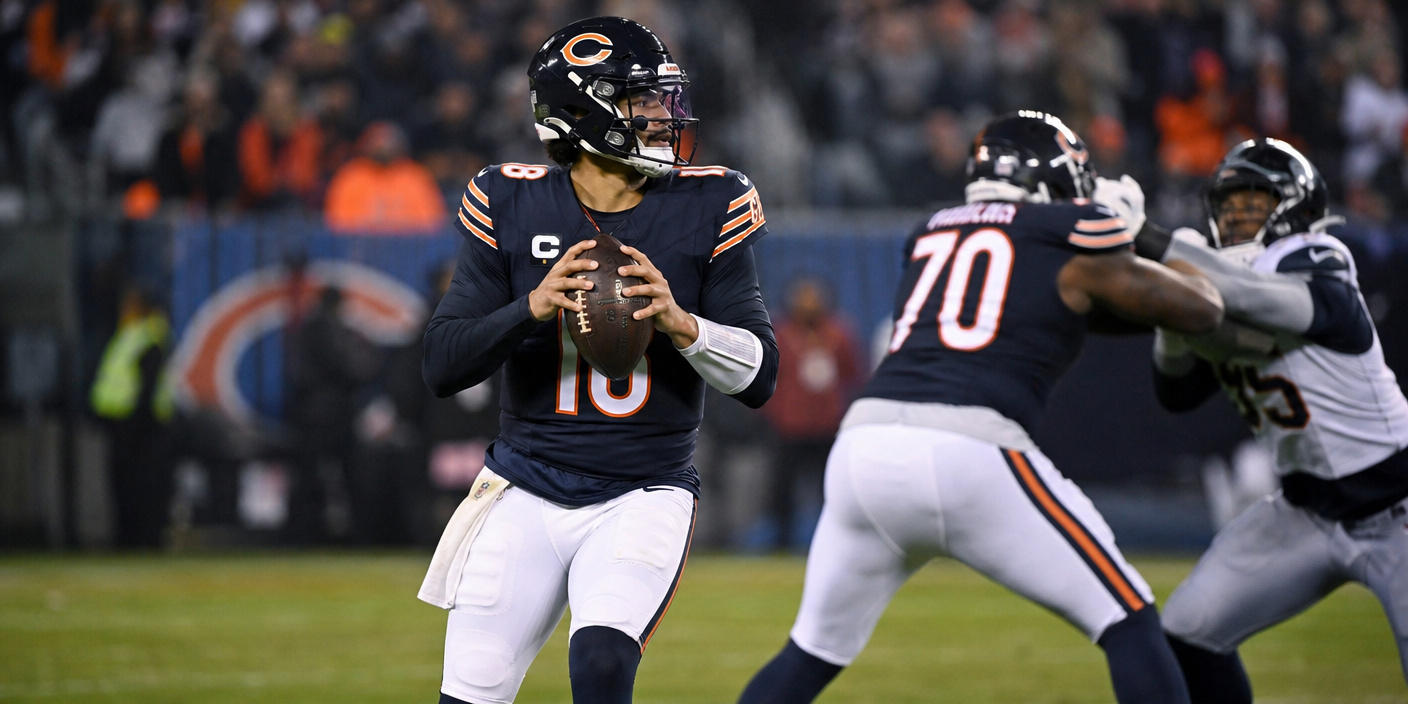
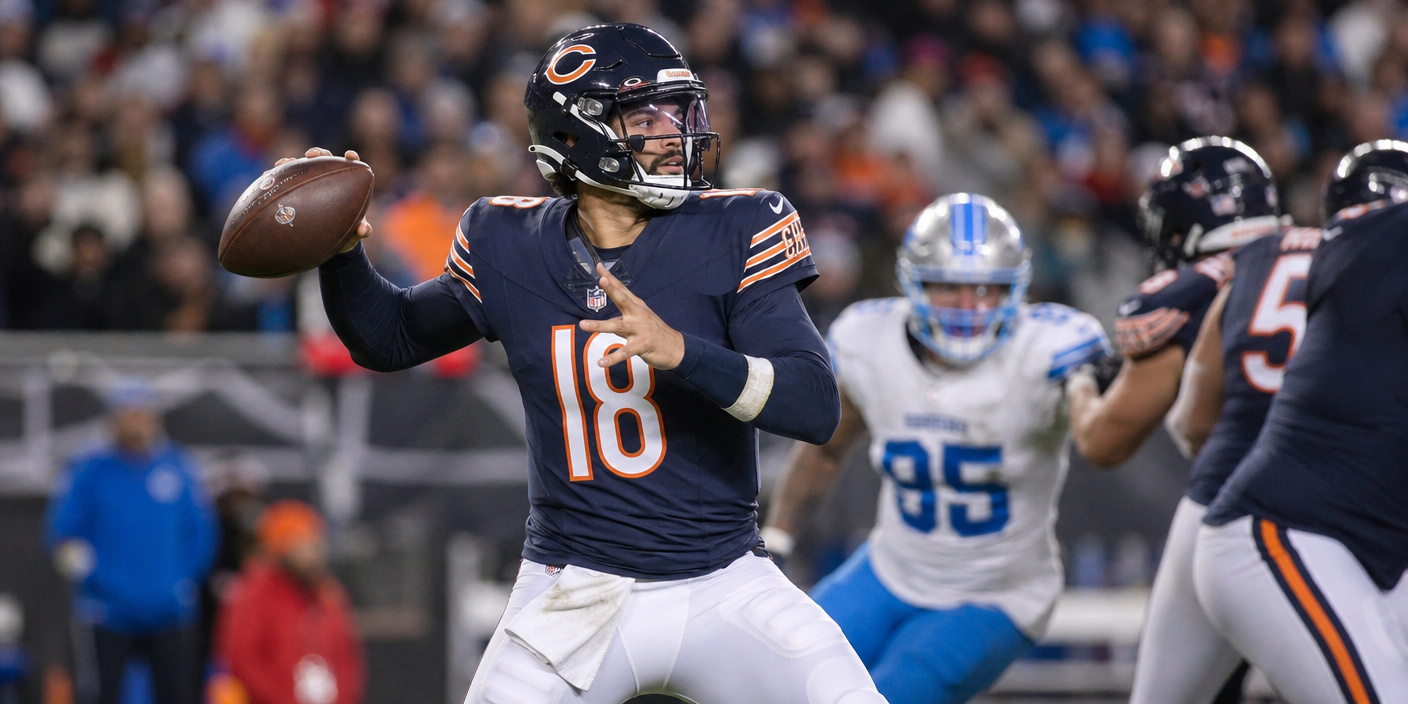
The Chicago Bears continued their impressive ascent through the NFL standings on Thursday night, leveraging a precise and aggressive performance from rookie quarterback Caleb Williams to secure a 30-24 victory over the New England Patriots. The win, which advances the Bears to a formidable 5-2 record on the season, served as a national showcase for the growing chemistry between Williams and his offensive playmakers. As the league’s mid-season point approaches, Chicago’s ability to close out competitive games against desperate opponents has shifted the conversation from ‘rebuilding’ to ‘contending.’
The Rookie Quarterback Duel
The Thursday night matchup was heavily marketed as a showdown between the top tier of the 2024 quarterback class: Caleb Williams of the Bears and Drake Maye of the Patriots. While both teams have experienced the turbulent growing pains associated with rookie signal-callers, the game offered a stark contrast in offensive maturity. Williams, displaying the poise that made him the consensus first-overall draft pick, managed the pocket with veteran-level efficiency.
His performance was punctuated by two surgical touchdown passes that exploited gaps in the Patriots’ secondary. Rather than relying solely on improvisation—a trademark of his college career—Williams demonstrated a commitment to structure and timing, essential traits for sustained success in the NFL. Conversely, Drake Maye showed flashes of brilliance for New England, proving capable of extending plays with his legs and finding tight windows. However, the Patriots struggled to sustain drives with the consistency required to match Chicago’s output, ultimately falling short in a game defined by third-down efficiency.
Analyzing the Offensive Progression
Beyond the headline statistics, the most significant takeaway from the Bears’ offensive effort was the rhythmic flow of the play-calling. Under the direction of the coaching staff, the Bears moved away from the conservative shell often seen in rookie-led offenses. Caleb Williams was given the license to attack the intermediate levels of the field, a strategy that paid dividends throughout the first half. The two touchdown passes served as the catalyst for the lead, allowing the Bears to dictate the tempo of the game.
This shift in philosophy suggests that the organization is fully confident in Williams’ capacity to digest complex defensive coverages. His decision-making process was notably faster, with significantly fewer instances of holding the ball too long. This development is crucial. For the Bears to maintain their 5-2 trajectory, Williams must continue to minimize negative plays—sacks and turnovers—while maximizing the efficiency of every possession. Against New England, he did exactly that.
Defensive Resilience and Field Position



While the offense provided the points, the Bears’ defense provided the stability. A 30-24 final scoreline is indicative of a game that remained competitive until the closing minutes, and the Chicago defense was tasked with holding off several late-game surges by the Patriots. The unit’s ability to create pressure on Maye without sacrificing coverage integrity allowed the Bears to maintain their lead when the game threatened to tighten.
Strategic field position, often the forgotten metric in high-scoring affairs, favored Chicago for the majority of the second half. By winning the battle in the trenches, the Bears limited the Patriots’ ability to execute their preferred run-heavy game plan. This forced Maye into obvious passing situations, where the Bears’ pass rushers, particularly off the edges, were able to force errant throws and crucial incompletions that stalled New England’s momentum.
The 5-2 Reality: Playoff Implications
A 5-2 record is a significant milestone in the modern NFL, effectively separating the ‘wildcard’ contenders from the bottom tier of the league. With this victory, the Bears have established a buffer that allows for margin-of-error in the coming weeks. The victory against a struggling but disciplined Patriots team—coached to fight until the final whistle—is the type of game that playoff teams are expected to win.
Looking ahead, the schedule offers a mix of divisional rivalries and high-profile matchups. The challenge for Chicago will be maintaining this upward trajectory as the ‘scouting book’ on Caleb Williams grows. Opposing defensive coordinators will now have seven games of film to dissect, searching for tendencies and weaknesses. The Bears’ response—their ability to innovate the game plan and protect their rookie asset—will define the second half of their season.
Building for the Future
Ultimately, the 30-24 win was more than just a notch in the win column; it was a verification of the front office’s long-term strategy. Investing in a franchise quarterback and surrounding him with high-caliber receivers has transformed the Bears from a stagnant offense into one that can score points in bunches. As the team heads back to the practice facility, the focus will undoubtedly shift to consistency. The NFL is a league of attrition, and reaching 5-2 is only the first step. The standard has been set, and Caleb Williams has proven, in primetime, that he is capable of leading this franchise through the grueling winter stretch of the NFL season.
FAQ: People Also Ask
1. What was Caleb Williams’ final stat line in the win over the Patriots?
Caleb Williams was highly efficient, leading the Chicago Bears with two touchdown passes. His performance was characterized by effective pocket management and key throws that allowed the Bears to maintain their lead throughout the game.
2. What does the Bears’ win mean for their season standings?
The victory improves the Chicago Bears’ record to 5-2. This record is critical as it places them firmly in the hunt for playoff contention as they approach the mid-season mark, establishing them as a serious competitor in the NFC.
3. How did the Patriots perform under Drake Maye in this game?
Drake Maye demonstrated significant potential, showing ability both as a passer and a runner. While he moved the ball effectively at times, the Patriots’ offense ultimately struggled to keep pace with the Bears, resulting in the 30-24 final score in favor of Chicago.
4. Why was this game significant for the Chicago Bears’ offensive development?
This game marked a shift toward a more aggressive, vertical passing attack. By trusting Caleb Williams to execute two touchdown passes and manage the game’s tempo, the coaching staff signaled that the offense is evolving, moving beyond simple concepts to more complex, pro-level schemes.