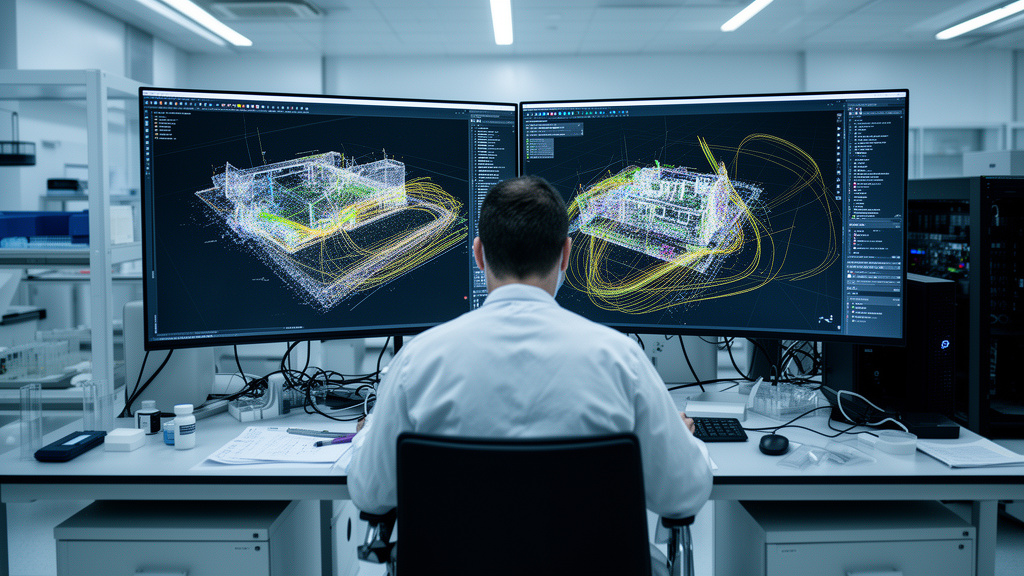
The streets of Chicago have officially entered the era of autonomous mapping, yet the arrival of Google-owned Waymo vehicles has sparked a fierce debate that extends far beyond the technical challenges of navigating the Windy City. While white Jaguar I-Pace vehicles equipped with distinct rooftop sensor suites are now a common sight in neighborhoods from the South Loop to Wrigleyville, they remain under human control—a necessary transitional phase while state legislators and local communities grapple with the implications of a fully driverless future.
Key Highlights
- Waymo has begun an intensive mapping phase across Chicago, utilizing human safety drivers to survey urban roads and traffic patterns.
- State Representative Kam Buckner’s proposed “Autonomous Vehicle Pilot Project Act” (HB4663) remains a central point of contention, currently stalled in committee.
- Local labor unions, specifically the Illinois Drivers Alliance, are vehemently opposing the legislation, citing threats to the livelihoods of rideshare and taxi drivers.
- Residents remain deeply divided, with many expressing skepticism regarding the vehicle’s ability to navigate Chicago’s notorious weather, potholes, and aggressive driving culture.
The Anatomy of a High-Tech Standoff
The presence of Waymo vehicles on Chicago’s streets is currently a paradox: high-tech hardware navigating a low-tech regulatory environment. Since the mapping initiative began in February 2026, the vehicles have functioned as data-gathering vessels rather than autonomous taxis. This operational limitation, however, has not dampened the intensity of the public and political discourse surrounding their eventual deployment.
The Legislative Tug-of-War
At the heart of the standoff is the legislative push spearheaded by State Representative Kam Buckner. The proposed bill aims to create a three-year pilot program, potentially opening Cook County and other major population centers to autonomous vehicle (AV) operation. Proponents argue that Chicago is missing a critical opportunity to lead in modern transit accessibility and safety. Conversely, critics view the legislation as premature. The current stalemate in the Rules Committee reflects a broader hesitation within the state government, which is balancing the siren song of Silicon Valley innovation against the very real and immediate concerns of its constituents.
The “Chicago Factor”: Can AI Handle the Grit?




One of the most persistent arguments from skeptical residents and transit advocates is the unique nature of Chicago’s driving environment. Unlike the sunny, predictable corridors of Phoenix or Los Angeles—where Waymo has established a foothold—Chicago presents a gauntlet of challenges. From blinding snowstorms and icy streets that challenge sensor integrity to the city’s complex, high-density traffic patterns, the technical requirements for a safe “Chicago-ready” robotaxi are significantly higher. Skeptics, like Evanston resident Kim Stover, question the safety of removing the human element entirely. The sentiment is clear: if the system fails in a Midwestern winter, who bears the responsibility?
Labor Unions and the Economic Anxiety
The resistance is not merely about safety; it is deeply rooted in economic survival. The Illinois Drivers Alliance has emerged as a vocal opponent, framing the arrival of Waymo not as a convenience, but as a threat to the community. They argue that the promise of autonomous transit comes at the expense of thousands of rideshare and taxi drivers. This tension is mirrored in the union’s recent correspondence with Governor J.B. Pritzker, urging him to reject the push for automation. The fear is that the shift to driverless cars will commoditize transit while eroding the wage stability of local workers, effectively prioritizing corporate efficiency over human employment.
The Path Toward Integration
If the technology is to succeed in Chicago, it will require more than just refined lidar and improved software; it will require a fundamental shift in public trust. Waymo’s challenge is to prove that its autonomous system can handle the “Chicago factor” without incident. Simultaneously, the city faces a choice: embrace a model of mobility that could reduce traffic and improve accessibility, or protect the status quo of a labor-intensive transit industry. As the mapping data is collected and the legislative bills continue to circulate in Springfield, the streets of Chicago remain a testing ground—not just for software, but for the future of urban work and transport.
FAQ: People Also Ask
Are Waymo vehicles in Chicago currently driving themselves?
No. As of April 2026, all Waymo vehicles operating in Chicago are being driven by human safety drivers. The current phase is focused on mapping streets, collecting geographical data, and understanding driving conditions, not transporting passengers autonomously.
What are the main concerns regarding Waymo in Chicago?
Public and political concerns center on four main pillars: job losses for existing rideshare and taxi drivers, the ability of autonomous systems to handle severe Chicago weather (snow and ice), general distrust of AI safety, and the potential for increased street congestion.
Is there a timeline for when robotaxis might actually launch?
There is no confirmed date. The deployment of autonomous vehicles in Illinois is currently blocked by the lack of enabling legislation. The proposed “Autonomous Vehicle Pilot Project Act” would be the first step, but it faces significant opposition and has yet to pass out of committee.
What is the argument for bringing Waymo to Chicago?
Advocates, including Waymo and some legislators, argue that autonomous vehicles can improve road safety by removing human error from the equation, enhance accessibility for those who cannot drive, and cement Chicago’s position as a hub for future transportation technology.