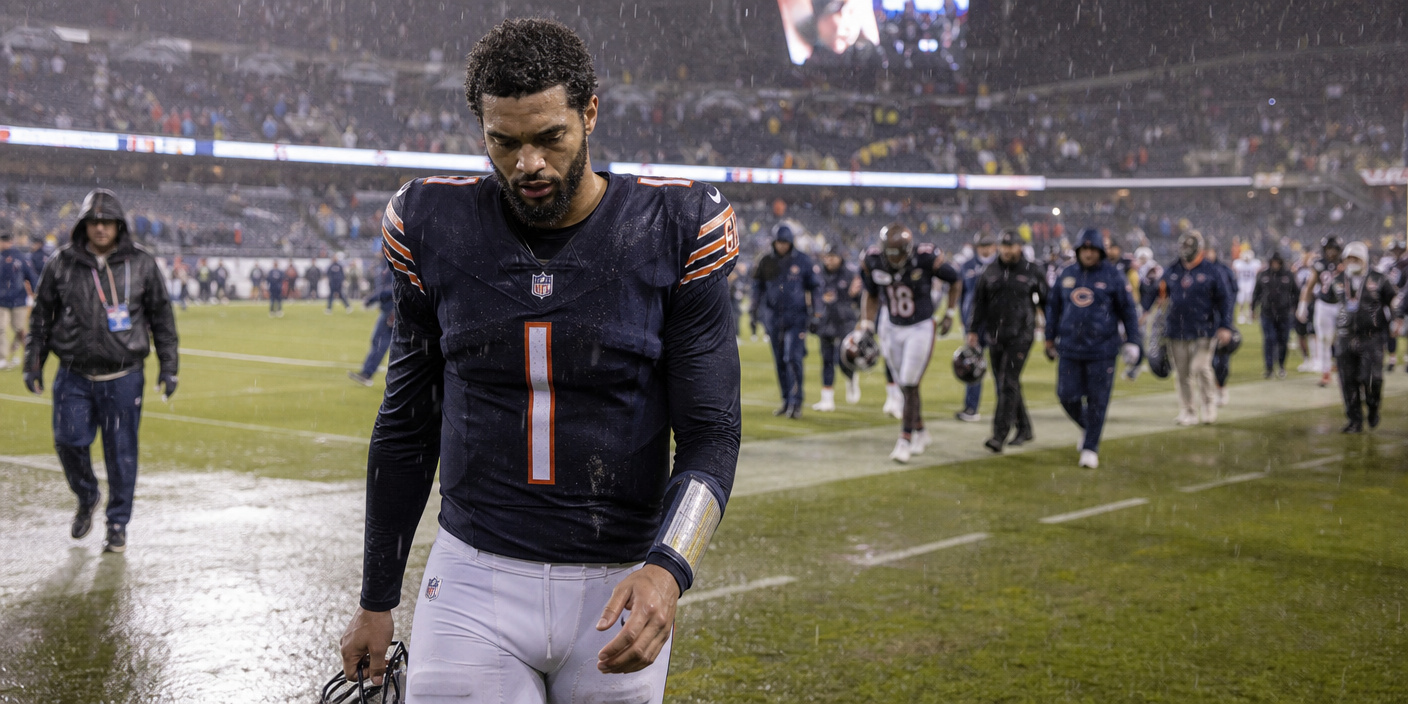
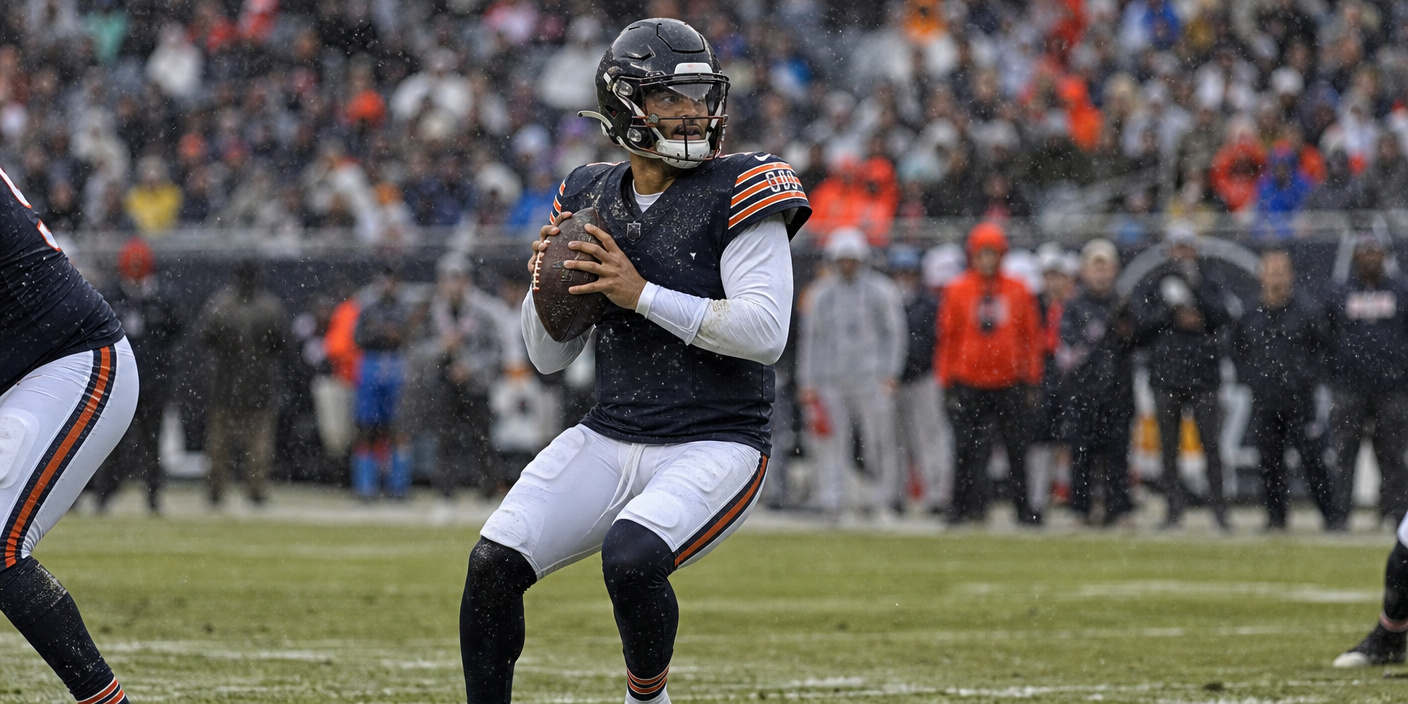
The Chicago Bears’ championship aspirations hit a jarring roadblock on Sunday, September 20, 2026, as franchise quarterback Caleb Williams was carted off the field at Soldier Field during a grueling 9-3 loss to the Minnesota Vikings. The injury, diagnosed on-field as a right hamstring issue, silenced a capacity crowd and left the organization grappling with the sudden loss of its offensive centerpiece.
Key Highlights
- The Incident: Caleb Williams was carted off the field in the third quarter following a non-contact aggravation of his right hamstring.
- Game Outcome: The Bears fell to the Vikings in a defensive stalemate, concluding with a 9-3 final score.
- Venue & Date: The event transpired at Soldier Field on September 20, 2026, creating an immediate ripple effect across the NFC North standings.
- Immediate Status: The team has confirmed a right hamstring injury, with further imaging scheduled to determine the severity and potential recovery timeline.
Soldier Field Silence: Assessing the Fallout of Williams’ Injury
The 2026 NFL season for the Chicago Bears was predicated on the continued elevation of Caleb Williams, a signal-caller known for his Houdini-like escapability and explosive playmaking. When he was carted off the Soldier Field turf midway through the third quarter of Sunday’s 9-3 loss to the Minnesota Vikings, the air left the stadium. In a game defined by defensive trench warfare and suffocating coverage, the loss of the team’s most dynamic playmaker transformed an already difficult afternoon into a potential crisis for the franchise.
The Anatomy of the Collapse
Throughout the first two quarters, both the Bears and the Vikings were locked in a vintage, grit-and-grind defensive battle. The 9-3 scoreline reflected a game where yardage was earned in agonizing increments. Williams had been the primary engine for the Bears’ offense, using his mobility to extend plays and evade the heavy pressure applied by the Vikings’ pass rush. However, the right hamstring injury occurred on a scramble near the left sideline. Observers noted that Williams pulled up sharply before collapsing, a scene that immediately signaled distress.
For a quarterback whose playstyle relies heavily on lateral movement and torque, a hamstring strain represents one of the most difficult injuries to manage. It is not merely an issue of straight-line speed; it is the inability to push off the back foot to generate power for throws or the lateral agility to escape the pocket when the primary read is covered. The medical staff’s decision to bring out the cart was a clear indication that the team was taking no risks with their franchise cornerstone, prioritizing long-term stability over short-term heroics.
Tactical Implications for the Coaching Staff
With Williams sidelined, the Bears’ offensive identity enters a state of flux. The game plan against Minnesota was built around his ability to manipulate the pocket and create chaos against a disciplined Vikings defensive front. Without him, the offense sputtered, managing only a field goal in the waning minutes of the half. The coaching staff now faces the unenviable task of reshaping the scheme to fit a more stationary pocket presence—or identifying a backup capable of mimicking even a fraction of Williams’ creative capability.
This injury puts immense pressure on the offensive line, which must now protect a less mobile signal-caller. If Williams is forced to miss significant time, the Bears must reconcile their run-first philosophy with the reality that defenses will now commit more resources to stopping the ground game, knowing the vertical threat is mitigated. The week ahead will be defined by film study, medical evaluations, and internal debates regarding the roster’s depth chart.
The Burden of Expectation
Perhaps the most significant impact of this injury is psychological. The Bears’ fanbase and locker room have grown accustomed to the high-wire act that is Williams’ style of play. Watching him depart the field on a cart introduced a sense of vulnerability that the team had previously been able to mask through sheer talent and poise.
As the team awaits MRI results, the focus shifts to the historical context of similar injuries. Hamstring strains in the NFL are notoriously fickle; returning too early often results in a lingering, season-long issue that saps a player’s explosiveness. For a player who was drafted and developed to be the centerpiece of a new era of Chicago football, the organization must play the long game. The 9-3 loss to the Vikings is painful in the standings, but the loss of Williams would be a tectonic shift in the Bears’ 2026 trajectory.
FAQ: People Also Ask
Q: What is the official diagnosis of Caleb Williams’ injury?
A: The Chicago Bears have officially confirmed a right hamstring injury. Further testing and imaging are underway to determine the grade of the strain and a projected timeline for recovery.
Q: How does this injury impact the Bears’ playoff chances?
A: The loss of a franchise quarterback is a major setback. While the team remains mathematically competitive, the offense will need to find a way to generate points without Williams’ signature mobility, putting pressure on the run game and defensive efficiency.
Q: Who is expected to start if Williams misses time?
A: The team has not officially announced a starter in the event that Williams is ruled out for upcoming games. Speculation remains focused on the backup quarterback room, which has been preparing for potential roster rotations throughout the preseason.
Q: Was there any contact on the play where the injury occurred?
A: No, the injury was described as a non-contact event. It occurred while Williams was in the process of a scramble, highlighting the physical toll that his style of play takes on his body over the course of an NFL season.