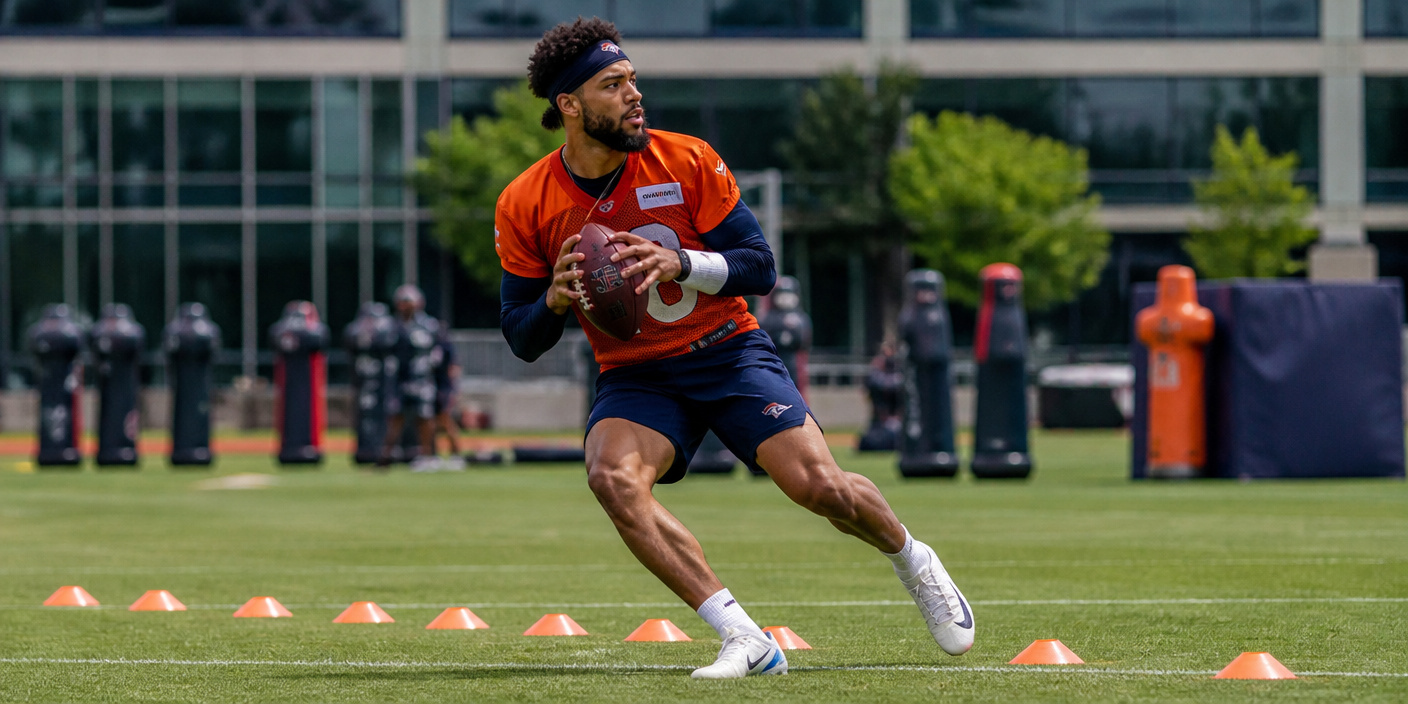
The Chicago Bears continued their impressive 2024 campaign on Sunday, securing a decisive 31-23 victory over the Atlanta Falcons at Mercedes-Benz Stadium. The win, which advances the Bears to a 4-2 record, was headlined by the triumphant return of rookie quarterback Caleb Williams, who had been sidelined for the previous three games due to a hamstring injury. Williams looked sharp in his return, orchestrating the offense with precision, while the defensive unit—anchored by a spectacular three-sack performance from Kyler Gordon—held firm against a persistent Falcons attack to maintain the lead throughout the second half.
Key Highlights
- Caleb Williams’ Return: After missing three consecutive games with a hamstring injury, Williams returned to the starting lineup, throwing for 305 yards and one touchdown.
- Defensive Masterclass: Kyler Gordon emerged as the defensive catalyst, racking up three crucial sacks to stall Atlanta’s offensive momentum.
- Winning Record: The victory improves the Chicago Bears’ standing to 4-2, solidifying their position in a competitive NFC playoff picture.
- Road Resilience: Overcoming a hostile environment in Atlanta, the Bears maintained composure, closing out the game with a 31-23 scoreline.
Strategic Dominance: The Caleb Williams Effect and Tactical Adjustments
Returning from a three-game hiatus is rarely a seamless transition for any quarterback, particularly one adjusting to the speed of the NFL. However, Caleb Williams’ performance against the Atlanta Falcons suggested that the time away served as an opportunity for tactical reset rather than a loss of rhythm. Williams finished the afternoon with 305 passing yards, demonstrating both improved pocket awareness and a willingness to extend plays when the initial look wasn’t available. The decision-making process displayed by Williams was a critical factor in the Bears’ success; he managed the game clock effectively and utilized his receiving corps to stretch the Falcons’ secondary, which had previously struggled to contain vertical passing threats.
This 31-23 road win highlights the growing maturity of the Chicago Bears’ offense. By successfully reintegrating their primary signal-caller, the team showed an ability to adapt mid-season. The offensive scheme appeared more balanced than in previous weeks, with the coaching staff leaning into play-action sets that allowed Williams to find soft spots in the Falcons’ coverage. This victory is not just a statistical win; it serves as a psychological boost for the roster, proving that the team can execute effectively on the road even after significant injury adversity.
The Kyler Gordon Factor: Elevating the Defensive Front



While Williams garnered the spotlight for his offensive contribution, the defensive side of the ball provided the backbone for this victory. Kyler Gordon’s performance was nothing short of elite, recording three sacks that disrupted the Falcons’ offensive flow at critical junctures of the game. In modern NFL play, pressure from the secondary and nickel positions is a force multiplier, and Gordon’s ability to time his blitzes effectively created havoc for the Atlanta offensive line. These sacks were not just individual achievements; they forced the Falcons into unfavorable down-and-distance situations, allowing the rest of the defensive unit to play more aggressively in coverage.
Gordon’s versatility has become a hallmark of this Bears defense. By forcing the Falcons to account for him on every snap, he opened up lanes for the edge rushers and linebackers, creating a collective pressure that ultimately defined the game. This defensive synergy is vital for the Bears as they navigate a challenging mid-season schedule, where consistency will be the differentiator between a wildcard berth and a division title challenge.
Navigating the NFC North and Future Outlook
The 4-2 start for the Chicago Bears places them in an intriguing position within the NFC. As the team moves forward, the primary challenge will be sustaining this momentum while managing the health of key personnel. The return of Caleb Williams is clearly the most significant factor for their ceiling, as his ability to produce 300+ yard games gives the team a high-scoring potential that was previously missing. However, the coaching staff will need to focus on red-zone efficiency, as settling for field goals in future matchups against top-tier conference rivals could be the difference between winning and losing tight contests.
Looking ahead, the Bears’ ability to secure road wins in hostile environments like Atlanta will be tested throughout the remainder of the season. The secondary, led by Gordon’s energy, will need to maintain this high-pressure approach against more dynamic quarterbacks. Furthermore, the chemistry developing between Williams and his wide receivers suggests that the ceiling for this offense is still rising. If the Bears can continue to balance the explosive passing game with a disciplined defensive approach, they are well-positioned to remain a significant factor in the NFC playoff race as the winter months approach.
FAQ: People Also Ask
1. How does the 4-2 record impact the Bears’ playoff aspirations?
A 4-2 record is a critical benchmark in the NFL, placing the Bears in the upper tier of the NFC standings early in the season. While it does not guarantee a playoff spot, it provides a buffer for the team as they head into the tougher middle stretch of their schedule and establishes them as legitimate contenders within their division.
2. What was the specific nature of Caleb Williams’ injury?
Caleb Williams was dealing with a hamstring injury that kept him out of action for three games. Hamstring injuries are notoriously sensitive for quarterbacks, as they affect both mobility in the pocket and the ability to generate power on deep throws. His performance today indicates a full recovery and no lingering limitations.
3. Why were Kyler Gordon’s three sacks so important for the win?
Sacks are momentum-killers for an offense. By recording three sacks, Gordon effectively stifled the Falcons’ ability to sustain drives. Each sack forced Atlanta to move backward, leading to stalled drives, punts, or forced field goal attempts, which kept the Bears’ lead secure.
4. Will the Chicago Bears change their offensive approach now that Williams is back?
Expect the Bears to continue leaning into a pass-heavy approach that maximizes Williams’ arm talent. With the quarterback back, the playbook opens up, allowing for deeper routes and more creative play-calling that can challenge opposing defenses horizontally and vertically.