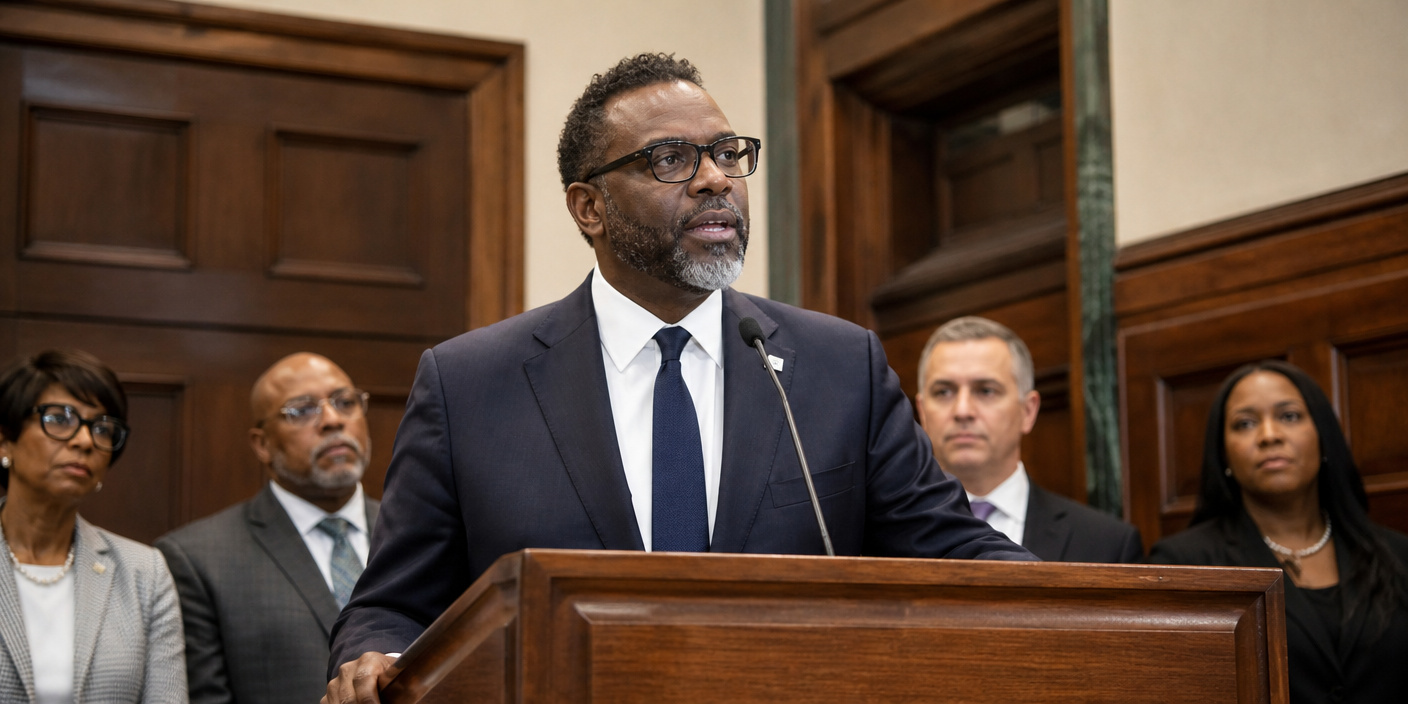
Chicago Public Schools (CPS) stands at a critical financial precipice after Illinois legislative leaders confirmed that no additional state appropriations will be allocated during the current veto session. As the district grapples with a massive, recurring structural deficit, this legislative stance effectively solidifies the likelihood of midyear staff reductions, leaving district officials to scramble for solutions to cover significant budgetary shortfalls. The impasse marks a major escalation in the ongoing tension between City Hall and Springfield, as school administrators and local leaders prepare for the potential erosion of classroom resources.
Key Highlights
- Legislative Deadlock: Illinois General Assembly leaders have explicitly declined to provide emergency appropriations for CPS during the veto session.
- The Fiscal Cliff: The district is facing a multi-hundred-million-dollar structural deficit, exacerbated by the sunsetting of federal ESSER COVID-19 relief funds.
- Impending Layoffs: CPS officials have warned that without external financial intervention, the district may be forced to initiate midyear layoffs to balance the budget.
- Political Friction: The situation has intensified the strain between Mayor Brandon Johnson’s administration and state legislative leadership over education funding priorities.
The Anatomy of the Fiscal Crisis
The denial of additional state funds is not merely a political dispute; it is the culmination of a long-simmering fiscal crisis that has been years in the making. At the center of the debate is the expiration of federal ESSER (Elementary and Secondary School Emergency Relief) funds, which provided a massive influx of cash to school districts across the nation to combat the academic and operational disruptions caused by the COVID-19 pandemic. For years, CPS utilized these temporary, non-recurring funds to cover recurring operational costs—a practice that financial analysts have long warned would lead to a “fiscal cliff” once the federal money ran dry.
Now that the cliff has arrived, the math is stark. The district faces a deficit that threatens core instructional programs, facility maintenance, and administrative support. While Chicago Public Schools has requested state intervention to help bridge this gap, leaders in the Illinois General Assembly, including Senate President Don Harmon and House Speaker Emanuel “Chris” Welch, have signaled a reluctance to depart from the state’s established Evidence-Based Funding (EBF) model. The state maintains that it has provided record levels of investment into the EBF formula, arguing that any further emergency infusions would undermine the systemic approach to state education funding.
The Failure of Negotiations
Negotiations leading up to this veto session were characterized by high stakes and limited common ground. CPS administrators, led by CEO Pedro Martinez, have argued that the unique size and socioeconomic challenges of Chicago’s student population require a tailored financial response that goes beyond formulaic funding. However, Springfield’s stance remains firm: the state has already allocated significant resources, and the burden of addressing the current shortfall lies with the district’s internal financial management and the city’s tax base.



This refusal to open the state coffers during the veto session leaves the district with few remaining levers. Without an influx of cash, the district is left to choose between aggressive budget cuts, potential property tax adjustments, or a restructuring of existing contractual obligations—all of which are politically volatile and operationally difficult to implement mid-year.
The Impact on Classroom Stability
The most concerning element of this budget gap is the direct impact on students and faculty. The threat of midyear layoffs is not just a statistical headline; it represents potential disruptions to instructional continuity. When a school district faces a deficit of this magnitude, the first areas typically targeted are support staff, elective programming, and administrative roles. However, as the deficit deepens, the scope of cuts often widens to include classroom teachers.
For students, the loss of staff members midyear can mean larger class sizes, the termination of specific academic support services, and a decline in extracurricular availability. The uncertainty surrounding these potential cuts creates an environment of instability that permeates the school district, affecting morale among educators and administrators alike. Parents and community stakeholders are now left to wonder how the district plans to maintain educational quality in the face of what appears to be an unavoidable austerity measure.
Strategic Challenges: The Path Forward
As the district navigates the coming weeks, the strategic path forward is narrow. The administration is essentially caught between two immovable forces: the state’s commitment to fiscal discipline and the district’s inability to sustain current service levels with existing revenue.
1. Internal Reallocation: The district may look to reallocate remaining funds from capital projects or deferred maintenance, though these are often earmarked for specific, non-negotiable legal or safety requirements.
2. Labor Relations: The district is entering a difficult phase of labor negotiations, where budget cuts will inevitably clash with union demands for salary increases and staffing stability.
3. Long-Term Revenue Strategies: The current crisis is highlighting the need for a more sustainable, long-term funding strategy that does not rely on the sporadic availability of state aid or the exhaustion of one-time federal grants.
Ultimately, this situation forces a reckoning regarding the financial structure of the nation’s fourth-largest school district. The legislative “no” is not just a rejection of an emergency grant; it is a clear signal that the era of pandemic-era bailouts has concluded, and districts must find a way to operate within the constraints of the existing state funding architecture.
FAQ: People Also Ask
1. Why did the Illinois General Assembly refuse to grant extra money to CPS?
Legislative leaders have maintained that the state has already provided record funding levels through the Evidence-Based Funding (EBF) formula. They argue that creating a precedent of emergency bailouts would disrupt the equitable distribution of funds established by state law.
2. What are the specific consequences of the district’s fiscal cliff?
Without additional revenue, the district faces a significant budget shortfall. This may result in midyear layoffs, potential increases in class sizes, the reduction of support services, and a general tightening of operational expenditures that could affect student programming.
3. Is this funding dispute a result of mismanagement?
Both sides view the issue through different lenses. Critics of the district point to the historical use of one-time federal funds to cover recurring expenses as a management failure. District leadership, however, argues that the current funding model is insufficient to cover the actual costs of educating the district’s diverse student population.