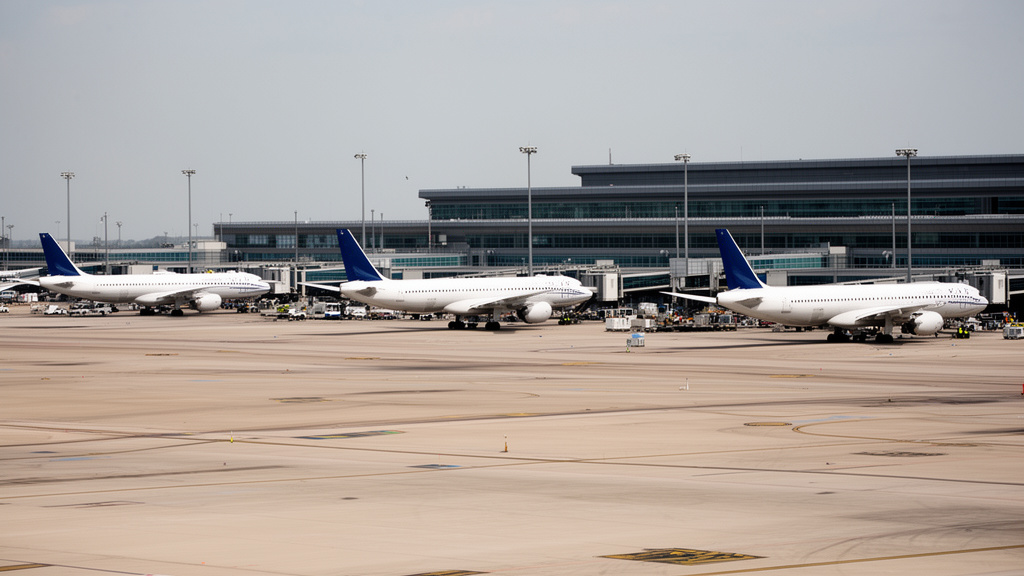
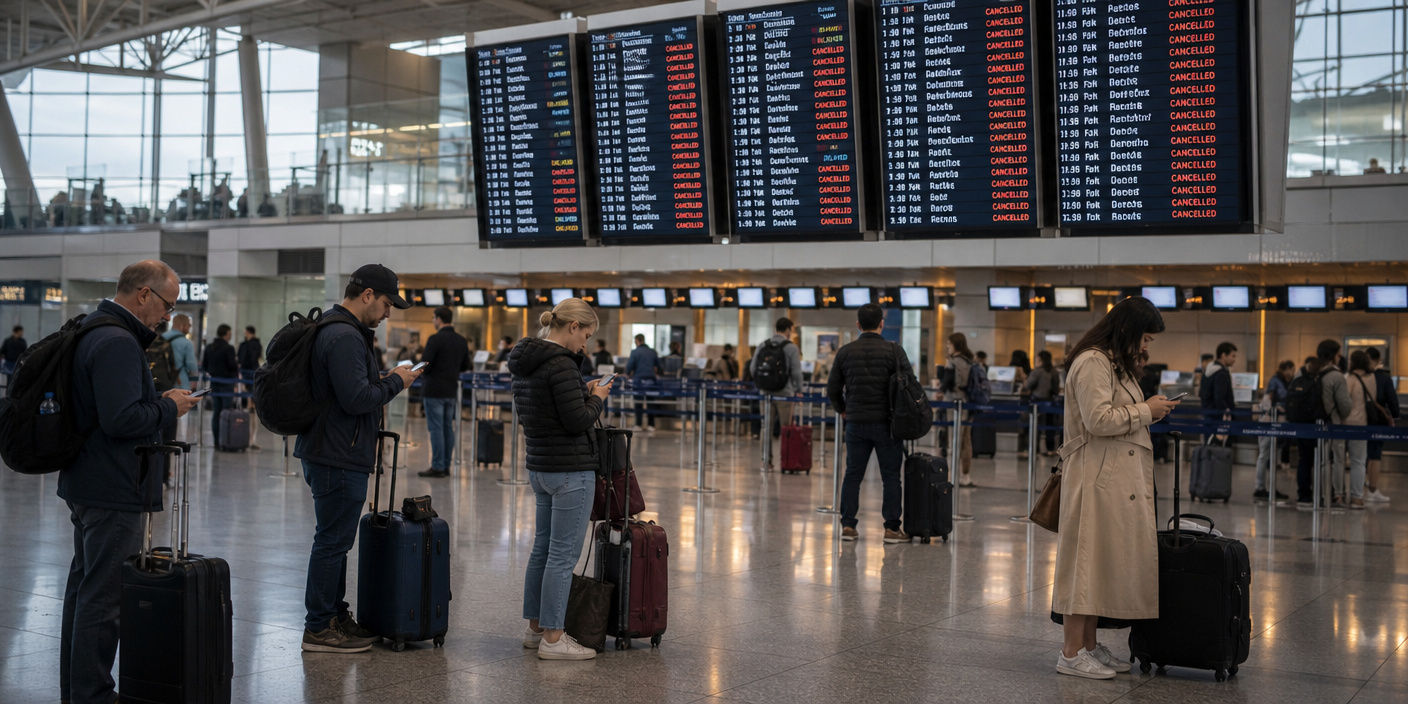
Operations at Chicago’s O’Hare International Airport and Midway International Airport are tentatively resuming following a historic nationwide ground stop that brought U.S. air travel to a complete standstill. The suspension, which effectively grounded aircraft across the country, triggered cascading delays that are expected to ripple through the aviation network well into the upcoming weekend. Transportation Secretary Sean Duffy has officially confirmed that the technical failure responsible for the shutdown has been rectified, allowing air traffic control systems to return to a standard operating posture. However, while the safety protocols that necessitated the ground stop have been satisfied, the logistical challenge of resetting the system in major hubs like Chicago remains significant.
Key Highlights
- System Resumption: Airspace across the United States has reopened, with O’Hare and Midway transitioning from total grounding to active departures and arrivals.
- Official Confirmation: Transportation Secretary Sean Duffy announced that the underlying system failure was successfully identified and resolved.
- Residual Delays: Despite the reopening, airlines and the FAA have warned that delays and cancellations will persist into the weekend due to the backlog of grounded aircraft and displaced flight crews.
- Traveler Advisory: Passengers are strongly urged to check their flight status directly with their carriers before heading to the airport to avoid unnecessary congestion at terminal drop-off points.
The Path to Resumption: Navigating the Aftermath
The abrupt cessation of flight operations was a precautionary measure necessitated by a failure in critical data systems. When the ground stop was implemented, it effectively froze all domestic departures, ensuring that no new flights could enter the system while the root cause was investigated. For major transit hubs like O’Hare and Midway—both critical nodes in the domestic and international aviation infrastructure—the pause was catastrophic. O’Hare, in particular, operates on a high-density schedule that relies on precise timing. When that timing is disrupted, the downstream effects are non-linear, meaning a short shutdown can result in hours of systemic recovery.
Understanding the Operational Logjam
When the ground stop was ordered, it was not merely a matter of flipping a switch to restart. Aviation is a highly choreographed ballet of interconnected movements. Aircraft, crews, and ground support teams are scheduled to precise intervals. Once those intervals are broken, crews often time out under federal flight-time limitations, and aircraft are physically displaced from their required gates.



At O’Hare and Midway, airport authorities have been working in tandem with the Department of Transportation to clear the tarmac and prioritize humanitarian and high-priority flights. However, the sheer volume of air traffic typically handled by these Chicago facilities means that even as the airspace reopens, throughput remains limited. Traffic flow management programs have been enacted to meter the rate at which aircraft can enter the airspace, preventing the airports from being overwhelmed while they clear the initial backlog.
The Role of Regulatory Oversight
Transportation Secretary Sean Duffy’s intervention was instrumental in coordinating the multi-agency response required to troubleshoot the outage. By stabilizing the communication pipelines between the Federal Aviation Administration (FAA) and airline operations centers, the government was able to initiate a phased restart. This “phased” approach is critical; it prevents a sudden surge of aircraft from overwhelming air traffic control sectors that are currently operating with limited staffing and resources following the disruption. The focus remains on safety, with Secretary Duffy emphasizing that full operational capacity will be restored only once the stability of the backup systems is verified.
Secondary Angle: The Economic Ripple Effect
Beyond the inconvenience to travelers, the ground stop carries significant economic weight. Every hour an aircraft sits grounded at the gate, costs accrue for airlines—fuel, labor, and re-accommodation. For business travelers and freight operations, the impact is even more acute. Chicago acts as a primary artery for US commerce; when O’Hare’s operations are stifled, the supply chain feels the impact. The secondary effect of this outage will likely be a surge in consumer complaints and a strain on airline customer service desks, which are already struggling to handle the volume of rebooking requests. The industry is bracing for a weekend where the primary focus shifts from scheduled service to “catch-up” operations.
Secondary Angle: Infrastructure Vulnerability
The event has renewed scrutiny regarding the resilience of aviation infrastructure. This incident highlights the interdependency of critical flight data systems. While the system failed, the fact that a nationwide shutdown was required suggests that redundancy protocols may need a comprehensive review. Industry experts argue that moving forward, the focus must shift toward decentralizing these communication networks so that a single failure point does not necessitate a total ground stop. Whether this will lead to immediate legislative changes or increased federal funding for aviation IT infrastructure remains a subject of ongoing debate in Washington.
Secondary Angle: Managing Future Expectations
For the passenger, the takeaway from this event is one of necessary vigilance. The modern air travel experience is becoming increasingly susceptible to data-driven interruptions. Travelers should anticipate that for the next 48 to 72 hours, the “normal” travel experience will be anything but. Airlines are currently in a reactive state, shuffling crews and aircraft to cover the most critical routes. The most resilient strategy for passengers in the coming days is to maintain extreme flexibility with itineraries and to prioritize direct flights whenever possible to mitigate the risk of connection-related failures.
FAQ: People Also Ask
Q: Why was the nationwide ground stop necessary?
A: The ground stop was implemented as a safety precaution following a critical failure in the data systems used to transmit essential flight information. This action ensured that all aircraft were grounded before the failure could affect active flight paths, maintaining the highest possible standard of safety in the national airspace.
Q: How do I know if my flight from O’Hare or Midway is affected?
A: You should monitor the official website or mobile application of your specific airline. While the FAA provides the status of the airspace, individual airlines determine which flights are cancelled, delayed, or prioritized for resumption based on their available aircraft and crew resources.
Q: Am I entitled to compensation for the delay?
A: Compensation policies vary significantly by airline and the specific nature of the disruption. Generally, airlines provide vouchers for meals or hotel accommodations if the delay is within their control, but federally mandated compensation for delays caused by system-wide technical outages is not always guaranteed. It is recommended to check the specific “Contract of Carriage” for the airline you are booked with.