A federal judge in Chicago has extended an order that prevents the deployment of National Guard troops in Illinois, a decision that remains in effect as the U.S. Supreme Court considers a high-stakes appeal from the Trump administration. The legal battle centers on the President’s authority to federalize and deploy state National Guard units, a move that Illinois and Chicago officials argue oversteps constitutional boundaries.
U.S. District Judge April Perry agreed to extend the existing temporary restraining order, which initially blocked the federal government from ordering the National Guard’s deployment within Illinois. Both the Trump administration and the state and city of Chicago consented to the extension, though their underlying objectives differ. For Illinois and Chicago, it provides more time for deliberation. For the administration, it facilitates the Supreme Court’s review of their appeal, aiming to overturn the block.
Legal Stalemate Continues: National Guard Deployment Block Extended



Judge Perry’s decision to extend the order, which had been set to expire, signals a continued legal holding pattern. While the National Guard members can remain in the state, they are prohibited from being deployed under the federalized orders. This extension, agreed upon to avoid a gap in legal protections while the Supreme Court deliberates, will last for an additional 30 days, through November 24, or until a final judgment is issued. However, Judge Perry cautioned that this is the only time the temporary restraining order can be extended, underscoring the need for a definitive resolution.
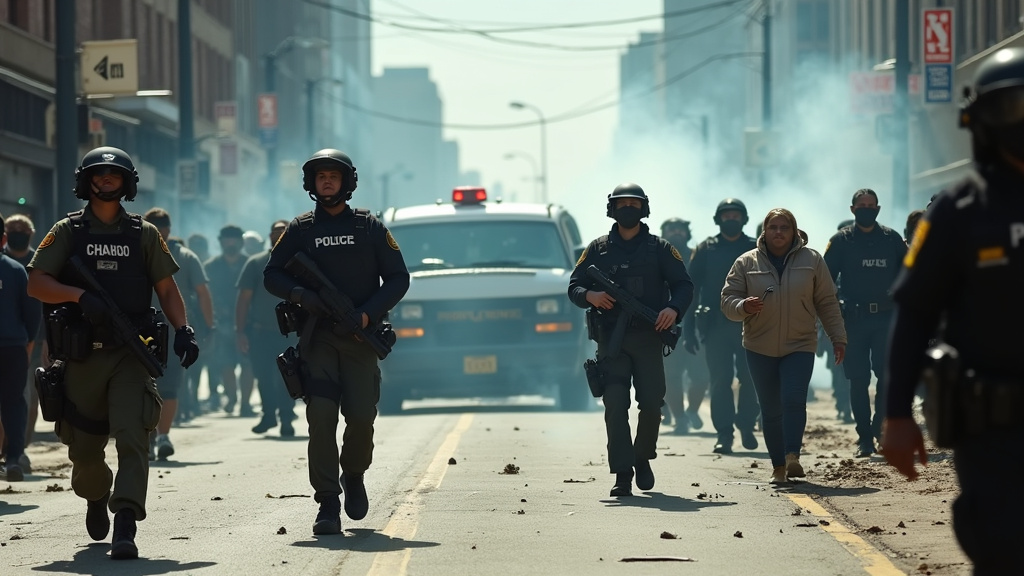
The core of the dispute lies in the Trump administration’s justification for deploying approximately 300 Illinois National Guard troops, along with units from Texas and California, to the Chicago area. The administration, represented by U.S. Solicitor General D. John Sauer, contends that the deployment is necessary to protect federal agents and property amidst what they describe as persistent violent resistance, particularly concerning immigration enforcement operations. Sauer argued in a Supreme Court filing that the restraining order imposes “grievous and irreparable harm on the Executive Branch by countermanding the President’s authority as Commander in Chief.”
The President’s Authority vs. State Sovereignty: Core of the Dispute
Conversely, Illinois and Chicago officials, including Illinois Solicitor General Jane Notz, have strongly contested the administration’s claims. They argue that state and local law enforcement are effectively managing protest activities and that there is no credible evidence to support the need for federal intervention. Notz stated that “the unnecessary deployment of military troops, untrained for local policing, will escalate tensions and undermine the ordinary law enforcement activities of state and local entities.” The state and city maintain that the President’s decision usurps state authority and the existing order “safeguards the careful balance of power struck by the Constitution.”
Judge Perry herself has expressed skepticism regarding the reliability of the information presented by federal officials, noting in an earlier opinion that while she did not doubt “acts of vandalism, civil disobedience, and even assaults on federal agents,” the declarations did not convince her of the necessity for federalizing the Guard.
A Wider Legal Landscape: National Guard Battles in Other Cities
The legal confrontations over National Guard deployments are not isolated to Illinois. Similar disputes have arisen in other major cities, including Los Angeles and Portland, Oregon. In California, legal challenges have been filed against the federalization and deployment of National Guard troops, with state officials arguing against federal overreach. In Portland, an appeals court has allowed the Trump administration to take command of Oregon National Guard troops, though their actual deployment remains blocked by a separate court order. These parallel legal battles highlight a nationwide trend of tension between federal and state authorities regarding the use of military force domestically.
The Supreme Court’s Looming Decision: A Critical Juncture
The Trump administration has appealed to the U.S. Supreme Court, seeking an emergency order to allow the deployment of National Guard troops in Illinois. The state and city of Chicago have urged the Supreme Court to uphold the lower court’s ruling, arguing that the administration has not demonstrated the “extraordinary relief” warranted for such a “dramatic step.” The Supreme Court’s decision is anticipated to have significant implications, potentially clarifying or reshaping the extent of presidential power over state National Guard units and the judiciary’s role in reviewing such actions. This ongoing legal saga is a popular and trending topic, with court observers closely watching for the high court’s intervention.
Implications for Chicago and Beyond
The legal wrangling directly impacts chicago and the state of Illinois, preventing the federalized deployment of troops amid ongoing federal enforcement actions. Beyond the immediate jurisdiction, the case touches upon fundamental questions of federalism and the separation of powers. The outcome could set precedents for future instances where presidential authority clashes with state sovereignty, particularly concerning the use of the National Guard in domestic contexts. The continued legal proceedings underscore the complexity and sensitivity of balancing federal interests with state autonomy, making this critical news for understanding evolving power dynamics in the United States.