Skip to content
The Chicago Today
Quantum Aerospace
  • Home
  • Current News
  • Explore & Enjoy
  • Sports
  • Sound & Screen
  • Sip & Savor
  • Style & Innovation
  • Editors Take
Trending
April 28, 2026RAYE & Niall Horan Lead Massive Capital Summertime Ball 2026 April 28, 2026Chicago Breaks Ground on $5.7B Red Line Extension: A New Era for Transit Equity April 28, 2026O’Hare Gridlock: 1,228 Flights Delayed in 2026’s Worst Day April 28, 2026Murakami’s 3-Run Blast Powers White Sox Past Angels April 28, 2026FashionBar Chicago Champions Trans Visibility on Runway April 28, 2026Stop AI Agent Sprawl: Gartner’s 6-Step Enterprise Guide April 28, 2026French Shoemaker Arche Bets on Chicago for US Market Surge April 28, 2026Why Most Restaurants Fail Before Opening: Insider Tips April 28, 2026Home Cinema Shift: ‘Hoppers’ Goes Digital, ‘Dust Bunny’ Hits 4K April 28, 2026Chicago Takes Center Stage: Global Jazz Day 2026 Arrives
The Chicago Today
The Chicago Today
  • Home
  • Current News
  • Explore & Enjoy
  • Sports
  • Sound & Screen
  • Sip & Savor
  • Style & Innovation
  • Editors Take
  • Blog
  • Forums
  • Shop
  • Contact
The Chicago Today
  Current News  Supreme Court Warns: Menstrual Leave May Hurt Women’s Careers
Current News

Supreme Court Warns: Menstrual Leave May Hurt Women’s Careers

Maoli MitchellMaoli Mitchell—March 13, 20260
FacebookX TwitterPinterestLinkedInTumblrRedditVKWhatsAppEmail

In a landmark observation, the Supreme Court of India addressed the sensitive issue of paid menstrual pain leave, warning that such a mandate could inadvertently cost women their careers. During a recent hearing, a bench led by Chief Justice D.Y. Chandrachud noted that while the physiological needs of women are undeniable, a rigid legal requirement for paid leave could trigger a hiring bias. The court expressed apprehension that private employers, driven by profit margins, might view women as more expensive or less available employees, thereby widening the gender gap in the professional sphere.

The Deep Dive

The Judicial Caution on Workplace Equity

The discussion surrounding paid menstrual pain leave has gained significant momentum globally, but the Supreme Court’s latest apprehension brings a dose of economic realism to the table. The court was hearing a petition seeking a direction for all state governments to frame rules for menstrual leave. While acknowledging the hardship faced by many women, the justices pointed out that a judicial decree might have ‘counter-productive’ consequences.

Chief Justice Chandrachud remarked that creating a mandatory leave policy could lead to women being sidelined from certain roles. If the law mandates 12 to 24 extra days of paid leave per year specifically for women, the court fears that recruiters in the private sector—where profit and productivity are the primary metrics—might lean toward male candidates to avoid the administrative and financial burden. This highlights a grim reality where protective legislation inadvertently creates new barriers to entry for the very demographic it intends to help.

The Double-Edged Sword of Social Welfare

More stories

Suspect Dead After Detroit Synagogue Vehicle Attack

March 13, 2026

The AI Renaissance: 2025 Sees Unprecedented Enterprise Adoption, Generative AI Dominance, and Evolving Challenges

November 14, 2025

PM Carney Unveils $35B Arctic Defence & Growth Surge

March 13, 2026

US Destroys Iranian Drone Carrier in Major Naval Strike

March 6, 2026

The central tension lies in the intersection of biological reality and corporate pragmatism. Advocates argue that menstrual leave is a fundamental right to health and dignity, similar to maternity leave. However, the Supreme Court noted that maternity leave benefits, while essential, have also been documented as a factor in hiring discrimination in certain industries. By adding paid menstrual pain leave to the list of mandatory requirements, the court worries that women might be seen as ‘high-maintenance’ employees in the eyes of patriarchal or profit-first management structures.

Furthermore, the court suggested that such a policy could lead to a ‘segregation’ of the workforce, where women are funneled into lower-responsibility roles or part-time positions where their absence would be less disruptive to the business flow. The goal of any modern labor policy should be to increase female participation in the workforce, which currently remains lower than desired in many developing economies. Any policy that provides an ‘excuse’ for employers to hire fewer women must be scrutinized with extreme care.

Towards a Balanced National Policy

Rather than a top-down judicial order, the Supreme Court suggested that the Ministry of Women and Child Development should take the lead. A national policy, crafted through consultation with stakeholders, would be more effective than a court mandate. Such a policy could explore flexible options, such as work-from-home arrangements or ‘quiet rooms’ in offices, rather than a blanket ‘paid leave’ that might trigger employer pushback.

Legal experts suggest that for menstrual leave to work without hurting women’s careers, it must be part of a broader conversation on workplace flexibility that applies to everyone. By normalizing the idea that employees have different biological and personal needs at different times, the ‘stigma’ of menstrual leave could be mitigated. For now, the Supreme Court’s stance serves as a reminder that well-intentioned laws must be insulated against the unintended consequence of creating a glass ceiling that is even harder to shatter.

FAQ: People Also Ask

Q1: Why is the Supreme Court hesitant to mandate menstrual leave?
The Court is concerned that mandatory leave could lead to discrimination in hiring. They fear employers will prefer male candidates to avoid the cost and scheduling challenges of providing additional paid leave to women.

Q2: Is menstrual leave currently legal in any Indian states?
Currently, Bihar and Kerala have implemented forms of menstrual leave for certain sectors. However, there is no nationwide law, and it remains at the discretion of individual employers or state governments.

Q3: What alternatives did the court suggest?
The Court suggested that the central government create a comprehensive policy that balances women’s health needs with workplace participation, potentially focusing on flexible work arrangements rather than a rigid leave mandate.


author avatar
Maoli Mitchell
Maoli Mitchell is an editor and journalist with a keen focus on music and local news. At the helm of content creation, Maoli ensures that readers stay informed about the latest happenings in their community while also diving into the vibrant music scene that defines the area's cultural landscape. With a background in both editorial management and music journalism, Maoli has a talent for blending informative reporting with engaging storytelling. When not curating articles or conducting interviews, Maoli enjoys attending live performances, discovering new local bands, and exploring the diverse neighborhoods that inspire their work. Connect with Maoli to stay updated on the stories and sounds that make your community unique.
See Full Bio
FacebookX TwitterPinterestLinkedInTumblrRedditVKWhatsAppEmail

Maoli Mitchell

Maoli Mitchell is an editor and journalist with a keen focus on music and local news. At the helm of content creation, Maoli ensures that readers stay informed about the latest happenings in their community while also diving into the vibrant music scene that defines the area's cultural landscape. With a background in both editorial management and music journalism, Maoli has a talent for blending informative reporting with engaging storytelling. When not curating articles or conducting interviews, Maoli enjoys attending live performances, discovering new local bands, and exploring the diverse neighborhoods that inspire their work. Connect with Maoli to stay updated on the stories and sounds that make your community unique.

ODU Heroism: ROTC Students Subdue Gunman in Deadly Attack
Chicago Teachers Union Walkout: Politics Over Classrooms?
Related posts
  • Related posts
  • More from author
Current News

China Orders Meta to Unwind $2B Manus AI Acquisition

April 28, 20260
Current News

UN Report Exposes Devastating Human Cost in Lebanon

April 24, 20260
Current News

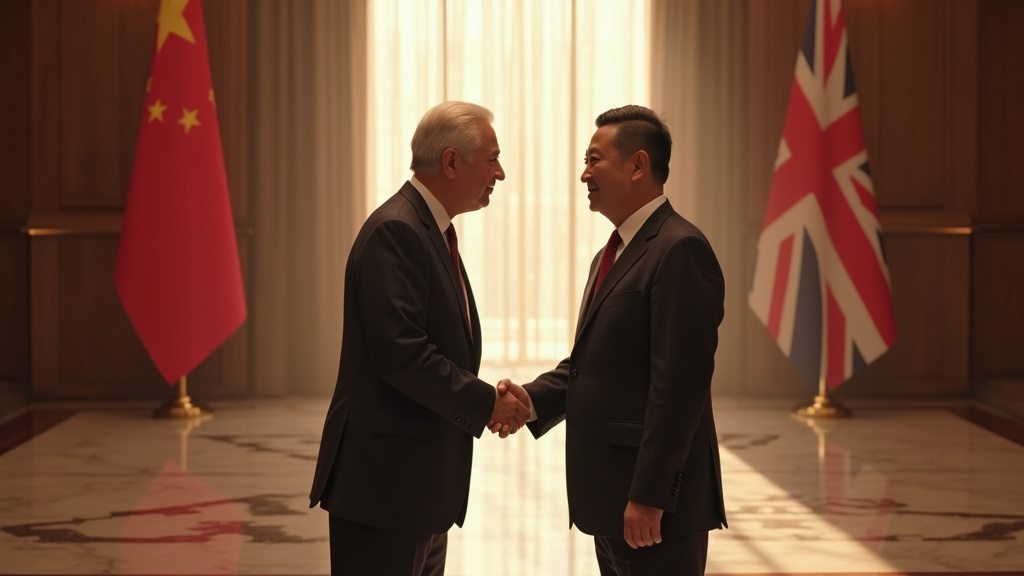
China Lauds Nations Blocking Taiwan President’s Flight

April 22, 20260
Load more
Read also
Sound & Screen

RAYE & Niall Horan Lead Massive Capital Summertime Ball 2026

April 28, 20260
Headlines

Chicago Breaks Ground on $5.7B Red Line Extension: A New Era for Transit Equity

April 28, 20260
Featured

O’Hare Gridlock: 1,228 Flights Delayed in 2026’s Worst Day

April 28, 20260
Sports

Murakami’s 3-Run Blast Powers White Sox Past Angels

April 28, 20260
Sip & Savor

FashionBar Chicago Champions Trans Visibility on Runway

April 28, 20260
Style & Innovation

Stop AI Agent Sprawl: Gartner’s 6-Step Enterprise Guide

April 28, 20260
Load more
Recent Posts
  • RAYE & Niall Horan Lead Massive Capital Summertime Ball 2026 April 28, 2026
  • Chicago Breaks Ground on $5.7B Red Line Extension: A New Era for Transit Equity April 28, 2026
  • O’Hare Gridlock: 1,228 Flights Delayed in 2026’s Worst Day April 28, 2026
  • Murakami’s 3-Run Blast Powers White Sox Past Angels April 28, 2026
  • FashionBar Chicago Champions Trans Visibility on Runway April 28, 2026

    # TRENDING

    chicago20252026aiFashionStreamingreviewaccountabilityinnovationfundingfestivalmusicnetflixalbumculinaryactionacquisitionnascarhululineup
    © 2024 All Rights Reserved by Chicago Today
    • Contact
    • Cookie Policy
    • Privacy Policy
    chiago today lower txt logo colroed and finished wbg
    Manage Consent
    To provide the best experiences, we use technologies like cookies to store and/or access device information. Consenting to these technologies will allow us to process data such as browsing behavior or unique IDs on this site. Not consenting or withdrawing consent, may adversely affect certain features and functions.
    Functional Always active
    The technical storage or access is strictly necessary for the legitimate purpose of enabling the use of a specific service explicitly requested by the subscriber or user, or for the sole purpose of carrying out the transmission of a communication over an electronic communications network.
    Preferences
    The technical storage or access is necessary for the legitimate purpose of storing preferences that are not requested by the subscriber or user.
    Statistics
    The technical storage or access that is used exclusively for statistical purposes. The technical storage or access that is used exclusively for anonymous statistical purposes. Without a subpoena, voluntary compliance on the part of your Internet Service Provider, or additional records from a third party, information stored or retrieved for this purpose alone cannot usually be used to identify you.
    Marketing
    The technical storage or access is required to create user profiles to send advertising, or to track the user on a website or across several websites for similar marketing purposes.
    • Manage options
    • Manage services
    • Manage {vendor_count} vendors
    • Read more about these purposes
    View preferences
    • {title}
    • {title}
    • {title}