The Middle East faces a precarious escalation as the Iranian military publicly claimed to have targeted vital U.S. military installations, specifically the Al Azraq Air Base in Jordan and the Sheikh Isa Air Base in Bahrain. This aggressive maneuver, which comes amid an intensive 11-day U.S. air campaign against Iranian-aligned assets, marks a significant shift in the operational parameters of regional conflict. Jordan’s swift confirmation that its air defense systems successfully intercepted four Iranian missiles provides a concrete timeline for the escalation, signaling that the ongoing hostilities are no longer contained to proxy skirmishes but have evolved into direct confrontations involving sovereign regional allies.
Key Highlights
- Iran’s military claims successful targeting of U.S. assets at Jordan’s Al Azraq and Bahrain’s Sheikh Isa air bases.
- The Jordanian military confirmed the interception of four inbound Iranian missiles, highlighting robust regional air defense capabilities.
- The incident represents a major escalation following an 11-day U.S. air campaign against Iranian targets.
- Analysts warn that the involvement of base facilities in Jordan and Bahrain increases the risk of broader regional entanglement.
The Anatomy of a Regional Escalation
The declaration by the Iranian military is more than a rhetorical threat; it represents a tactical evolution in the ongoing regional standoff. For nearly two weeks, U.S. forces have been engaged in an intensive air campaign designed to degrade the operational capacity of Iranian-backed militant groups and their supply chains. The counter-claims from Tehran suggesting strikes on Al Azraq and Sheikh Isa suggest a concerted effort to demonstrate retaliation capability against the U.S. Central Command’s (CENTCOM) regional architecture.
Strategic Vulnerability: Al Azraq and Sheikh Isa
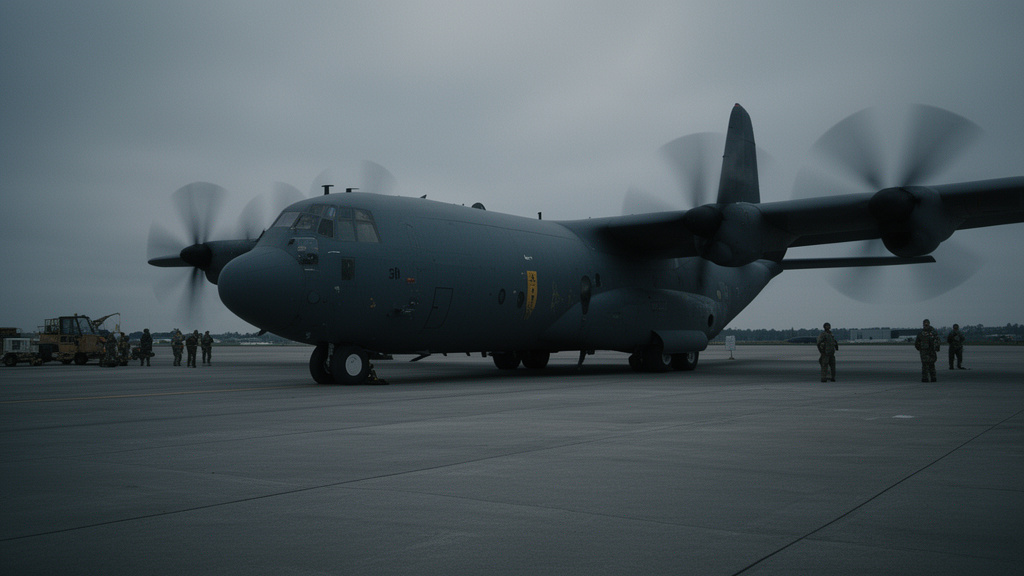
The targeting of these specific locations is not coincidental. Al Azraq Air Base in Jordan has long served as a pivotal hub for U.S. operations, including intelligence, surveillance, and reconnaissance (ISR) flights, as well as logistical support for coalition forces. Its position allows for rapid deployment and oversight of airspace spanning Syria and Iraq. Similarly, Sheikh Isa Air Base in Bahrain is a critical node for the U.S. Navy and Air Force, housing assets that support maritime security patrols in the Persian Gulf and the Arabian Sea. By targeting these facilities, the Iranian military is attempting to project force against the physical infrastructure that sustains the U.S. presence in the Gulf Cooperation Council (GCC) countries.
The Interception and Regional Defense



Jordan’s acknowledgment of the interception is a crucial data point. It confirms that the Iranian missiles were active threats that required kinetic neutralization. The Jordanian Armed Forces’ integration of Patriot missile batteries and advanced radar networks proved capable of tracking and destroying the four inbound projectiles. This successful interception underscores the efficacy of the integrated air and missile defense (IAMD) architecture that the U.S. has been building with regional partners for over a decade. It also puts neighboring states on high alert; the ability of Iranian ballistic or cruise missiles to reach deep into Jordanian territory forces a re-evaluation of defense postures across the Levant.
The 11-Day Campaign Context
The current atmosphere of heightened alert is the culmination of an 11-day U.S. air campaign. This sustained effort has targeted command-and-control centers, weapons caches, and assembly points associated with the Islamic Revolutionary Guard Corps (IRGC) and its affiliates. As these strikes have grown in frequency and precision, the pressure on Tehran to respond in a way that preserves its domestic political narrative while avoiding an all-out war has intensified. The decision to attempt strikes on U.S.-occupied bases—even if they were ultimately intercepted—serves as a high-stakes move to maintain a stance of ‘deterrence’ against U.S. operations.
Future Implications and Geopolitical Fallout
This development introduces significant volatility. If these attacks continue, the threshold for a wider, more kinetic regional war drops significantly. The involvement of Jordan, a key U.S. partner that maintains delicate diplomatic channels with both the West and its neighbors, is particularly concerning. Increased frequency of such attacks may compel the U.S. to authorize more aggressive defensive operations, potentially leading to a cycle of escalation that the region can ill afford. Furthermore, the reliance on advanced interceptor technology—which is expensive and difficult to replenish—puts long-term strategic strain on regional military inventories. As the international community watches, the primary concern remains whether backchannel diplomacy can cool the rhetoric before these missile exchanges escalate into unavoidable direct conflict.
FAQ: People Also Ask
Q: What is the significance of the Al Azraq Air Base?
A: Located in Jordan, Al Azraq is a crucial logistics and air operations hub for U.S. forces, facilitating regional surveillance and rapid response capabilities across the Levant and Iraq theaters.
Q: Why was the interception of four missiles in Jordan critical?
A: The successful interception confirms that Iran’s missile capabilities are posing a direct threat to U.S. allies in the region, testing the integrated air defense systems that the U.S. and its partners have spent years developing.
Q: What are the risks of targeting Sheikh Isa Air Base in Bahrain?
A: Sheikh Isa hosts critical U.S. Navy and Air Force infrastructure. Targeting it escalates the conflict from regional proxy fighting to a direct confrontation involving U.S. sovereign military assets, significantly increasing the risk of a wider regional war.
Q: How does this fit into the 11-day U.S. air campaign?
A: The 11-day campaign has involved sustained U.S. strikes against Iranian-backed infrastructure. The alleged missile strikes from Iran are widely viewed by analysts as a retaliatory attempt to push back against this U.S. operational pressure.