The U.S. military is reportedly evaluating the potential tactical deployment of the GBU-43/B Massive Ordnance Air Blast (MOAB) bomb against Iranian energy and nuclear infrastructure, should President Donald Trump authorize a return to active combat operations. This assessment represents a significant escalation in strategic planning, shifting from conventional precision strikes to the consideration of the most powerful non-nuclear weapon in the U.S. arsenal. As tensions in the Middle East reach a critical inflection point, the mention of this specific munition—infamously dubbed the ‘Mother of All Bombs’—signals a deliberate shift in psychological and kinetic posturing by the U.S. Department of Defense.
The GBU-43/B Massive Ordnance Air Blast: Tactical Capabilities and Strategic Implications
Understanding the Ordnance
The GBU-43/B Massive Ordnance Air Blast (MOAB) is a thermobaric, GPS-guided munition that weighs approximately 21,600 pounds (9,800 kg). It is delivered not by a fighter jet, but by a C-130 Hercules transport aircraft due to its immense size and weight. Unlike a standard bunker-buster, which relies on kinetic penetration, the MOAB creates a massive blast wave, intended to destroy surface targets, clear minefields, and collapse tunnels over a vast area. Its primary utility has historically been psychological warfare and area denial. In 2017, the U.S. military utilized the MOAB against Islamic State tunnel complexes in Nangarhar Province, Afghanistan. Its potential application against Iranian sites—many of which are hardened or subterranean—raises significant questions about tactical efficacy. Military analysts point out that while the MOAB is devastating, it is not a direct substitute for the GBU-57 Massive Ordnance Penetrator (MOP), which is specifically designed to breach reinforced concrete deep underground, the type often associated with Iran’s nuclear program.
The Strategic Pivot: Energy and Nuclear Sites
The reported consideration of such high-yield ordnance targets the nerve center of Iran’s economy and its controversial nuclear program. By targeting energy facilities—specifically oil refineries and terminals—the U.S. could theoretically inflict immediate and debilitating economic damage, creating a bottleneck that would restrict Iran’s capacity to fund its regional proxies and sustain its military apparatus. However, the decision to use a weapon as visible and destructive as the MOAB suggests a secondary strategic objective: signaling. The mere presence of such a capability in the theater of operations serves as a potent deterrent, forcing Iranian leadership to calculate the existential risk of continuing their current policies.
Iran’s Defiant Posture
Despite the overt warnings from Washington, Iranian officials have remained steadfast, vowing to fight on. The Islamic Revolutionary Guard Corps (IRGC) continues to project strength, conducting military exercises and maintaining its forward-deployed network of proxies. The leadership in Tehran has framed the U.S. threats as acts of desperation rather than legitimate strategic intent. This refusal to back down creates a volatile feedback loop: the more the U.S. signals a willingness to use overwhelming force, the more Iran doubles down on its defensive and retaliatory capabilities, increasing the likelihood of miscalculation.
Secondary Angles: Exploring the Complexity of the Conflict


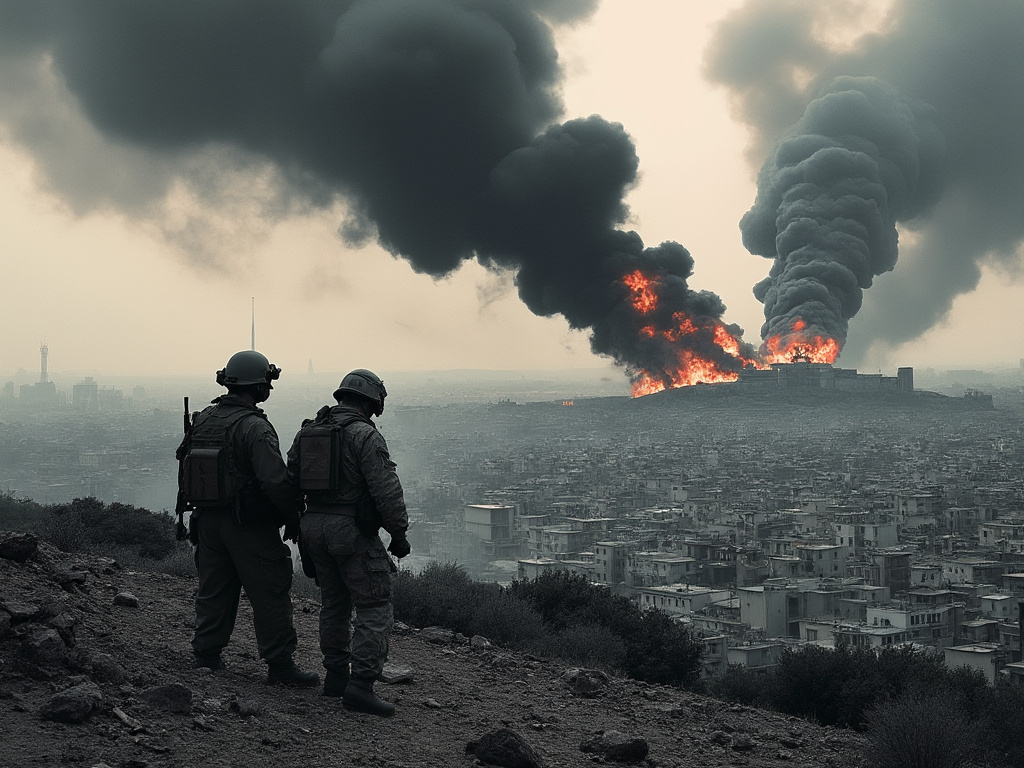

1. The Psychological Deterrence Factor: Beyond the physical destruction, the strategic value of the MOAB lies in its name and reputation. By utilizing a weapon that is universally recognized by its ominous moniker, the U.S. aims to influence the decision-making calculus in Tehran, forcing a reconsideration of their nuclear ambitions without firing a single shot.
2. The Humanitarian and Environmental Cost: Any strike using a MOAB, particularly in or near industrial energy sites, would likely result in catastrophic environmental consequences, including massive oil spills and toxic fires. This angle adds a layer of international legal and humanitarian complexity that would likely complicate any U.S. coalition-building efforts.
3. The Limits of Air Power: The potential deployment highlights the broader debate regarding the efficacy of air power alone in achieving geopolitical goals. While the MOAB can destroy surface infrastructure, history has shown that such actions rarely induce regime change or force a permanent policy shift in states with the ideological cohesion of the current Iranian administration. Reliance on high-impact munitions may address short-term tactical objectives while failing to solve the long-term political impasse.
FAQ: People Also Ask
What is the primary difference between a MOAB and a standard bunker-buster?
The MOAB (GBU-43/B) is designed for area destruction via a massive blast wave and is best used against surface-level targets or tunnel complexes. A bunker-buster, such as the GBU-57 MOP, is designed with a hardened casing and rocket-assisted propulsion to penetrate deep into reinforced underground facilities before detonating.
Why would the U.S. use the MOAB against Iran?
The U.S. considers the MOAB as both a tactical tool and a strategic signaling device. It aims to degrade critical infrastructure—such as energy terminals—while simultaneously demonstrating an overwhelming level of force intended to force Iran to negotiate or alter its military strategy.
Is the MOAB a nuclear weapon?
No. The GBU-43/B is a conventional, high-explosive weapon. Despite its immense power, it does not involve any radioactive material or nuclear fission/fusion processes.
How does Iran respond to these threats?
Iran maintains a policy of defiance, viewing threats of U.S. military force as psychological warfare. They typically respond by accelerating their own military preparations, utilizing proxies to conduct asymmetric warfare, and reinforcing their defensive posture around critical infrastructure sites.
What are the risks of using such a high-yield bomb?
The primary risks include significant collateral damage, severe environmental contamination, and the potential for rapid regional escalation. Using a weapon of this magnitude could provoke an all-out regional war, pulling in various proxy groups and potentially destabilizing the global energy market.