The Chicago Bears’ search for a new home has taken a dramatic, high-stakes turn with the emergence of a $10 billion master-planned proposal for the ‘Bronzeville Lakefront,’ situated on the historic site of the former Michael Reese Hospital. This ambitious project, spearheaded by the development consortium GRIT (Global Realty & Investment Team), pivots away from the controversial Arlington Park suburban option and the crowded Museum Campus proposal, offering a massive 49-acre tract of land that promises to reshape the city’s South Side while keeping the franchise within Chicago city limits.
Key Highlights
- Project Scope: A comprehensive $10 billion mixed-use development at the former Michael Reese Hospital site.
- Stadium Specifics: Plans feature a state-of-the-art, 75,000-seat domed stadium designed to accommodate year-round events.
- Strategic Location: The Bronzeville Lakefront site offers critical access to transit, lakefront connectivity, and significant room for ancillary commercial development.
- Economic Goal: The proposal is explicitly framed as an anchor to stimulate multi-billion dollar investment in the Bronzeville neighborhood, aiming to blend professional sports with community revitalization.
Redefining the Chicago Lakefront: The $10 Billion Gamble
The ongoing saga of the Chicago Bears’ stadium hunt has reached a fever pitch, and the Bronzeville Lakefront proposal—often colloquially referred to as the Michael Reese site project—is positioning itself as the most viable middle ground between suburban sprawl and urban density. By proposing a 75,000-seat domed stadium, developers are addressing the Bears’ primary requirement: a climate-controlled, year-round facility capable of hosting not just eight regular-season games, but Super Bowls, Final Fours, and major concerts that Soldier Field simply cannot support.
A 75,000-Seat Anchor for the South Side
At the heart of the $10 billion proposal is the stadium, which developers envision as a catalytic engine. Unlike the current cramped footprint of Soldier Field, which is physically constrained by historic preservation mandates and the surrounding parkland, the Bronzeville site allows for a massive, purpose-built entertainment district. A 75,000-seat capacity is the industry standard for hosting premier international events. By enclosing the stadium with a dome, the facility becomes a 365-day-a-year destination, shielding fans from the infamous Chicago winter and ensuring that the stadium becomes a profitable asset rather than an eight-day-a-year liability.
The Bronzeville Transformation

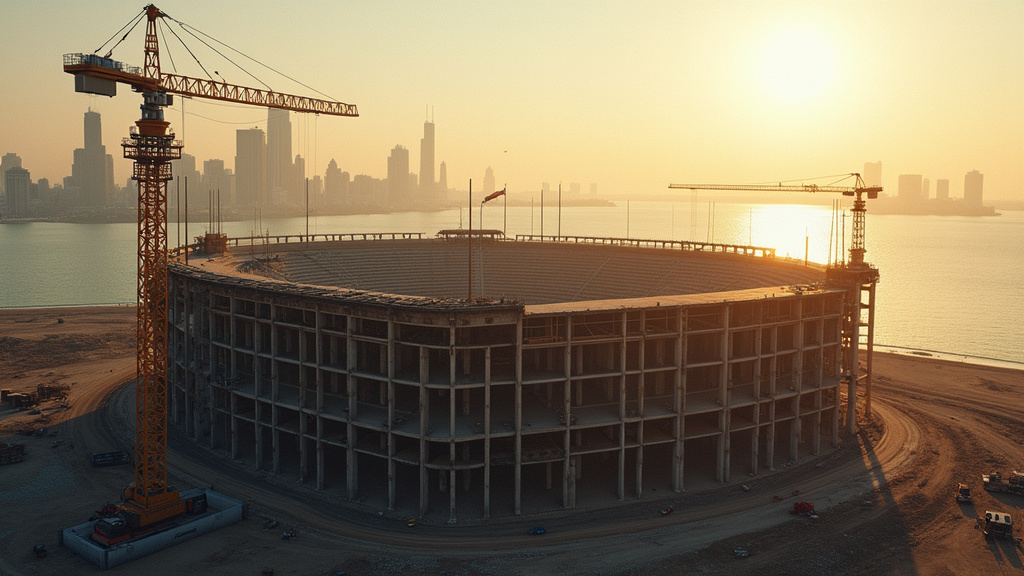

Beyond the turf, the developers are pitching a comprehensive urban master plan. The former Michael Reese site has been a “white whale” for Chicago developers for decades, a massive 49-acre void waiting for the right spark. This proposal suggests that the Bears are that spark. The integration of high-density residential housing, luxury retail, and tech-focused office space is intended to create a “15-minute neighborhood” where the stadium acts as the cultural hub. This is a critical distinction from the Arlington Park proposal, which was criticized for its isolation from the urban core. By centering the project in Bronzeville, the developers are leveraging the existing Metra and CTA infrastructure, aiming to create a sustainable, transit-oriented development (TOD) that appeals to the modern NFL fan experience.
Navigating the Political and Infrastructure Hurdles
While the financials appear substantial, the proposal faces the reality of Chicago’s complex political landscape. Securing public subsidies for a stadium in a climate of fiscal belt-tightening is a Herculean task. The developers must navigate zoning approvals, potential environmental remediation from the former hospital site, and the vocal opposition of groups wary of gentrification in the South Side. Furthermore, the infrastructure cost is not limited to the stadium; it includes significant investment in roadway reconfiguration and public transportation improvements to handle the surge capacity of 75,000 attendees. Unlike a suburban greenfield site, urban development in Bronzeville requires intricate coordination with city officials, the Chicago Park District, and potential state legislative partners.
Economic Ripples and Long-Term Stability
From an economic development perspective, the project aims to reverse decades of disinvestment in the surrounding area. The proponents argue that a $10 billion project would create thousands of permanent jobs, generate substantial tax revenue, and serve as a massive psychological win for the city’s ability to attract and retain major professional franchises. However, skeptics point to the “stadium subsidy” debate, questioning whether public money should be diverted toward a project that primarily benefits a private entity—the Bears organization—and its high-net-worth ownership group. The success of this proposal hinges on a unique public-private partnership (PPP) model that guarantees the community sees tangible benefits—affordable housing mandates, workforce development, and minority-owned business participation—that transcend the occasional Sunday game day.
FAQ: People Also Ask
1. Why is the Michael Reese site considered a top contender for the Bears?
The site offers a massive, contiguous 49-acre footprint close to downtown, which is rare in a dense city like Chicago. It allows for a new stadium plus massive mixed-use development, whereas the current Soldier Field site is extremely constrained.
2. Is this proposal officially backed by the Chicago Bears?
While developers have presented this proposal as a solution for the Bears, the team has not formally committed to the site. The Bears are still evaluating multiple options, including a new stadium near their current Soldier Field home and the potential for a suburban site.
3. How does the $10 billion figure break down?
This figure represents the total build-out of the entire Bronzeville Lakefront project over several years, not just the stadium. It includes the construction of the stadium, high-density residential towers, commercial office space, hotel infrastructure, and public park amenities.
4. What are the main obstacles to this development?
The primary hurdles include securing public funding for infrastructure, navigating city zoning requirements, addressing historical site remediation from the old hospital, and reaching a final agreement with the Chicago Bears organization regarding the stadium’s design and financing.