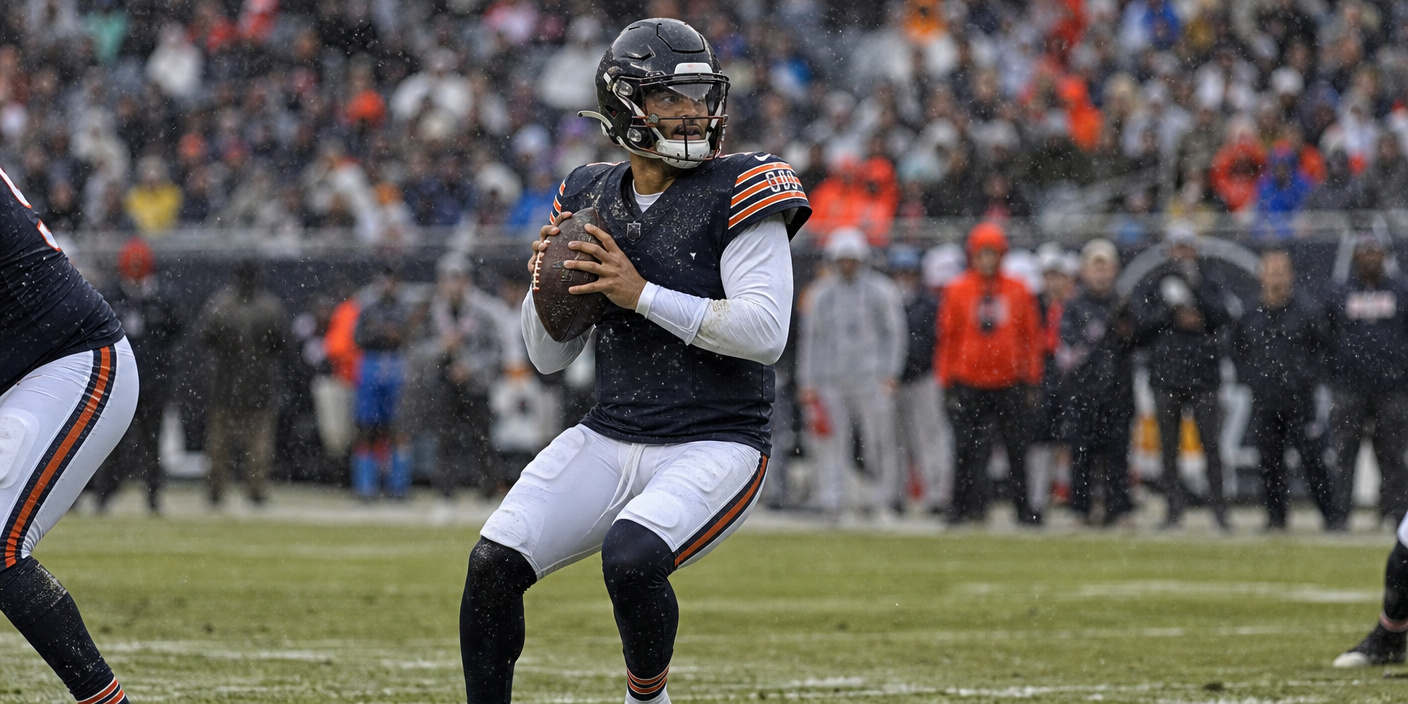
The Chicago Bears’ home opener was meant to be the dawn of a new era, but Mother Nature and a stifling Minnesota Vikings defense turned the highly anticipated debut into a defensive slog that ended in a 9-3 heartbreak. For fans who braved the driving rain at the stadium, the result was a sobering reminder of the volatility inherent in rebuilding a franchise. The game, which lacked a single touchdown, pivoted on a critical fourth-quarter moment when rookie sensation and star quarterback Caleb Williams was forced to the sidelines with a hamstring injury. As the Bears fall to 0-1, the organization now faces immediate questions regarding both the health of their franchise leader and the viability of their current offensive identity.
Key Highlights
- The Chicago Bears suffered a 9-3 loss to the Minnesota Vikings in a rain-soaked, defensive-dominated home opener.
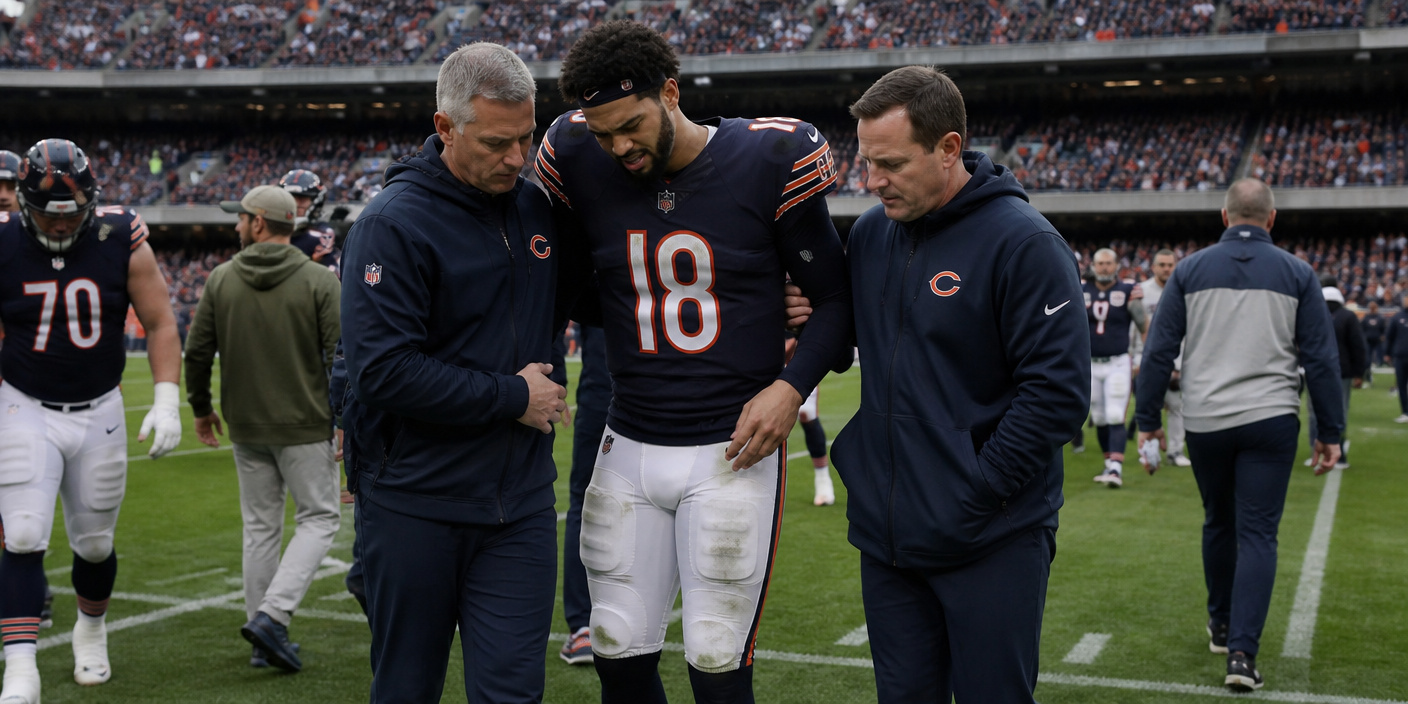
- Caleb Williams exited the game in the fourth quarter after sustaining a hamstring injury, casting a shadow over the team’s immediate future.
- The game was defined by offensive stagnation on both sides, with neither team finding the end zone throughout four quarters of play.
- Despite the loss, analysts point to defensive resilience as a silver lining, though the focus remains squarely on the quarterback’s recovery timeline.
A Rainy Reality Check: Assessing the Bears’ Offensive Identity
The 9-3 scoreline tells a story of weather-affected futility, but for the Bears, it represents a deeper, more systemic issue that the team hoped to have solved in the offseason. Under heavy, unrelenting rain, both the Chicago and Minnesota offenses struggled to establish a rhythm. Field conditions, combined with conservative play-calling, turned the game into a contest of field position and special teams prowess rather than a showcase of explosive offensive talent.
The Caleb Williams Factor



The most concerning development of the afternoon was undoubtedly the health of Caleb Williams. Entering the season as the centerpiece of the franchise’s ambitious rebuild, Williams has been tasked with stabilizing a position that has been a historical sore spot for the Chicago Bears. His fourth-quarter departure due to a hamstring injury is not merely a personnel issue; it is a psychological blow to a fanbase that has been starving for long-term consistency. Hamstring injuries for quarterbacks are notoriously tricky; they affect mobility, throwing mechanics, and the ability to extend plays—all of which are key tenets of Williams’ playstyle. Medical experts suggest that while minor strains can heal within weeks, the team’s handling of his return will be the most significant decision the coaching staff makes in the early 2024 season. Rushing a franchise quarterback back too soon could have catastrophic implications for his development and long-term durability.
Defensive Resilience vs. Offensive Stagnation
While the offense faltered, the Bears’ defense provided a glimmer of competence that suggests the team isn’t entirely without direction. Holding the Vikings to a single-digit score is no small feat in the modern NFL, where high-scoring affairs are the norm. The defensive line showed bursts of pressure, and the secondary held firm against a talented Minnesota receiving corps. However, defensive wins are only meaningful if the offense can capitalize on them. The inability of the Bears to sustain drives, convert on third downs, or find the end zone reflects a disconnect between the offensive scheme and the personnel on the field. Whether this was a byproduct of the weather or a deeper, structural failure remains to be seen in next week’s tape review.
The Path Forward: What Needs to Change?
As the Bears look toward their next matchup, the margin for error has effectively evaporated. The coaching staff faces immense pressure to simplify the scheme for Williams, assuming he returns quickly, or to formulate a contingency plan that doesn’t rely entirely on the mobility of their QB1. Furthermore, the reliance on field goals as the primary scoring method is unsustainable. The team must address their red-zone efficiency, which was non-existent during the Vikings game. For the Bears’ front office, the mandate is clear: protect the asset, improve the execution, and find a way to spark an offense that currently looks like it is still learning to walk.
FAQ: People Also Ask
Q: How serious is Caleb Williams’ hamstring injury?
A: While the team has characterized the injury as a strain, the severity will be determined by follow-up scans and how he responds to treatment throughout the week. Soft tissue injuries for mobile quarterbacks are monitored closely to prevent re-aggravation.
Q: Was the 9-3 score a result of the rain?
A: Weather was certainly a factor in the low scoring. The rain made ball security difficult and forced both teams into conservative, run-heavy play-calling, which contributed to the absence of touchdowns.
Q: Does this loss end the Bears’ playoff hopes?
A: Absolutely not. A single loss in the opener, while disappointing, is not a season-ending event. However, it does highlight the need for immediate adjustments in offensive strategy and player health management.
Q: What is the main takeaway for the coaching staff?
A: The primary takeaway is the need for offensive consistency. The defense proved it can hang with league competitors, but the offense must demonstrate the ability to generate scoring drives, regardless of weather conditions or player health.