Skip to content
The Chicago Today
Quantum Aerospace
  • Home
  • Current News
  • Explore & Enjoy
  • Sports
  • Sound & Screen
  • Sip & Savor
  • Style & Innovation
  • Editors Take
Trending
July 23, 2026Netflix’s 300-Title AI Overhaul: The Future of Streaming July 22, 2026Chicago Gourmet 2026: The Culinary Event of the Year Returns July 22, 2026Chicago’s Final 2026 Business Expo: Soul & Smoke Takes Stage July 22, 2026Project Hail Mary Hits Amazon Prime Video This Weekend July 22, 2026Harry Styles Tour Update: Inside the Latest Cancellation July 22, 2026Chicago’s Crime Paradox: Perception vs. Proven Data July 22, 2026Iran Escalates: U.S. Bases in Jordan, Bahrain Targeted July 21, 2026Chicago’s 25th District Council Names 3 Finalists to Fill Vacancy July 21, 2026Climate Vanguard: Aspen Institute Summit Charts Future in Chicago July 20, 2026Chicago Climate Week: City Prepares for First Convergence
The Chicago Today
The Chicago Today
  • Home
  • Current News
  • Explore & Enjoy
  • Sports
  • Sound & Screen
  • Sip & Savor
  • Style & Innovation
  • Editors Take
  • Blog
  • Forums
  • Shop
  • Contact
The Chicago Today
  Style & Innovation  Netflix’s 300-Title AI Overhaul: The Future of Streaming
Style & Innovation

Netflix’s 300-Title AI Overhaul: The Future of Streaming

Felicia HolmesFelicia Holmes—July 23, 20260
FacebookX TwitterPinterestLinkedInTumblrRedditVKWhatsAppEmail

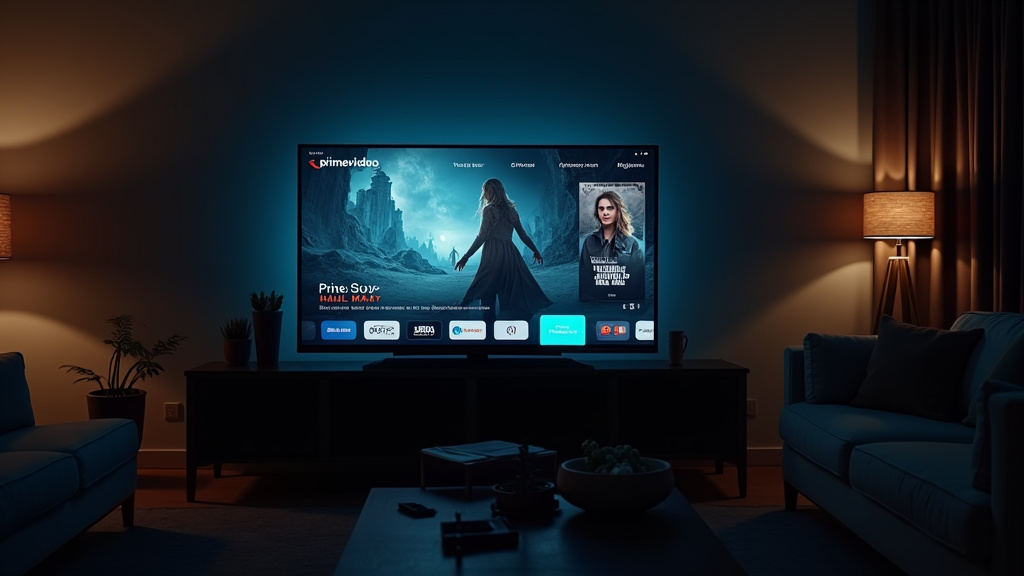
In a pivotal expansion of its technological capabilities, Netflix has officially integrated Generative AI tools into 300 titles throughout 2026. This move signals a significant shift in how the world’s leading streaming platform manages content discovery, audience engagement, and production quality. By leveraging these advanced models, Netflix is moving beyond simple recommendation algorithms, entering a phase where the platform actively participates in the refinement and discovery of its massive library. This strategic implementation touches every corner of the user experience, from the way subtitles are generated and voice search operates, to the visual fidelity of the content itself.

Key Highlights

  • Netflix deployed Generative AI tools across 300 unique titles in 2026.
  • Core functions include advanced voice search, hyper-personalized title discovery, and footage enhancement.
  • The documentary series ‘The American Experiment’ features 17 minutes of AI-enhanced content.
  • The shift represents a move from passive content delivery to active, AI-assisted content optimization.
  • Industry analysts view this as a primary catalyst for potential cost reductions in post-production workflows.

The Algorithmic Evolution: Netflix’s Scale-Up of GenAI

For years, Netflix has been synonymous with the ‘recommendation engine,’ a sophisticated piece of code that predicts what viewers want to watch next. In 2026, that relationship has changed. The company has evolved from merely suggesting content to fundamentally altering the consumption and creation pipeline. By integrating Generative AI across 300 titles this year, Netflix is not just optimizing the ‘what’ of streaming, but the ‘how.’

This deployment is not a singular, monolithic update. Instead, it is a distributed integration of Large Language Models (LLMs) and vision-processing AI designed to solve three distinct friction points: the discoverability of niche content, the efficacy of voice-activated search, and the aesthetic preservation of archive footage. As users engage with the platform, the underlying AI models are constantly iterating, learning from metadata, audio-visual patterns, and viewer behavior to create a more ‘concierge-like’ experience. For the average subscriber, this means the platform now understands nuanced requests—such as ‘find me a show about 1990s cyberpunk that has a dark, rain-soaked aesthetic’—with a level of precision that was previously impossible. This is not just a search improvement; it is a fundamental restructuring of the streaming interface into a conversational, responsive environment.

Inside ‘The American Experiment’: The Human-AI Hybrid

Perhaps the most concrete example of this technology in practice is the documentary series ‘The American Experiment.’ Netflix has confirmed that the series incorporates 17 minutes of AI-enhanced footage, setting a new industry benchmark for documentary post-production. The use of GenAI here was not for generating fake content, but for technical restoration and stylistic augmentation. The AI tools were employed to clean up archival footage, upscale lower-resolution historical clips to 4K parity, and color-correct inconsistent lighting across decades of source material.


More stories
Potato Chip Couture Steals James Beard Awards Red Carpet Spotlight

Potato Chip Couture Steals James Beard Awards Red Carpet Spotlight

June 19, 2025

Chicago to Host Multifaceted ‘Women in Peace & Music’ Event Featuring Fashion Show, Book Launch, and Pageant

September 13, 2025

Google Builds Data Hub in Sweden

June 2, 2026
Chicago Runway Redefines Beauty: Model Icon Fashion Show & MRI Pageant Champion Diversity

Chicago Runway Redefines Beauty: Model Icon Fashion Show & MRI Pageant Champion Diversity

June 28, 2025

This creates an interesting narrative about the relationship between human creators and automated tools. The filmmakers behind ‘The American Experiment’ reportedly used these AI enhancements to create a seamless visual experience, ensuring that the transition from a 1970s home video clip to a modern-day interview feels cohesive rather than jarring. This application provides a glimpse into the future of documentary filmmaking: a collaborative process where the filmmaker directs the intent, and the AI handles the granular technical labor. This ‘human-in-the-loop’ approach is key to Netflix’s strategy, aiming to mitigate concerns regarding authenticity while maximizing production value.

Navigating the Ethics of Automated Entertainment

While the technological advancements are undeniable, they arrive amidst a complex backdrop of industry ethics and creative labor concerns. The integration of GenAI in 300 titles naturally raises questions about the future of traditional post-production jobs. If an AI can color-correct, upscale, and stabilize footage in a fraction of the time it takes a human editor, the economic equation of content creation shifts dramatically. However, Netflix’s current approach, focused on ‘enhancement’ rather than ‘creation,’ appears designed to appease these concerns while capturing the benefits of efficiency.

Beyond labor, there is the question of data and privacy. As Netflix’s AI models ingest more data to refine voice search and discovery, the platform is accumulating a massive repository of user intent. The company faces the challenge of utilizing this ‘interest graph’ to improve personalization without violating user trust or transparency. The success of this 300-title rollout serves as a bellwether for the rest of the entertainment industry. If Netflix can prove that GenAI enhances viewer satisfaction without alienating the creative community, it will likely trigger a gold rush of adoption across other major streaming platforms, effectively making AI a standard utility in the Hollywood post-production pipeline by the end of the decade.

FAQ: People Also Ask

Q: Is Netflix using Generative AI to write scripts for these 300 titles?
A: No. Based on current reporting, the integration is focused on technical tasks like voice search optimization, content discovery, and footage enhancement, rather than scriptwriting or creative content generation.

Q: What specifically did the AI do in ‘The American Experiment’?
A: The AI was utilized for technical post-production tasks, specifically upscaling, color correction, and cleaning up 17 minutes of archival footage to ensure visual consistency with modern, high-definition captures.

Q: How does this affect the user interface of Netflix?
A: Users will likely notice a more responsive voice search and more accurate content categorization. The goal is to make the library easier to navigate and the ‘suggested for you’ categories more specific to complex user tastes.

Q: Are these 300 titles permanently altered?
A: The enhancements are integrated into the deliverable files on the platform. The goal is to improve the viewing experience for the subscriber, ensuring consistent visual and functional quality across the catalog.

Q: What are the economic implications for editors?
A: By automating time-intensive tasks like upscaling and basic color matching, these tools allow human editors to focus on higher-level creative editing and narrative structure, though it marks a significant shift in technical production roles.

Related coverage

  • Japan Bets Big on AI Robots: Fujitsu Leads Charge
  • Intel’s 18A Leap: Foundry Boom & AI Surge
  • Bianco Evento Unveils 2027 Bridal Collection in Chicago
author avatar
Felicia Holmes
Felicia Holmes is a seasoned entertainment journalist who shines a spotlight on emerging talent, award-winning productions, and pop culture trends. Her work has appeared in a range of outlets—from established trade publications to influential online magazines—earning her a reputation for thoughtful commentary and nuanced storytelling. When she’s not interviewing Hollywood insiders or reviewing the latest streaming sensations, Felicia enjoys discovering local art scenes and sharing candid behind-the-scenes anecdotes with her readers. Connect with her on social media for timely updates and industry insights.
See Full Bio
FacebookX TwitterPinterestLinkedInTumblrRedditVKWhatsAppEmail

Felicia Holmes

Felicia Holmes is a seasoned entertainment journalist who shines a spotlight on emerging talent, award-winning productions, and pop culture trends. Her work has appeared in a range of outlets—from established trade publications to influential online magazines—earning her a reputation for thoughtful commentary and nuanced storytelling. When she’s not interviewing Hollywood insiders or reviewing the latest streaming sensations, Felicia enjoys discovering local art scenes and sharing candid behind-the-scenes anecdotes with her readers. Connect with her on social media for timely updates and industry insights.

Chicago Gourmet 2026: The Culinary Event of the Year Returns
Related posts
  • Related posts
  • More from author
Japan Bets Big on AI Robots: Fujitsu Leads Charge
Style & Innovation

Japan Bets Big on AI Robots: Fujitsu Leads Charge

July 16, 20260
Intel’s 18A Leap: Foundry Boom & AI Surge
Style & Innovation

Intel’s 18A Leap: Foundry Boom & AI Surge

July 15, 20260
Bianco Evento Unveils 2027 Bridal Collection in Chicago
Style & Innovation

Bianco Evento Unveils 2027 Bridal Collection in Chicago

July 13, 20260
Load more
Read also
Sip & Savor

Chicago Gourmet 2026: The Culinary Event of the Year Returns

July 22, 20260
Sip & Savor

Chicago’s Final 2026 Business Expo: Soul & Smoke Takes Stage

July 22, 20260
Sound & Screen

Project Hail Mary Hits Amazon Prime Video This Weekend

July 22, 20260
Sound & Screen

Harry Styles Tour Update: Inside the Latest Cancellation

July 22, 20260
Featured

Chicago’s Crime Paradox: Perception vs. Proven Data

July 22, 20260
Current News

Iran Escalates: U.S. Bases in Jordan, Bahrain Targeted

July 22, 20260
Load more
Recent Posts
  • Netflix’s 300-Title AI Overhaul: The Future of Streaming July 23, 2026
  • Chicago Gourmet 2026: The Culinary Event of the Year Returns July 22, 2026
  • Chicago’s Final 2026 Business Expo: Soul & Smoke Takes Stage July 22, 2026
  • Project Hail Mary Hits Amazon Prime Video This Weekend July 22, 2026
  • Harry Styles Tour Update: Inside the Latest Cancellation July 22, 2026

    # TRENDING

    chicago20252026aiFashionStreamingreviewaccountabilityinnovationfundingfestivalmusicnetflixalbumculinaryactionacquisitionnascarhululineup
    © 2024 All Rights Reserved by Chicago Today
    • Contact
    • Cookie Policy
    • Privacy Policy
    The Chicago Today
    Manage Consent
    To provide the best experiences, we use technologies like cookies to store and/or access device information. Consenting to these technologies will allow us to process data such as browsing behavior or unique IDs on this site. Not consenting or withdrawing consent, may adversely affect certain features and functions.
    Functional Always active
    The technical storage or access is strictly necessary for the legitimate purpose of enabling the use of a specific service explicitly requested by the subscriber or user, or for the sole purpose of carrying out the transmission of a communication over an electronic communications network.
    Preferences
    The technical storage or access is necessary for the legitimate purpose of storing preferences that are not requested by the subscriber or user.
    Statistics
    The technical storage or access that is used exclusively for statistical purposes. The technical storage or access that is used exclusively for anonymous statistical purposes. Without a subpoena, voluntary compliance on the part of your Internet Service Provider, or additional records from a third party, information stored or retrieved for this purpose alone cannot usually be used to identify you.
    Marketing
    The technical storage or access is required to create user profiles to send advertising, or to track the user on a website or across several websites for similar marketing purposes.
    • Manage options
    • Manage services
    • Manage {vendor_count} vendors
    • Read more about these purposes
    View preferences
    • {title}
    • {title}
    • {title}