The NFL season is currently testing the depth and resilience of franchises across the league as high-impact injuries continue to reshape coaching strategies and team dynamics in real-time. This week, the narrative centers on a significant setback for the Chicago Bears, who are now navigating the loss of a pivotal defensive playmaker, contrasting sharply with the return of Philadelphia Eagles star wide receiver A.J. Brown, who has demonstrated exceptional durability and performance despite lingering health concerns. These parallel stories highlight the thin margin between a championship run and a personnel crisis in modern professional football.
Key Highlights
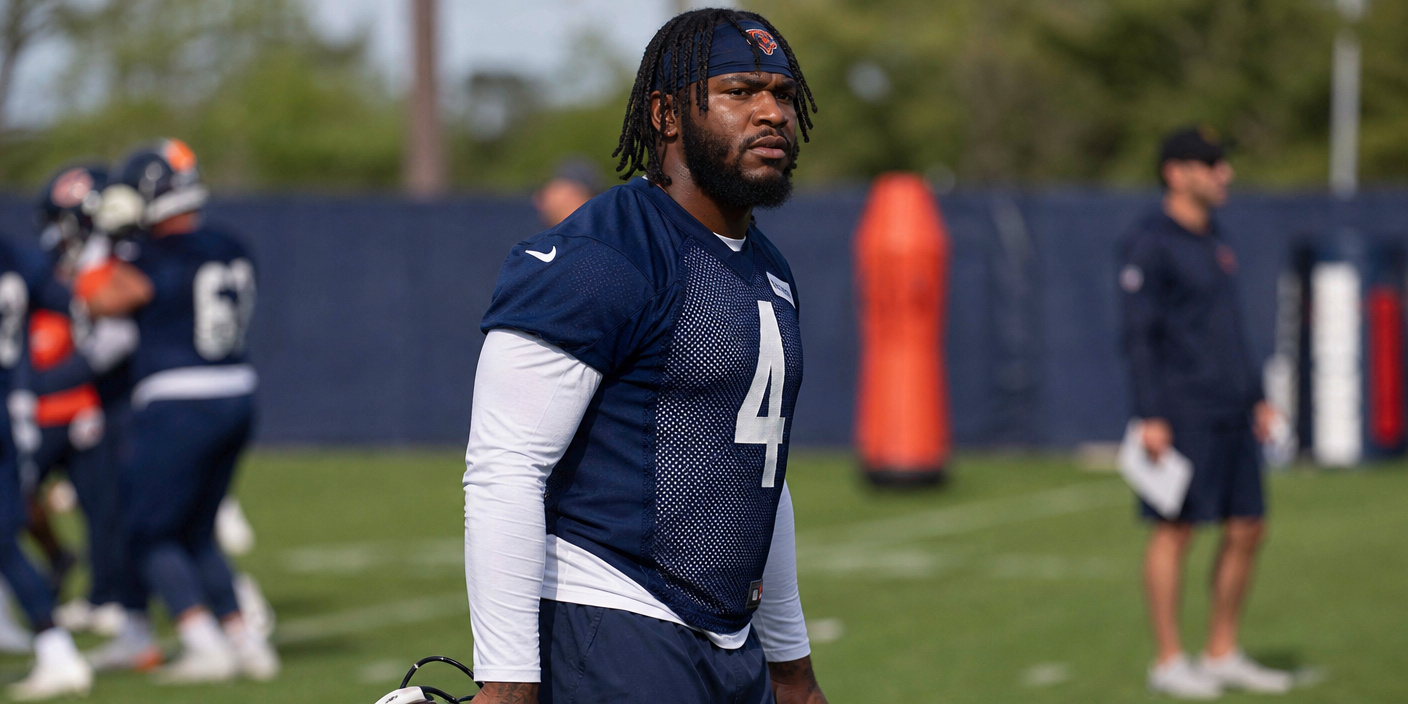
- Chicago Bears Personnel Loss: The Bears are officially without starting safety Jaquan Brisker, who has been ruled out for multiple weeks following a concussion sustained during Monday’s practice, forcing a major schematic shift.
- A.J. Brown’s Impact: Philadelphia’s WR1, A.J. Brown, continues to produce elite-level statistics despite managing a significant hamstring injury, underscoring his value to the Eagles’ offensive scheme.
- Defensive Reorganization: The Bears’ coaching staff must now rely on depth chart adjustments to maintain their secondary’s effectiveness without Brisker’s aggressive coverage and tackling abilities.
- Injury Management: These developments reflect the broader NFL challenge of balancing player health with the intense, weekly demands of the regular season, particularly as the mid-season point approaches.
Gridiron Resilience: Navigating the NFL’s Injury Landscape
The nature of the NFL is inherently attrition-based, but when key personnel are removed from the active roster, the ripple effects are felt instantly across team performance metrics and betting markets alike. The current situation involving the Chicago Bears and the Philadelphia Eagles serves as a case study in how different roles and units within an NFL organization must adapt when star players are compromised.
The Secondary Crisis: What Losing Brisker Means for Chicago
The loss of Jaquan Brisker is not merely a personnel issue; it is a fundamental shift in the Bears’ defensive identity. Brisker has established himself as one of the most versatile and physical safeties in the league, functioning as a hybrid player who can blitz effectively while dropping into deep coverage. For head coach Matt Eberflus, the absence of such a dynamic player forces a contraction of the defensive playbook.
Without Brisker, the Bears must now lean on rotational players to plug the gap. This adjustment often leads to ‘schematic simplification,’ where the defense plays more ‘vanilla’ coverages to accommodate the inexperience of replacement players. Opposing quarterbacks will likely look to exploit this shift, specifically attacking the vacated space in the intermediate middle of the field where Brisker often patrolled. The coaching staff is now under significant pressure to create a scheme that protects the secondary while still maintaining the aggressive turnover-generation mentality that has defined the unit this season.
A.J. Brown’s Masterclass: Playing Through Pain
While the Bears deal with a total absence, the Philadelphia Eagles are managing a ‘productive injury.’ A.J. Brown, dealing with a persistent hamstring issue, has remained a fixture in the Eagles’ passing attack. His ability to perform at a high level while clearly not at 100% health speaks to the evolution of modern sports science and the specific role of the ‘Alpha’ wide receiver in the Kellen Moore offensive system.
Brown’s performance through injury is not just a testament to his toughness; it is a tactical necessity for Philadelphia. When Brown is on the field, the defensive coverage shifts dramatically, often drawing double teams or safety help, which subsequently opens up lanes for DeVonta Smith and Dallas Goedert. His presence creates a ‘gravity’ that dictates the flow of the game, even if his explosiveness is slightly dampened. Managing this injury is a delicate balancing act for the Eagles’ medical staff, who must ensure that ‘playing through’ does not escalate into a long-term, season-ending soft tissue tear.
Strategic Adjustments: The Depth Chart Imperative
For any NFL team, the weeks surrounding these types of injuries are critical for depth assessment. The Chicago Bears’ front office is currently evaluating whether they have the internal personnel to cover the safety position adequately or if they must look to the waiver wire and practice squad to add veteran insurance.
This highlights a secondary angle: the economic and strategic value of the ‘next man up’ philosophy. Teams that invest heavily in depth—specifically in the secondary and the offensive line—are historically the ones that weather the late-season injury storm the best. The Bears are currently in a testing phase where the backups are forced into starter-level snaps, a scenario that often accelerates development but also increases the risk of defensive breakdowns during critical third-down situations.
Looking Ahead: The Statistical Reality
As the league enters the next phase of the schedule, the focus shifts to data-driven recovery timelines. Concussion protocols, such as those governing Brisker, are notoriously unpredictable. Unlike muscle strains, which have somewhat defined healing windows, neurological recovery is unique to the individual.
Conversely, hamstring injuries like the one affecting Brown often persist throughout a season, requiring specialized load management during the practice week. The Eagles have been praised for their ‘smart-loading’ approach, limiting Brown’s practice reps during the week to maximize his output on game days. This strategy represents a significant shift in how elite teams handle star athletes, prioritizing the ‘Sunday Product’ over the ‘Wednesday Reps.’
Ultimately, whether it is the defensive vulnerability in Chicago or the controlled performance in Philadelphia, these injuries demonstrate that an NFL team is only as strong as its ability to manage the physical limitations of its most valuable assets. The coming weeks will reveal which team has the better contingency plans and which medical units are most effective at managing the rigors of professional football.
FAQ: People Also Ask
Q: How does the NFL concussion protocol impact a player’s return timeline?
A: The NFL concussion protocol is a five-phase process. It involves a systematic increase in physical activity, from light aerobic exercise to team practice participation, monitored by independent neurological consultants. Because every brain heals differently, there is no set number of days a player must sit out, though players rarely return within the same week.
Q: How does A.J. Brown’s injury affect the Eagles’ offensive play-calling?
A: When Brown is limited, offensive coordinator Kellen Moore typically adjusts by utilizing more ’12 personnel’ (two tight ends) to maintain the running game and relying on shorter, high-percentage passing concepts to reduce the need for Brown to make explosive, high-stress cuts. This keeps him involved while reducing the risk of re-aggravation.
Q: Can the Bears elevate a replacement for the safety position immediately?
A: Yes, NFL teams have the flexibility to sign players from their practice squad to the active roster. Given the sudden nature of the injury to their starter, the Bears will likely evaluate practice squad safeties who are familiar with the defensive terminology, as they offer a faster ‘time-to-readiness’ than external free agents.
Q: Does playing through a hamstring injury usually lead to a worse outcome?
A: Yes, there is a cumulative risk. Soft tissue injuries have a high recurrence rate. If an athlete compensates for a bad hamstring by changing their gait or mechanics, it can often lead to secondary injuries in the calf, hip, or lower back, which is why medical staffs prefer to limit reps rather than risk a full-grade tear.