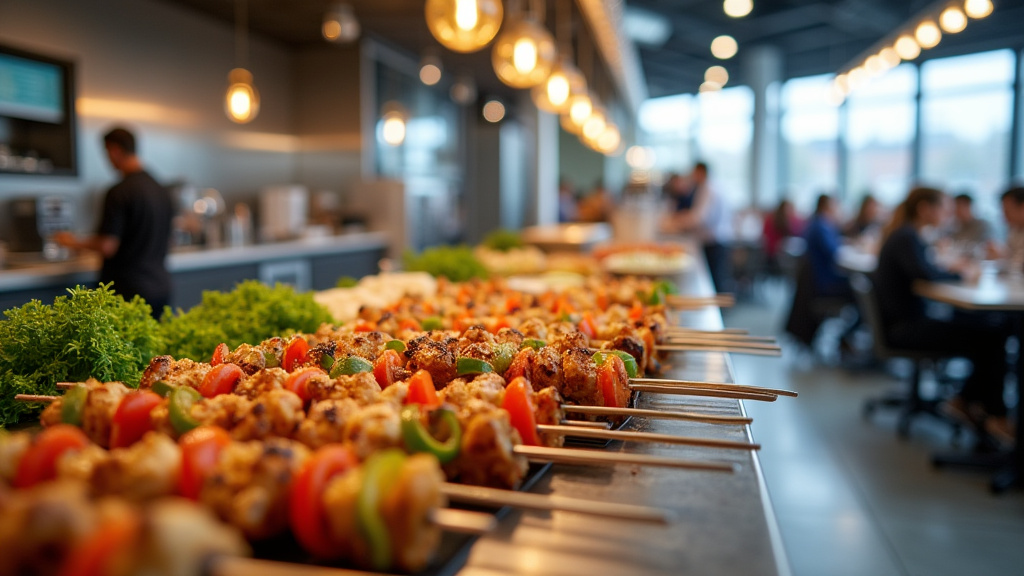
Starbird, the California-based, tech-forward fast-casual brand known for its “super-premium” crispy chicken, has officially marked its entry into the Midwest. The company will open its highly anticipated flagship location in St. Charles, Illinois, on October 19. This launch serves as the critical starting point for a broader regional expansion strategy, which includes plans for five total locations throughout the Chicago area in partnership with the Keystone Management Group.
Key Highlights
- Flagship Launch: The first Midwest Starbird location opens in St. Charles, Illinois, on October 19.
- Growth Trajectory: This location is the first of five planned restaurants across the greater Chicago metropolitan area.
- Strategic Partnership: The expansion is executed through a franchise agreement with Keystone Management Group.
- Brand Philosophy: Starbird differentiates itself through its “super-premium” fast-casual model, focusing on antibiotic-free, non-GMO fed poultry and tech-enabled convenience.
The Strategic Pivot: Starbird’s Midwest Ambitions
The decision to plant a flag in St. Charles is a calculated move for Starbird, a brand that has garnered a cult following on the West Coast by bridging the gap between traditional quick-service restaurants (QSR) and fast-casual dining. By selecting a suburban market like St. Charles for its debut, Starbird is positioning itself as a destination for families and commuters who are increasingly discerning about ingredient quality and dining convenience.
The Keystone Management Group Connection
Expansion into a market as competitive as Chicago requires more than just a strong product; it requires localized operational expertise. Starbird’s decision to partner with Keystone Management Group is fundamental to this rollout. Keystone brings deep familiarity with the regulatory, logistical, and consumer demands of the Illinois market. This partnership is designed to ensure that the operational rigor which made Starbird successful in California—specifically its focus on speed-of-service and high-end culinary standards—is maintained as the brand scales across state lines.
Redefining the ‘Super-Premium’ Fast-Casual Category
Starbird defines its offerings as “super-premium,” a label it backs up through its ingredient sourcing. The chain famously avoids the use of growth-promoting antibiotics and insists on chickens fed a non-GMO diet. In an era where consumers are increasingly skeptical of industrial food supply chains, this transparency serves as a core marketing pillar.



Technologically, the chain is built for the modern consumer. The St. Charles location will feature the company’s signature tech-forward infrastructure, which includes streamlined digital ordering systems and dedicated pickup lanes designed to maximize efficiency for both in-person dining and off-premise orders. This operational efficiency is not merely about convenience; it is a response to the post-pandemic reality where drive-thru and carry-out volume frequently rival, or even surpass, dine-in revenue.
Chicago as a Competitive Laboratory
Chicago, and specifically its sprawling suburban network, represents one of the most competitive restaurant markets in the United States. From established local giants like Portillo’s to national heavyweights like Shake Shack and Chick-fil-A, Starbird is entering a space with entrenched consumer loyalties. However, industry analysts note that there remains a persistent “quality gap” in the fast-casual poultry segment.
Starbird’s strategy likely hinges on occupying the space between standard fast-food quality and the higher price point of upscale, sit-down dining. By offering a “chef-inspired” menu that includes diverse flavors and creative salads alongside traditional tenders and sandwiches, they aim to attract the demographic that wants a quick meal without sacrificing dietary standards or flavor complexity.
Economic Implications of the 5-Store Rollout
The commitment to five locations in the Chicago area acts as a “hub and spoke” model for regional growth. By establishing a cluster of stores, Starbird and Keystone can consolidate supply chain costs, share labor resources, and create brand awareness through geographic density. This multi-unit approach also allows for more effective localized marketing efforts, ensuring that the brand becomes a staple in the suburban ecosystem rather than a singular, ephemeral novelty.
Furthermore, the entry of a West Coast player like Starbird signals continued investor confidence in the fast-casual sector, despite economic headwinds such as fluctuating commodity prices and labor market challenges. The ability to successfully launch in the Midwest will serve as a bellwether for the brand’s potential to expand into other major metropolitan markets across the United States.
FAQ: People Also Ask
Q: What makes Starbird different from other fast-casual chicken restaurants?
A: Starbird differentiates itself through its “super-premium” sourcing, specifically using antibiotic-free, non-GMO fed chicken. Their operational model is also highly tech-integrated, focusing on efficient digital ordering and high-speed off-premise service.
Q: How many locations are planned for the Chicago area?
A: The partnership between Starbird and Keystone Management Group includes plans for five locations in the Chicago metropolitan area, with St. Charles serving as the initial flagship.
Q: Who is responsible for operating the new Starbird locations in Illinois?
A: The Illinois expansion is led by Keystone Management Group, which is partnering with Starbird to manage and operate the new franchise locations.
Q: What is the official opening date for the St. Charles location?
A: The Starbird location in St. Charles, Illinois, is scheduled to open its doors on October 19.