The Chicago Transit Authority (CTA) serves as the literal backbone of the city’s economic and social infrastructure. Yet, for many of the 1.5 million daily riders, the experience of boarding a train or bus is far from uniform. A groundbreaking new survey conducted by the University of Chicago’s NORC and WTTW News, involving 1,100 residents, has laid bare a striking reality: perception of CTA safety is fundamentally fractured along the lines of race and geography. As city officials scramble to address falling ridership and public perception, this data offers a critical, and often uncomfortable, mirror held up to the city of Chicago.
Key Highlights
- The NORC/WTTW survey involved a representative sample of 1,100 Chicago residents to gauge public sentiment regarding public transit.
- Findings reveal a significant correlation between a respondent’s home neighborhood and their level of apprehension regarding transit safety.
- Racial disparities in safety perception remain stark, suggesting that the experience of “safety” on the CTA is not a universal metric but a subjective one influenced by demographic context.
- The study arrives at a pivotal moment, as the Chicago Transit Board and city leadership face mounting pressure to restore pre-pandemic ridership levels while balancing police presence with community demand for social services.
The Geography of Transit Anxiety and Public Perception
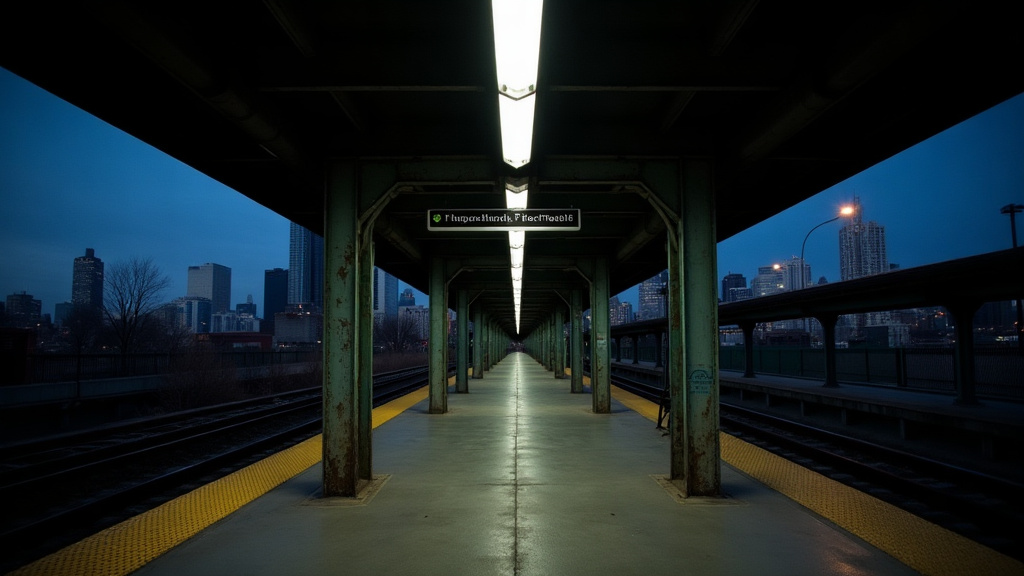
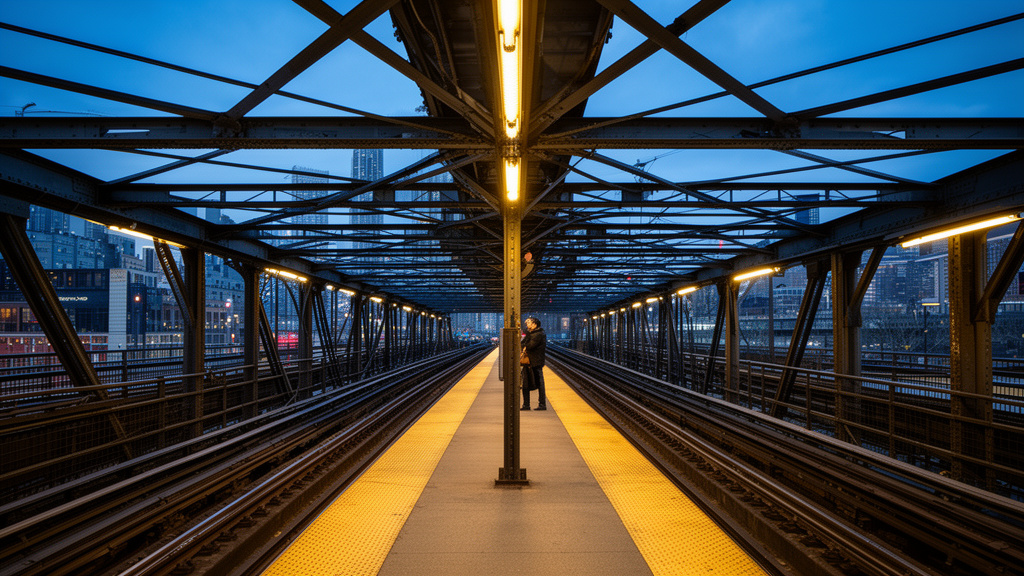
When examining the data, the most immediate trend is the geographic divide. The “L” system, which connects the dense Loop to the surrounding North, South, and West sides, acts as a conduit for the entire city, yet the perception of this system varies wildly depending on which station a commuter boards. Residents in North Side neighborhoods, often serviced by older, more frequent lines, report higher levels of perceived safety compared to those relying on lines serving the South and West sides.
This is not merely a matter of station aesthetics or wait times; it is a fundamental difference in the sense of security. The NORC/WTTW data suggests that long-standing geographic disparities in resource allocation have created a “two-tiered” experience of public transit. For many, the CTA is a reliable tool for professional mobility; for others, it is a space characterized by unpredictability. This geographic fracture complicates any singular policy approach, as strategies designed to “fix” the CTA may be viewed as effective in Lincoln Park but entirely disconnected from the reality of a commuter in Englewood or Austin.
Racial Disparities in Transit Trust
Perhaps the most vital insight from the survey is the role of race in shaping perceptions of safety. The data indicates that safety is not viewed through a colorblind lens. Minority residents, particularly on the South and West sides, report higher levels of concern regarding transit safety, which often aligns with a broader narrative of systemic disinvestment in these communities.
When we dissect the numbers, it becomes clear that the “safety” of the CTA is inextricably linked to the policing and social services present in the immediate vicinity of transit hubs. For many Black and Latino Chicagoans, the presence of law enforcement on the train can be just as complex a signal as the absence of it. The survey highlights that while riders crave safety, there is a divergence of opinion on how that safety should be achieved, with debates ranging from increased Chicago Police Department (CPD) presence to investments in mental health responders and transit ambassadors.
The Economic Impact of the “Safety Gap”



Secondary to the personal experience of riding the train is the economic ripple effect. A reliable, safe transit system is a prerequisite for a healthy labor market. If residents do not feel safe on the CTA, they are less likely to choose public transit for work commutes, entertainment, or essential travel. This results in decreased ridership, which further reduces revenue for the CTA, creating a cycle of decline.
Retail districts that rely on foot traffic from CTA stations are particularly vulnerable. When perception of safety plummets, it doesn’t just affect the passenger; it affects the local economy of the neighborhoods the train traverses. Small businesses near major transit hubs have reported that perceived instability on the “L” directly correlates with lower evening and weekend activity, effectively strangling the economic vitality of surrounding blocks.
Historical Context: The Long Shadow of the L
To understand the current sentiment, one must look at the history of the CTA. For decades, the system has been a point of pride and a target of neglect. Historically, the expansion of the “L” was often tied to real estate development and urban planning decisions that favored white, affluent corridors. This historical bias is embedded in the infrastructure itself.
When surveys today ask about “safety,” they are often capturing a latent distrust that has been built over decades of unequal investment. The current crisis of perception is not new; it is the manifestation of years of deferred maintenance and policy shifts that have largely ignored the transit needs of marginalized communities. Solving this requires more than just putting more officers on platforms; it requires a systemic acknowledgment of why these communities feel marginalized in the first place.
Future Predictions and Policy Challenges
Looking ahead, the city faces a daunting task. As the Chicago Transit Board works to implement new security strategies, they are walking a razor’s edge. Increasing police presence may appease some riders in the short term but may alienate others who have historically had negative interactions with the CPD.
Future policy will likely shift toward a “holistic safety” model, which includes a mix of uniformed security, non-law enforcement social workers, and infrastructure improvements like better lighting and cleaner stations. However, the data from the NORC/WTTW study serves as a warning: if these solutions are applied uniformly across the entire city, they will likely fail. The needs of a commuter at the 95th/Dan Ryan station are fundamentally different from those at the Belmont stop. Moving forward, the CTA must prioritize hyper-local solutions that respond directly to the demographic data provided by studies like this one, rather than relying on one-size-fits-all transit mandates.
FAQ: People Also Ask
Q: How many people were surveyed in this NORC/WTTW study?
A: The study surveyed 1,100 Chicago residents to ensure a representative sample across various neighborhoods and demographics, allowing for a statistically significant look at public sentiment.
Q: What are the primary factors contributing to the safety divide on the CTA?
A: The survey indicates that geography (neighborhood location) and race are the two most significant variables influencing how safe riders feel. These are linked to historical infrastructure investments and current perceptions of law enforcement.
Q: Does the study offer solutions for the CTA?
A: While the study primarily acts as a diagnostic tool, its findings suggest that city officials must adopt nuanced, neighborhood-specific approaches rather than a blanket strategy to address safety concerns.
Q: Why is this survey considered a major development for Chicago?
A: It provides hard data to support anecdotal concerns that have been circulating for years, forcing the Chicago Transit Authority and city leaders to confront the specific, documented nature of the safety perception gap.