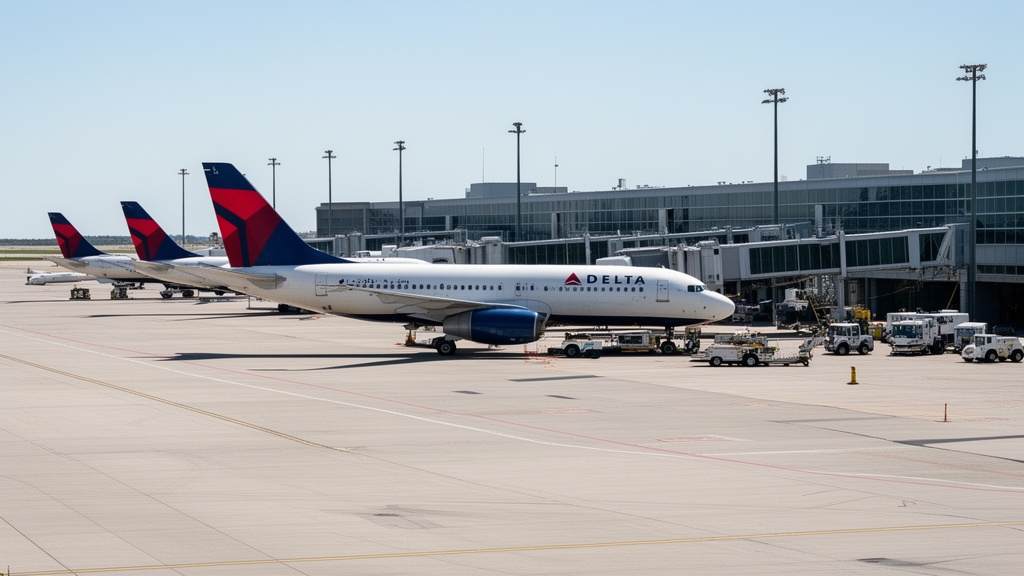
As the calendar turns toward the holiday season, Illinois is poised for a significant surge in mobility. According to the latest data from AAA, approximately 4.1 million Illinois residents are projected to travel 50 miles or more for the Thanksgiving holiday. This volume, which remains near historical record highs, underscores a persistent consumer trend: the prioritization of holiday connection and family gatherings, even in the face of sustained affordability pressures and a complex economic landscape.
Key Highlights
- Record-Adjacent Volume: Nearly 4.1 million Illinoisans are expected to travel this Thanksgiving, reflecting strong demand despite inflationary headwinds.
- Economic Dissonance: Travelers are balancing tightened household budgets against the desire for travel, often opting for budget-conscious choices in accommodations and dining.
- Roadway Congestion: The vast majority of travelers will be navigating state roadways, with major bottlenecks expected on primary arteries surrounding Chicago.
- Air Travel Demand: Airports are seeing continued high volume, with capacity constraints and pricing dynamics continuing to challenge spontaneous booking.
Navigating the Holiday Surge in Illinois
The projected migration of 4.1 million Illinoisans this Thanksgiving is more than just a statistic; it is a testament to the resilience of holiday tradition. While economists and financial analysts have pointed to consumer caution as a hallmark of 2024, the travel sector remains a notable outlier. Understanding this paradox requires a deeper look at the interplay between consumer sentiment, infrastructure, and the evolving nature of holiday logistics.
The Economic Tightrope: Inflation vs. Experience
There is a palpable dissonance between the current economic environment and travel behavior. While the Consumer Price Index (CPI) has fluctuated, impacting the cost of groceries and fuel, the average Illinois traveler appears to be engaging in “compensatory consumption.” This is the psychological practice of cutting discretionary spending in non-essential areas throughout the year specifically to protect the budget allocated for holiday travel and family gatherings.
Financial experts note that while households are more price-sensitive than they were in 2022, they are not necessarily canceling plans. Instead, travelers are exhibiting increased savvy. AAA data suggests that travelers are booking earlier, utilizing loyalty programs more aggressively, and shifting toward “drive-to” destinations rather than expensive fly-to resorts. The affordability pressure is real, but it is currently manifesting as a change in the nature of travel, rather than a cessation of it.
The Infrastructure Challenge: Illinois on the Move
With the sheer volume of travelers, Illinois’ infrastructure—particularly the major transit corridors surrounding the Chicagoland area—will face immense stress. The Illinois Department of Transportation (IDOT) and AAA have identified several key pressure points. The I-90 and I-94 corridors remain the primary arteries for those leaving and entering the city.



For those driving, timing remains the most significant lever for managing stress. Historical patterns indicate that leaving on the Tuesday before the holiday or early Wednesday morning can mitigate the worst of the peak congestion. Conversely, those departing on Wednesday afternoon or Thursday morning are likely to encounter significant delays. The compounding factor this year is the increase in last-minute, on-demand traffic, which makes real-time GPS reliance more critical than ever.
Air Travel and the Capacity Crunch
For the subset of travelers taking to the skies, the experience at O’Hare International Airport and Midway International Airport requires strategic preparation. Air travel volumes continue to mirror pre-pandemic highs, but the aviation industry is still navigating staffing and capacity constraints.
Travelers are facing a “capacity crunch” where demand is outstripping the number of available seats, which serves to keep ticket prices elevated. The advice from industry analysts is consistent: arrive at the airport at least three hours early for domestic flights and monitor flight status updates religiously. Furthermore, the reliance on ride-sharing services to reach the airport adds another layer of cost and uncertainty, with surge pricing likely to be a factor during peak hours on the Wednesday before and the Sunday after Thanksgiving.
Future Predictions and Structural Shifts
Looking ahead, the Thanksgiving travel period serves as a bellwether for the upcoming winter holiday season. If the 4.1 million Illinoisan travel threshold is met or exceeded, it confirms that travel has transitioned from a discretionary luxury to an essential aspect of the American lifestyle.
We anticipate a shift in the coming years toward more integrated “smart” travel. This includes the increased use of real-time data platforms that allow travelers to shift their routes dynamically based on accident reports and traffic flow—a necessity given the narrowing margins of error on heavily congested roads. Furthermore, as autonomous driving features become more prevalent in consumer vehicles, the stress reduction for long-distance drivers may marginally increase, though the fundamental challenge of volume-to-road-capacity remains the primary bottleneck for Illinois.
FAQ: People Also Ask
Q: What are the best times to avoid traffic in Illinois during Thanksgiving?
A: AAA recommends traveling before 10:00 AM on Wednesday or waiting until Thanksgiving Day itself to avoid the heaviest congestion. Sunday afternoon is generally the most congested time for the return trip.
Q: How does inflation affect the average Thanksgiving travel budget?
A: While fuel prices have stabilized compared to previous record highs, the cost of services, vehicle rentals, and parking fees remains elevated. Many families are mitigating these costs by reducing the number of days away or opting for shorter-distance trips.
Q: Are there any specific Illinois roads to avoid?
A: The major bottlenecks remain the intersections of I-90, I-94, and I-290. Commuters should expect significant delays around the O’Hare hub and the downtown Chicago interchanges throughout the Wednesday preceding the holiday.
Q: Is public transportation a viable alternative to driving?
A: Yes. For those within the Chicago metropolitan area, utilizing Metra or CTA services to connect to travel hubs can bypass roadway congestion, though travelers should check holiday schedules, as transit frequency is typically reduced on the holiday itself.