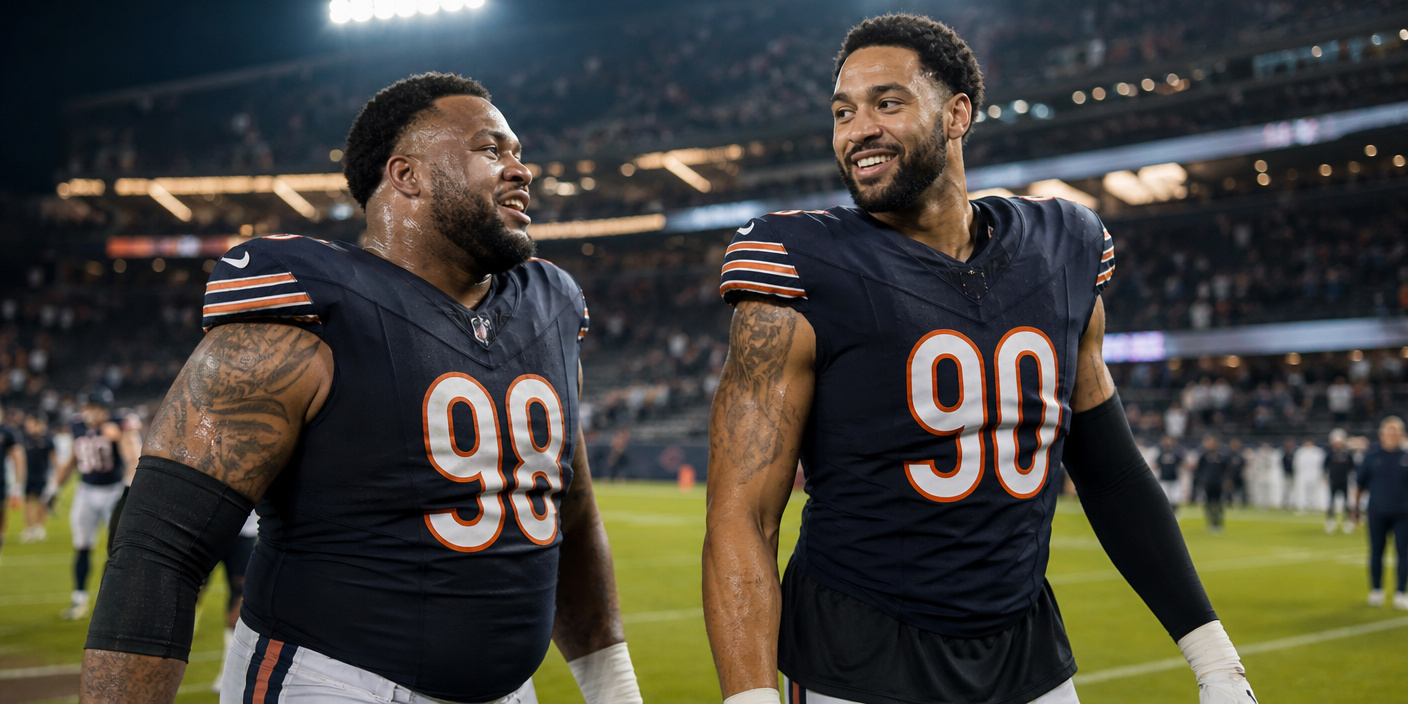
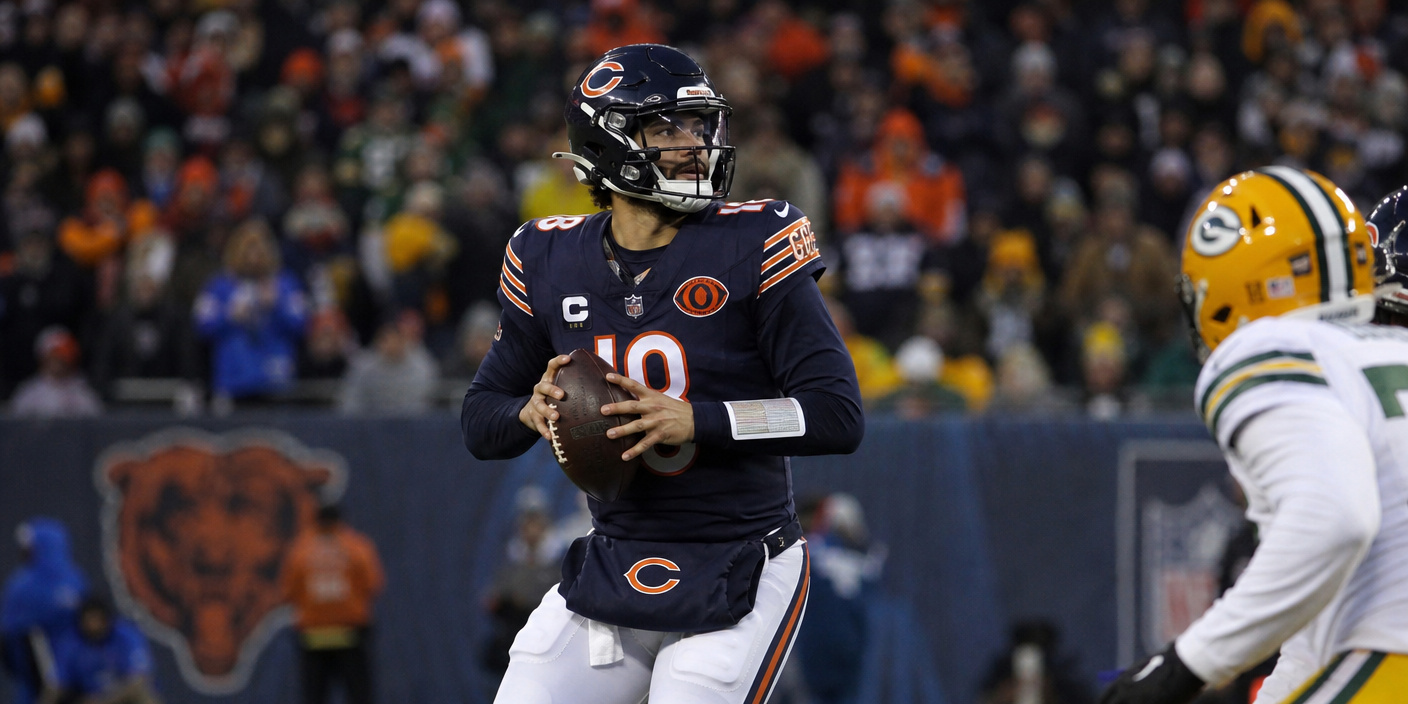
The Chicago Bears improved their record to 7-2 after defeating the New Orleans Saints at Soldier Field on Sunday, November 22, 2026. This victory marks a critical turning point for the Chicago franchise, cementing their status as a legitimate playoff contender as the league moves toward the final stretch of the regular season. For the Saints, however, the afternoon was defined by the recurring, frustrating inability to close out road games against high-intensity defenses, leaving them to grapple with the consequences of a loss that felt all too familiar to the faithful in New Orleans.
Key Highlights
- Record Milestone: The Chicago Bears have officially moved to 7-2, securing one of the most successful starts in recent team history and positioning themselves firmly at the top of their division.
- Soldier Field Dominance: The Bears leveraged their home-field advantage at Soldier Field, proving that late-season cold-weather football remains a formidable weapon in their tactical arsenal.
- The ‘Familiar Theme’: The New Orleans Saints succumbed to a persistent issue of situational errors, specifically failing to capitalize on red-zone opportunities, which has been a narrative thread throughout their 2026 campaign.
- Defensive Prowess: Chicago’s defensive unit delivered a high-pressure performance, holding the Saints’ offense to minimal yardage during pivotal third-down exchanges.
- Playoff Implications: With this loss, the Saints face a shrinking margin for error, as the competitive landscape of the NFC intensifies in the final months of the season.
Anatomy of a Sunday Setback: Why the Saints Stumbled
The Soldier Field Factor: A Tactical Bottleneck
There is no denying the psychological and physical weight of Soldier Field in late November. The environment at Chicago’s historic home is more than just a venue; it is a catalyst for attrition. For the New Orleans Saints, the visit to the lakefront on Sunday, November 22, 2026, was a masterclass in why this venue remains one of the most difficult places to play in professional football. The shifting winds and the cooling temperatures often force teams to abandon aggressive passing attacks in favor of a grinding, ground-based approach. The Saints, who historically rely on rhythmic passing to sustain drives, found themselves stifled by the elements.
This is not merely about the temperature, but about the rhythm of the game. When a team cannot find its footing in the opening quarter—struggling with field position and the sheer physical demand of the turf—they often revert to conservative play-calling. That conservatism was the Saints’ undoing. By failing to push the envelope early, they allowed the Bears’ defensive front to pin their ears back, creating a relentless pass rush that limited the Saints’ quarterback options. The ‘familiar theme’ referenced by analysts throughout the week pertains to this very struggle: a lack of adaptability when the game plan goes sideways in hostile territory.
Dissecting the Bears’ 7-2 Trajectory
Conversely, the Chicago Bears are playing with a newfound sense of identity. Moving to 7-2 is not an accident of the schedule; it is the byproduct of a team that has found its specific schematic niche. Under their current leadership, the Bears have focused on a balanced offensive attack that complements a disciplined, ball-hawking defense. The victory over New Orleans demonstrated that Chicago can win games in multiple ways—not just by outscoring opponents, but by suffocating them.


In the second half, the Bears adjusted their blocking schemes to counter the Saints’ blitz packages, a necessary evolution that suggests high-level coaching preparation. This ability to make mid-game adjustments is exactly what separates legitimate contenders from the rest of the pack. As the Bears look toward the post-season, this win serves as a crucial data point: they are a team capable of closing out tight games, a trait that was notably absent in previous years. Their current record puts them in the driver’s seat for home-field advantage throughout the playoffs, a prospect that should worry every other team in the NFC.
The ‘Familiar Theme’: Addressing the Saints’ Identity Crisis
The term ‘familiar theme’ often carries a negative connotation in sports journalism, and in this context, it refers to the Saints’ inability to finish drives. Throughout the 2026 season, statistical analysis has pointed to a troubling trend regarding the Saints’ red-zone efficiency. They frequently move the ball between the 20-yard lines with impressive consistency, only to stall when the field shrinks. This is an issue of execution, but more importantly, an issue of play-calling philosophy.
When a team struggles in the red zone, it is often because they become predictable. Opposing defenses, such as Chicago’s on Sunday, are effectively reading the tendencies. The Saints are leaning on high-percentage, short-range passes, but against a defensive front as disciplined as the Bears, those windows close rapidly. To reverse this ‘familiar’ narrative, the coaching staff must look at introducing more unpredictability in their goal-line sets. Failure to do so will continue to result in field goals where touchdowns are needed, a math problem that consistently results in losses against top-tier opponents.
Looking Ahead: Implications for the Final Stretch
As we look at the remainder of the 2026 regular season, the delta between these two teams could not be more apparent. The Bears are building momentum, with players seemingly buying into a defensive-first culture that travels well. Meanwhile, the Saints must go back to the drawing board to address their situational inconsistencies. The ‘familiar theme’ of the loss in Chicago is not just about one game; it is a warning sign that the current trajectory of the Saints’ offense is unsustainable against playoff-caliber defenses.
For the Bears, the focus now shifts to maintaining health and consistency. Seven wins against two losses is a formidable foundation, but the league is unforgiving. If they can continue to capitalize on turnovers and maintain their defensive discipline at Soldier Field, they are on a direct path to a deep playoff run. The Saints, however, are now in ‘must-win’ territory. Every subsequent game will be scrutinized through the lens of this Sunday’s defeat, and their ability to bounce back will define the legacy of their 2026 season.
FAQ: People Also Ask
Q: What is the current record of the Chicago Bears following this win?
A: Following their victory over the New Orleans Saints on Sunday, November 22, 2026, the Chicago Bears improved their record to 7-2.
Q: Where was the game played?
A: The game was played at Soldier Field in Chicago, which proved to be a significant factor due to the cold-weather conditions that impacted offensive pacing.
Q: What does the ‘familiar theme’ in the Saints’ loss refer to?
A: The ‘familiar theme’ refers to the Saints’ recurring struggle to execute in the red zone and finish drives against high-intensity defenses throughout the 2026 season, a trend that was evident again in this loss.
Q: Why is the Bears’ 7-2 record considered significant?
A: A 7-2 record places the Bears in a commanding position for the NFC playoff race, highlighting their evolution into a disciplined, contender-level team capable of winning both at home and in high-pressure scenarios.