Skip to content
The Chicago Today
Quantum Aerospace
  • Home
  • Current News
  • Explore & Enjoy
  • Sports
  • Sound & Screen
  • Sip & Savor
  • Style & Innovation
  • Editors Take
Trending
July 29, 2026Chicago Oversight Body Criticized for Misconduct ‘Vacuum’ July 29, 2026Evanston Eyes New Fiscal Strategy for Northwestern’s Commercial Interests July 29, 2026Regional Tinderbox: Jordan Intercepts Missiles as US & Saudi Strike Iraq July 28, 2026ACM Honors 2026: Dolly Parton to Receive Poet’s Award July 28, 2026Fatal Hit-and-Run on I-57: Tragedy Near Halsted Leaves One Dead July 28, 2026Cubs Sever Ties: Jameson Taillon Designated for Assignment July 27, 2026NOAA Accelerates Cloud Migration to Supercharge Weather Forecasting July 27, 2026Chicago Gourmet 2024: A Culinary Return of Iconic Flavors July 27, 2026What To Watch: 40+ Premieres And Finales This Week July 27, 2026Streaming Breach: Major Artist Pages Hit by Unauthorized Uploads
The Chicago Today
The Chicago Today
  • Home
  • Current News
  • Explore & Enjoy
  • Sports
  • Sound & Screen
  • Sip & Savor
  • Style & Innovation
  • Editors Take
  • Blog
  • Forums
  • Shop
  • Contact
The Chicago Today
  Editors Take  Trump’s National Guard Threat to Chicago Draws Fire, Echoes Katrina’s Response Failures
Editors Take

Trump’s National Guard Threat to Chicago Draws Fire, Echoes Katrina’s Response Failures

Brittany HollindaleBrittany Hollindale—August 25, 20250
FacebookX TwitterPinterestLinkedInTumblrRedditVKWhatsAppEmail

President Donald Trump’s recent remarks signaling a potential deployment of the National Guard to Chicago have ignited a fierce debate over federal authority, local control, and the efficacy of military intervention in urban centers. The president’s pronouncements, which characterized Chicago as a “mess” and its mayor as “grossly incompetent,” have been met with strong rebukes from city and state leaders, drawing parallels to past federal responses that proved deeply flawed, most notably Hurricane Katrina.

Trump’s “Trial Run” for Federal Intervention

More stories
Culture

Cultural Milestones: Defining Moments That Shaped Modern Society

September 17, 2024
Grocery Chains Enter the Pharmacy Battle: Could Giant Eagle Offer Relief Amid Soaring Prescription Costs and Closures?

Grocery Chains Enter the Pharmacy Battle: Could Giant Eagle Offer Relief Amid Soaring Prescription Costs and Closures?

July 6, 2025

Thomas Walton: In the Age of Information, Wisdom is the True Differentiator

November 16, 2025

Transparency’s Tightrope Walk: Daily Herald Editorial Highlights Unintended Consequences

February 11, 2026

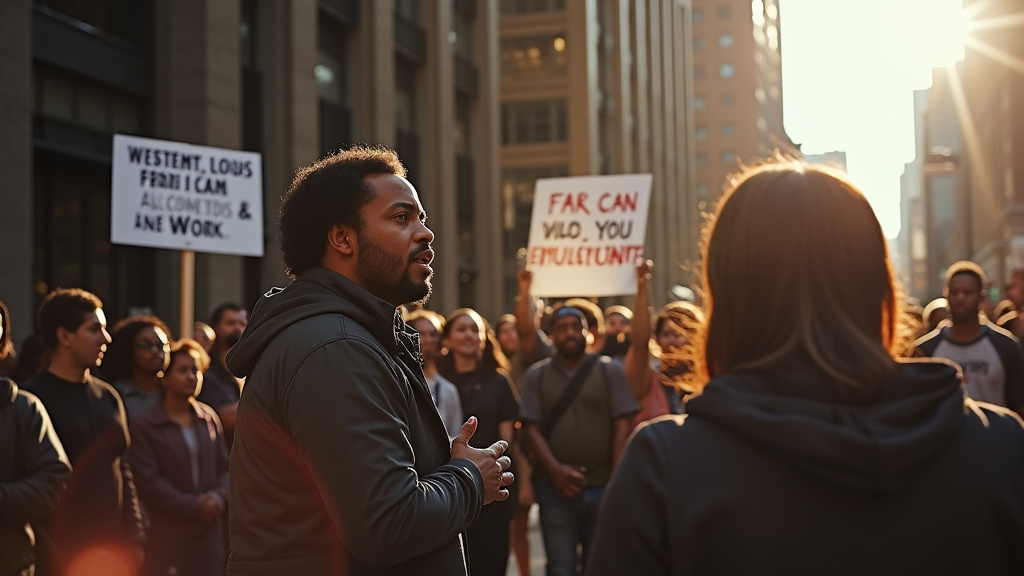
President Trump has repeatedly suggested he will extend federal crackdowns on crime beyond Washington, D.C., to cities like Chicago. His comments, made in the Oval Office, indicated that Chicago was next on his agenda after operations in the nation’s capital. These remarks were not presented as a formal plan but signaled Chicago’s high priority on his list. The Pentagon has reportedly been drawing up plans for National Guard deployments to the city, with discussions including the potential use of active-duty forces. The administration’s actions in Washington D.C. saw hundreds of arrests, many linked to immigration enforcement, and have been described by critics as a “trial run for a police state.” This aggressive federal posture has drawn criticism from local officials who argue it constitutes an abuse of presidential power and a violation of constitutional principles. The use of federal troops domestically is governed by laws like the Posse Comitatus Act, which generally limits the military’s role in civilian law enforcement, and federalizing state National Guard units typically requires governor consent or specific legal justifications not easily applied to cities outside Washington D.C. itself.

Chicago Leaders Reject Federal Intervention

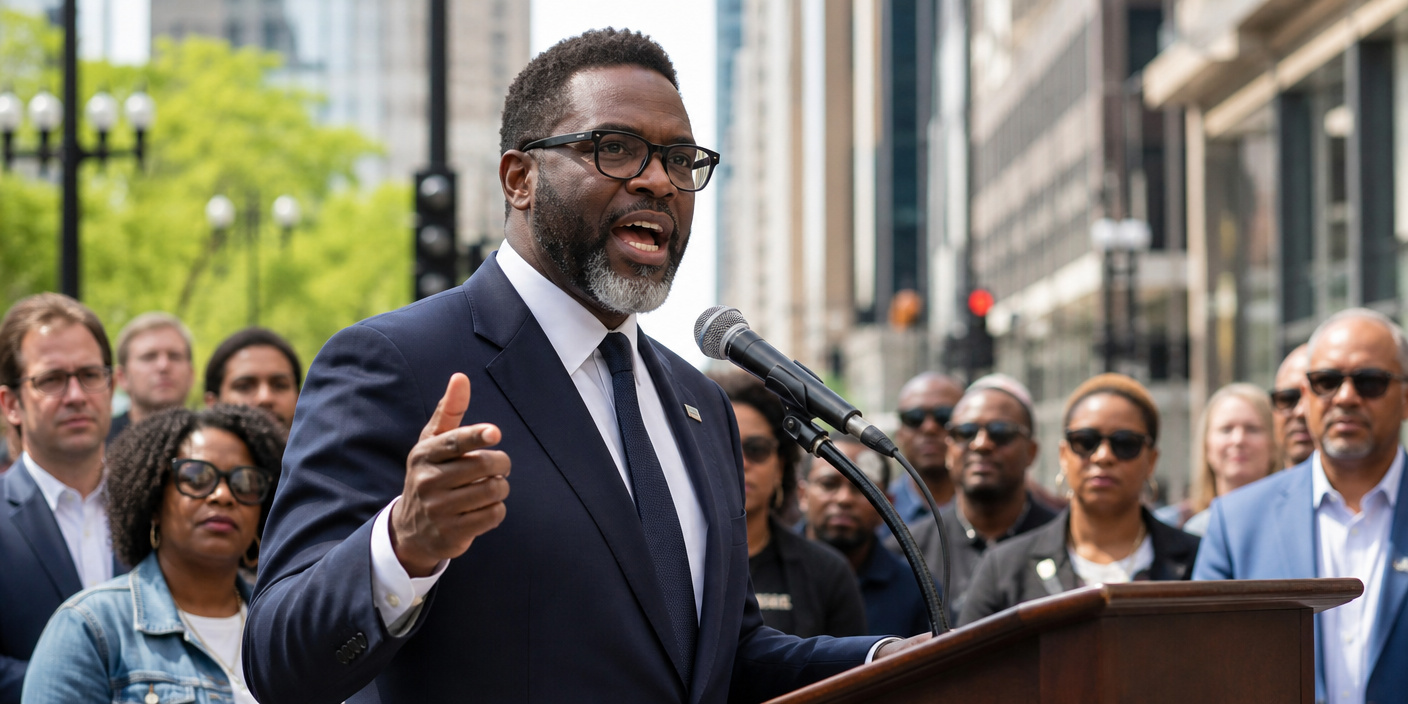
Chicago Mayor Brandon Johnson staunchly rejected the notion of federal troops patrolling the city, labeling the idea “illegal and costly.” He asserted that such a deployment would be “uncoordinated, uncalled for, and unsound,” potentially inflaming tensions between residents and law enforcement. Johnson cited city data indicating significant reductions in violent crime over the past year, with homicides down by over 30%, robberies by 35%, and shootings by nearly 40%. These statistics, which Mayor Johnson highlighted as proof of progress through targeted community violence intervention programs, were presented as a counterpoint to the president’s claims of chaos.

Illinois Governor JB Pritzker echoed Johnson’s concerns, calling Trump’s threats “a trial run for a police state” and accusing the president of attempting to “manufacture a crisis.” Pritzker emphasized that the state had received no requests for federal intervention and that no emergency warranted such action. He stated that Illinois would “stand up for the sovereignty of our state, and protect the people of Illinois.” The strong opposition from both state and city leaders underscores a significant rift between local governance and the federal administration’s approach to urban safety.

Katrina’s Shadow: Lessons in Failed Response

The persistent questions surrounding federal intervention in cities like Chicago inevitably bring to mind the catastrophic failures of the federal response to Hurricane Katrina two decades ago. The disaster exposed profound systemic flaws in national preparedness, including inadequate infrastructure, broken command and control structures, poor regional planning, and critical communication breakdowns between federal, state, and local authorities. The resulting chaos and immense human suffering highlighted the devastating consequences of uncoordinated and ineffective federal action during a crisis.

Katrina’s aftermath revealed how essential clear communication, robust infrastructure, and effective interagency collaboration are for disaster management. The prolonged suffering of New Orleans residents, stranded without basic necessities due to the slow and disorganized federal response, serves as a stark reminder of the limitations of military-style interventions in civilian emergencies. The lessons learned from Katrina emphasize the need for careful planning, trust in local expertise, and a cautious approach to deploying federal forces, particularly when state and local authorities do not request such assistance.

The Ongoing Debate Over Federal Power

As the national news cycle continues to dissect the implications of President Trump’s rhetoric, the debate over federal power and local autonomy remains at the forefront. Mayors and governors in cities across the nation have voiced concerns about potential federal overreach, viewing such deployments as politically motivated rather than genuinely aimed at improving public safety. The historical context provided by events like Hurricane Katrina offers critical insights into the potential pitfalls of centralized, military-centric responses to complex urban challenges. In this ongoing discourse, the news editorial boards and public are closely watching how these tensions resolve, bearing in mind the enduring lessons of past federal interventions.

FacebookX TwitterPinterestLinkedInTumblrRedditVKWhatsAppEmail

Brittany Hollindale

Hi, I'm Brittany. I hold a Bachelor's degree in Journalism from the University of California, Berkeley, and a Master's degree from the University of Washington, where I specialized in digital media and investigative reporting. I'm driven by a passion for telling stories that resonate with our community, from in-depth investigations to vibrant features on LA's diverse culture. In my free time, I enjoy exploring the city's art scene, attending local theater productions, and discovering new favorite spots in eclectic neighborhoods. Thank you for reading my work and engaging with the stories that make our community unique.

Breaking News: Gaza Hospital Strike Claims Journalists; Indian Parliament Debates Jailed Ministers Law
Chicago Gears Up to Celebrate House Music’s Legacy with Annual Festival and Conference
Related posts
  • Related posts
  • More from author
Editors Take

Evanston Eyes New Fiscal Strategy for Northwestern’s Commercial Interests

July 29, 20260
Editors Take

Chicago’s All-Star Glow: Inside the 2026 WNBA Takeover

July 25, 20260
Editors Take

Climate Vanguard: Aspen Institute Summit Charts Future in Chicago

July 21, 20260
Load more
Read also
Featured

Chicago Oversight Body Criticized for Misconduct ‘Vacuum’

July 29, 20260
Editors Take

Evanston Eyes New Fiscal Strategy for Northwestern’s Commercial Interests

July 29, 20260
Current News

Regional Tinderbox: Jordan Intercepts Missiles as US & Saudi Strike Iraq

July 29, 20260
Sound & Screen

ACM Honors 2026: Dolly Parton to Receive Poet’s Award

July 28, 20260
Headlines

Fatal Hit-and-Run on I-57: Tragedy Near Halsted Leaves One Dead

July 28, 20260
Sports

Cubs Sever Ties: Jameson Taillon Designated for Assignment

July 28, 20260
Load more
Recent Posts
  • Chicago Oversight Body Criticized for Misconduct ‘Vacuum’ July 29, 2026
  • Evanston Eyes New Fiscal Strategy for Northwestern’s Commercial Interests July 29, 2026
  • Regional Tinderbox: Jordan Intercepts Missiles as US & Saudi Strike Iraq July 29, 2026
  • ACM Honors 2026: Dolly Parton to Receive Poet’s Award July 28, 2026
  • Fatal Hit-and-Run on I-57: Tragedy Near Halsted Leaves One Dead July 28, 2026

    # TRENDING

    chicago20252026aiFashionStreamingreviewaccountabilityinnovationfundingfestivalmusicnetflixalbumculinaryactionacquisitionnascarhululineup
    © 2024 All Rights Reserved by Chicago Today
    • Contact
    • Cookie Policy
    • Privacy Policy
    The Chicago Today
    Manage Consent
    To provide the best experiences, we use technologies like cookies to store and/or access device information. Consenting to these technologies will allow us to process data such as browsing behavior or unique IDs on this site. Not consenting or withdrawing consent, may adversely affect certain features and functions.
    Functional Always active
    The technical storage or access is strictly necessary for the legitimate purpose of enabling the use of a specific service explicitly requested by the subscriber or user, or for the sole purpose of carrying out the transmission of a communication over an electronic communications network.
    Preferences
    The technical storage or access is necessary for the legitimate purpose of storing preferences that are not requested by the subscriber or user.
    Statistics
    The technical storage or access that is used exclusively for statistical purposes. The technical storage or access that is used exclusively for anonymous statistical purposes. Without a subpoena, voluntary compliance on the part of your Internet Service Provider, or additional records from a third party, information stored or retrieved for this purpose alone cannot usually be used to identify you.
    Marketing
    The technical storage or access is required to create user profiles to send advertising, or to track the user on a website or across several websites for similar marketing purposes.
    • Manage options
    • Manage services
    • Manage {vendor_count} vendors
    • Read more about these purposes
    View preferences
    • {title}
    • {title}
    • {title}