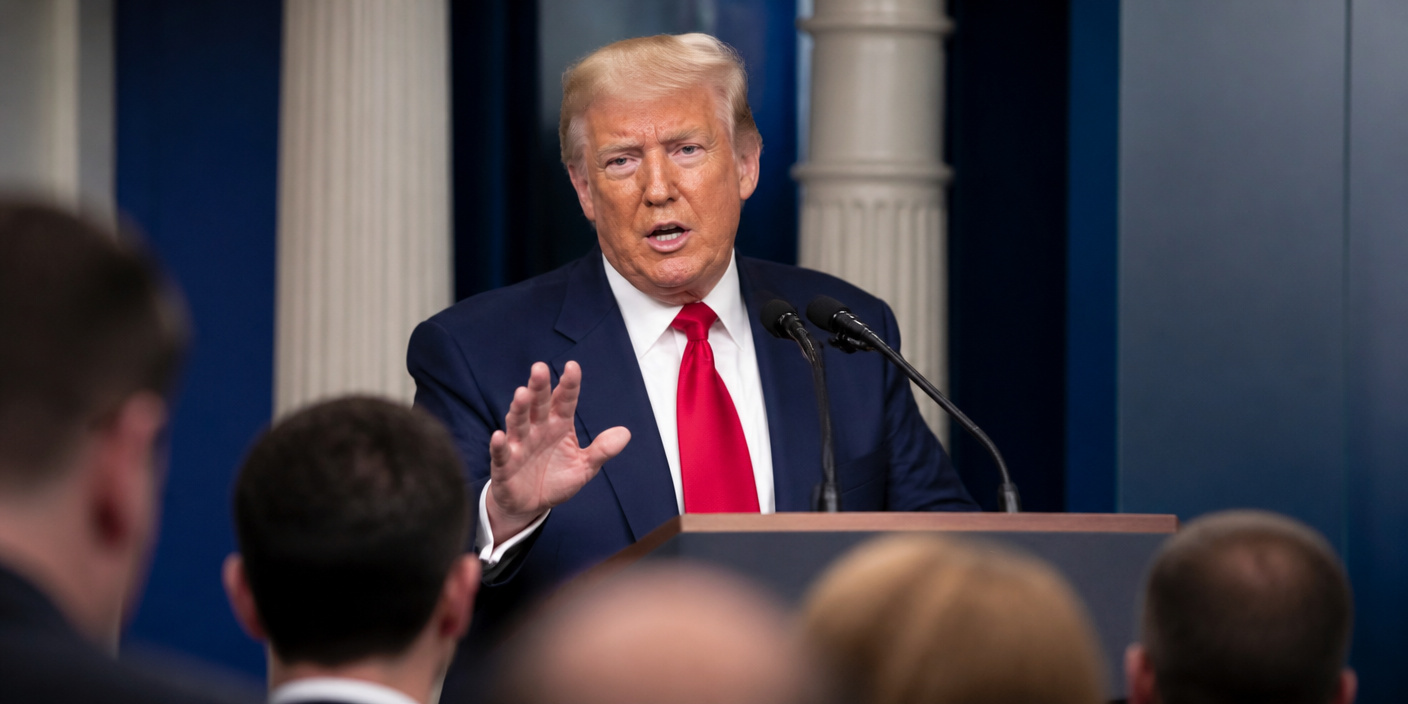
Donald Trump announced today that he had “largely negotiated” a peace deal with Iran, which would include the opening of the Strait of Hormuz.
- Trump asserts a peace deal with Iran is nearly finalized.
- The deal reportedly includes provisions for the opening of the Strait of Hormuz.
- This claim emerges amid ongoing geopolitical tensions in the region.
Trump’s Diplomatic Overture to Iran
Former President Donald Trump has asserted that a significant peace agreement with Iran is on the verge of completion, a development he claims would lead to the reopening of the critical Strait of Hormuz waterway. The announcement, made without immediate corroboration from official channels, suggests a dramatic potential shift in Middle East diplomacy. Trump, speaking at a rally, described the deal as “largely negotiated,” implying that the foundational elements are in place and only final approvals remain.
Geopolitical Context of the Strait of Hormuz
The Strait of Hormuz, a narrow waterway connecting the Persian Gulf to the open ocean, is a chokepoint for global oil supplies. Approximately 20-30% of the world’s seaborne petroleum traffic passes through this strategic passage. Historically, Iran has threatened to close the strait during periods of heightened tension with international powers, underscoring its immense strategic importance. Any agreement that ensures its continued free navigation would be a significant geopolitical achievement.
Economic Ramifications of Open Navigation
The potential opening of the Strait of Hormuz, as claimed by Trump, carries substantial economic implications. A secure and open passage would likely stabilize oil prices by alleviating concerns about supply disruptions. This could lead to lower energy costs for consumers worldwide and boost global economic activity. Conversely, any perceived threat to this waterway can trigger sharp increases in oil prices, impacting economies globally.
Historical Precedents and Skepticism
This is not the first time Trump has claimed to be on the cusp of a major diplomatic breakthrough. His administration pursued a policy of “maximum pressure” against Iran, withdrawing from the Joint Comprehensive Plan of Action (JCPOA) nuclear deal and imposing stringent sanctions. While he has often spoken of his ability to negotiate complex international agreements, past claims of imminent deals have not always materialized as described. Analysts remain cautious, awaiting independent verification and details of the alleged agreement.
Entities Involved
The core entities involved in this situation are the United States, under the purported negotiation leadership of Donald Trump, and Iran. The Strait of Hormuz itself is a critical geographical entity. International bodies such as the United Nations and major global economies that rely on oil imports also play a significant role in the broader context.
FAQ: People Also Ask
What is the Strait of Hormuz?
The Strait of Hormuz is a narrow channel of sea separating Iran and Oman, serving as the sole sea passage from the Persian Gulf to the open ocean. It is one of the world’s most important oil transit points.
What was the JCPOA?
The Joint Comprehensive Plan of Action (JCPOA), commonly known as the Iran nuclear deal, was an agreement on Iran’s nuclear program reached in Vienna in 2015 between Iran and the P5+1 (the five permanent members of the United Nations Security Council—China, France, Russia, the United Kingdom, the United States—plus Germany and the European Union). The U.S. withdrew from the deal under President Trump in 2018.
Why is the Strait of Hormuz strategically important?
Its strategic importance lies in its role as a vital chokepoint for global energy supplies. The majority of oil exported from the Persian Gulf states transits through the strait, making its stability crucial for international energy markets.
What does “largely negotiated” imply?
When a deal is described as “largely negotiated,” it suggests that the principal terms and conditions have been agreed upon by the parties involved, with only minor details or final ratification pending. However, this can also be a subjective assessment, and the remaining steps can sometimes prove challenging.
Has Iran officially commented on this claim?
As of the latest reports, there has been no immediate official confirmation or denial from the Iranian government regarding Donald Trump’s claims of a negotiated peace deal.