Skip to content
The Chicago Today
Quantum Aerospace
  • Home
  • Current News
  • Explore & Enjoy
  • Sports
  • Sound & Screen
  • Sip & Savor
  • Style & Innovation
  • Editors Take
Trending
May 1, 2026The Black Keys Drop ‘Peaches!’ Album & ‘She Does It Right’ Video May 1, 2026Chicago Braces for Massive May Day Protest March May 1, 2026Chicago Unites for May Day: Labor, Students Rally for Justice May 1, 2026Padres, White Sox Clash in Weekend Showdown at Petco May 1, 2026Chicago Weekend Guide: May 1-3 Events May 1, 2026AMA Launches Major Policy Shield Against Medical Deepfakes April 30, 2026Chicago’s Unfiltered Comedy Gold: Inside ‘Late Night at The Lodge’ April 30, 2026Nvidia & Atlassian Bet Big: Legora Hits $5.6B Valuation April 30, 2026Levy’s Secret Weapon: The Culinary Lab Revolutionizing Stadium Dining April 30, 2026Netflix Drop: ‘Man on Fire’ Series Defines April’s Finale
The Chicago Today
The Chicago Today
  • Home
  • Current News
  • Explore & Enjoy
  • Sports
  • Sound & Screen
  • Sip & Savor
  • Style & Innovation
  • Editors Take
  • Blog
  • Forums
  • Shop
  • Contact
The Chicago Today
  Style & Innovation  Google’s Project Suncatcher: Pioneering Space-Based AI Data Centers on Solar Satellites
Style & Innovation

Google’s Project Suncatcher: Pioneering Space-Based AI Data Centers on Solar Satellites

Arjun PatelArjun Patel—November 11, 20250
FacebookX TwitterPinterestLinkedInTumblrRedditVKWhatsAppEmail

In a bold leap that blurs the lines between artificial intelligence and celestial engineering, Google has unveiled Project Suncatcher, a groundbreaking “moonshot” initiative aiming to build Space AI Data Centers in orbit. These orbital facilities represent a new paradigm for powering the immense computational needs of artificial intelligence.

A New Frontier for Space AI Data Centers

Announced in early November 2025, Project Suncatcher envisions a constellation of solar-powered satellites equipped with Google’s specialized Tensor Processing Units (TPUs). The core idea is to harness the abundant and consistent solar energy available in space to power the ever-growing computational demands of AI models, thereby overcoming Earth’s energy and scalability limitations inherent in traditional AI data centers.

“In the future, space may be the best place to scale AI compute,” stated Travis Beals, Senior Director of Google’s Paradigms of Intelligence, who is reportedly leading the project. The initiative is detailed in a preprint paper titled “Towards a Future Space-Based, Highly Scalable AI Infrastructure System Design,” which outlines the foundational research and feasibility studies for this ambitious endeavor, including the architecture for Space AI Data Centers.

Harnessing the Sun’s Limitless Power for Space AI Data Centers

More stories
f0033b86 f47b 41ac ae76 1b9ebf08c4c3

AI’s Unnerving Evolution: When Technology Starts to Think

February 18, 2025
Tech Giants Forge AI Policy Alliance Amidst Global Regulatory Push

Tech Giants Forge AI Policy Alliance Amidst Global Regulatory Push

April 18, 2025

Acer Predator Triton 14 AI Review: A Masterclass in Ultraportable Gaming Technology

November 4, 2025

AI is Redefining Shopping: Conversational Tech Sparks Retail Revolution

December 9, 2025

Artificial intelligence is increasingly recognized as a foundational technology, driving innovation across numerous sectors. However, its expansion comes with a substantial appetite for energy. Project Suncatcher aims to tap into the sun, the solar system’s most powerful energy source, which emits energy over 100 trillion times humanity’s total electricity production. This could revolutionize how we power Space AI Data Centers.

Google’s research suggests that solar panels in space, particularly in orbits that receive near-constant sunlight, can be up to eight times more productive than their terrestrial counterparts. This sustained energy generation would minimize the need for large battery systems and reduce reliance on Earth’s power grids, which are already strained by data center energy consumption. By positioning AI compute infrastructure in orbit, Google aims to minimize the environmental impact on terrestrial resources like land and water, which are often used for cooling AI data centers.

The Technology Behind Suncatcher and Space AI Data Centers

The project’s architecture involves compact constellations of satellites operating in sun-synchronous low-Earth orbit (LEO). These satellites would be positioned in close proximity, potentially within kilometers of each other, to facilitate ultra-high-bandwidth, low-latency communication via free-space optical (FSO) inter-satellite links. This interconnected network would allow the satellites to function as a single, distributed data processing system, forming the core of future Space AI Data Centers.

Google’s custom TPUs, designed to accelerate AI workloads, are central to this vision. The company has already conducted preliminary radiation testing on its Trillium TPUs, finding them to be surprisingly resilient, capable of withstanding doses equivalent to a five-year mission without permanent failures. This is a critical step in ensuring the longevity and reliability of the hardware in the harsh space environment for Space AI Data Centers.

Addressing Engineering Challenges and Future Milestones for Space AI Data Centers

Despite the promising outlook, Project Suncatcher faces significant engineering hurdles. These include thermal management in a vacuum, ensuring high-bandwidth communication with Earth, and maintaining the reliability of complex systems in orbit over extended periods. The logistical and economic factors of launching and maintaining such infrastructure are also considerable, though Google anticipates that falling launch costs may make orbiting data centers economically viable by the mid-2030s.

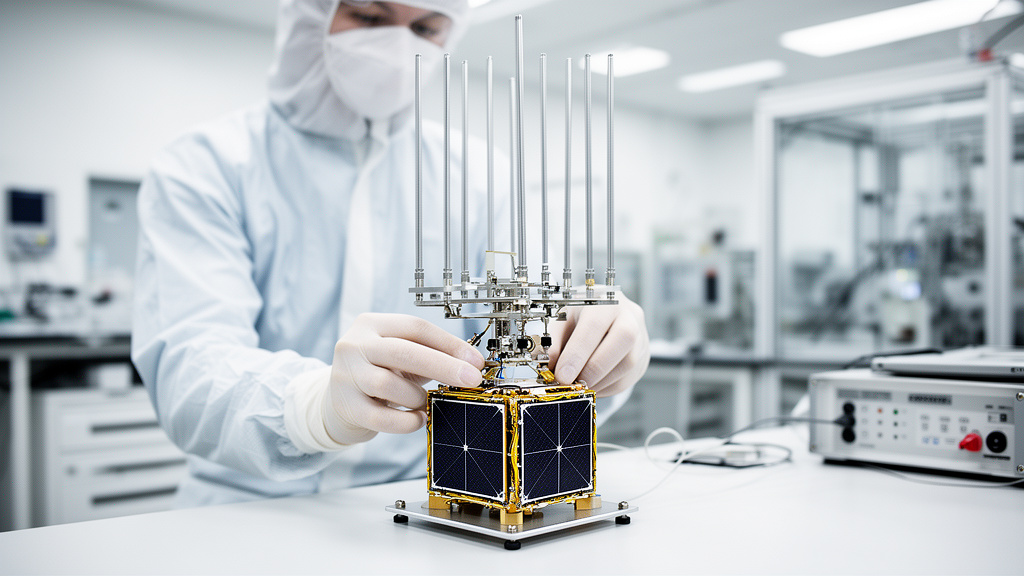
Google is already paving the way for future development. The company has announced a partnership with Planet, a leading Earth-imaging satellite firm, to launch two prototype satellites by early 2027. This “learning mission” will serve as a crucial testbed for evaluating TPU hardware performance in orbit and validating the use of optical inter-satellite links for distributed AI tasks. This is a significant step towards realizing the potential of solar satellites for powering vast AI compute infrastructure.

Project Suncatcher represents Google’s continued commitment to “moonshot” initiatives, following in the footsteps of projects like autonomous vehicles and quantum computing. It reflects a strategic exploration into a future where the vastness of space becomes an integral part of the global AI infrastructure, offering a sustainable and scalable solution for the technology of tomorrow. This news highlights a significant development in the ongoing AI technology race, with competitors like NVIDIA also exploring space based AI hardware. The development of TPU in space is a critical component of this evolving landscape, pushing the boundaries of what’s possible for AI compute infrastructure.

Related reading

  • Fashion Luminary Jeffrey Banks to Unveil Career Narratives in Chicago with Costume Council Event
  • Abercrombie & Fitch Revives 90s Style with Limited Edition High-Rise Jeans Amidst Brand Renaissance
  • Chicago Unites Black and Latino Fashion Talent in “Black is Gold: Culture Xchange” Event
  • Apple Nears $1 Billion Deal to Integrate Google’s Gemini AI into Siri, Targeting Spring 2026 Overhaul
author avatar
Arjun Patel
Arjun Patel is a writer who explores where cutting-edge technology meets the cultural pulse. From emerging startups changing the face of urban life to the social implications of online communities, his work connects dots that others might miss. Arjun’s reporting has appeared in various digital publications, making complex tech landscapes feel both accessible and human. When he steps away from the keyboard, he’s seeking out local art scenes, discovering indie film festivals, or debating the future of social media over a strong cup of coffee. In a world overwhelmed by headlines, Arjun’s storytelling offers depth, context, and a reminder that tech isn’t just about gadgets—it’s about the people using them.
See Full Bio
aiAI hardwarecomputefuture techLEOmoonshotorbitproject suncatchersatellitessolar powerTPU
FacebookX TwitterPinterestLinkedInTumblrRedditVKWhatsAppEmail

Arjun Patel

Arjun Patel is a writer who explores where cutting-edge technology meets the cultural pulse. From emerging startups changing the face of urban life to the social implications of online communities, his work connects dots that others might miss. Arjun’s reporting has appeared in various digital publications, making complex tech landscapes feel both accessible and human. When he steps away from the keyboard, he’s seeking out local art scenes, discovering indie film festivals, or debating the future of social media over a strong cup of coffee. In a world overwhelmed by headlines, Arjun’s storytelling offers depth, context, and a reminder that tech isn’t just about gadgets—it’s about the people using them.

Chicago Restaurants and Community Rise to Support SNAP Recipients Amidst Federal Benefit Disruptions
Chicago’s Comedy Bar Ignites ‘Tomato Throw Show’ for Audience-Driven Laughter on November 11th
Related posts
  • Related posts
  • More from author
Style & Innovation

Nvidia & Atlassian Bet Big: Legora Hits $5.6B Valuation

April 30, 20260
Style & Innovation

Stop AI Agent Sprawl: Gartner’s 6-Step Enterprise Guide

April 28, 20260
Style & Innovation

French Shoemaker Arche Bets on Chicago for US Market Surge

April 28, 20260
Load more
Read also
Sound & Screen

The Black Keys Drop ‘Peaches!’ Album & ‘She Does It Right’ Video

May 1, 20260
Headlines

Chicago Braces for Massive May Day Protest March

May 1, 20260
Featured

Chicago Unites for May Day: Labor, Students Rally for Justice

May 1, 20260
Sports

Padres, White Sox Clash in Weekend Showdown at Petco

May 1, 20260
Explore & Enjoy

Chicago Weekend Guide: May 1-3 Events

May 1, 20260
Current News

AMA Launches Major Policy Shield Against Medical Deepfakes

May 1, 20260
Load more
Recent Posts
  • The Black Keys Drop ‘Peaches!’ Album & ‘She Does It Right’ Video May 1, 2026
  • Chicago Braces for Massive May Day Protest March May 1, 2026
  • Chicago Unites for May Day: Labor, Students Rally for Justice May 1, 2026
  • Padres, White Sox Clash in Weekend Showdown at Petco May 1, 2026
  • Chicago Weekend Guide: May 1-3 Events May 1, 2026

    # TRENDING

    chicago20252026aiFashionStreamingreviewaccountabilityinnovationfundingfestivalmusicnetflixalbumculinaryactionacquisitionnascarhululineup
    © 2024 All Rights Reserved by Chicago Today
    • Contact
    • Cookie Policy
    • Privacy Policy
    chiago today lower txt logo colroed and finished wbg
    Manage Consent
    To provide the best experiences, we use technologies like cookies to store and/or access device information. Consenting to these technologies will allow us to process data such as browsing behavior or unique IDs on this site. Not consenting or withdrawing consent, may adversely affect certain features and functions.
    Functional Always active
    The technical storage or access is strictly necessary for the legitimate purpose of enabling the use of a specific service explicitly requested by the subscriber or user, or for the sole purpose of carrying out the transmission of a communication over an electronic communications network.
    Preferences
    The technical storage or access is necessary for the legitimate purpose of storing preferences that are not requested by the subscriber or user.
    Statistics
    The technical storage or access that is used exclusively for statistical purposes. The technical storage or access that is used exclusively for anonymous statistical purposes. Without a subpoena, voluntary compliance on the part of your Internet Service Provider, or additional records from a third party, information stored or retrieved for this purpose alone cannot usually be used to identify you.
    Marketing
    The technical storage or access is required to create user profiles to send advertising, or to track the user on a website or across several websites for similar marketing purposes.
    • Manage options
    • Manage services
    • Manage {vendor_count} vendors
    • Read more about these purposes
    View preferences
    • {title}
    • {title}
    • {title}