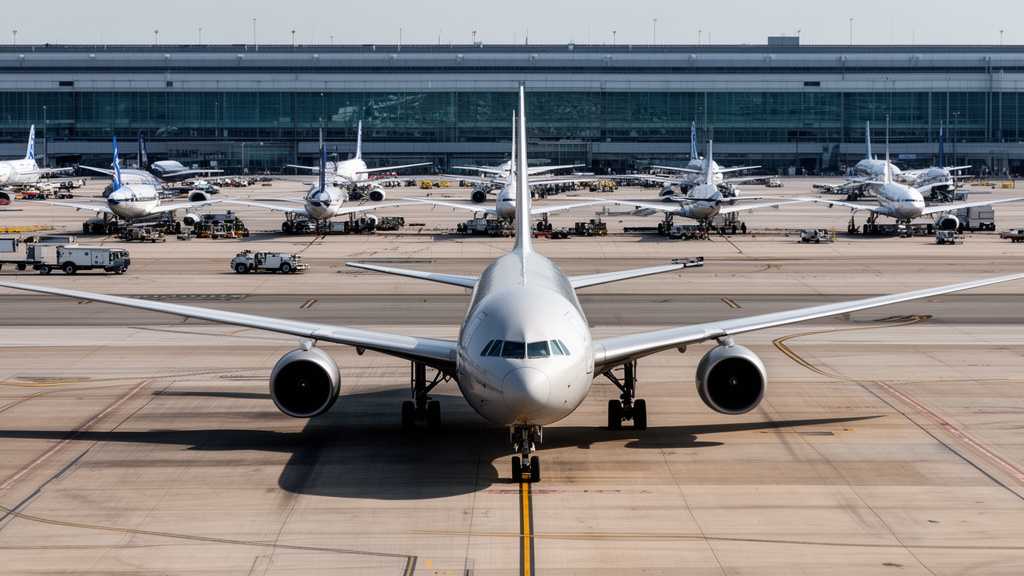
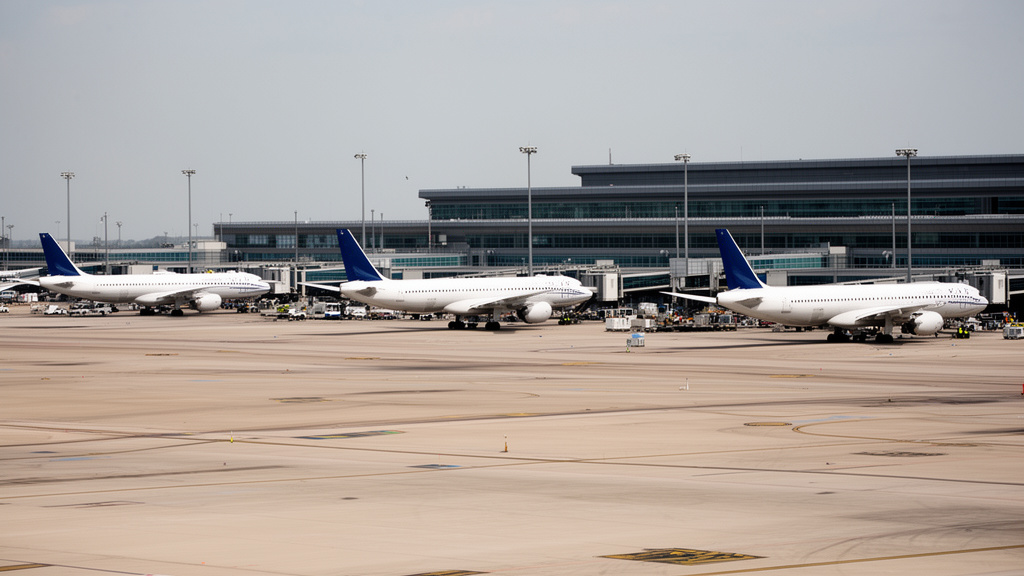
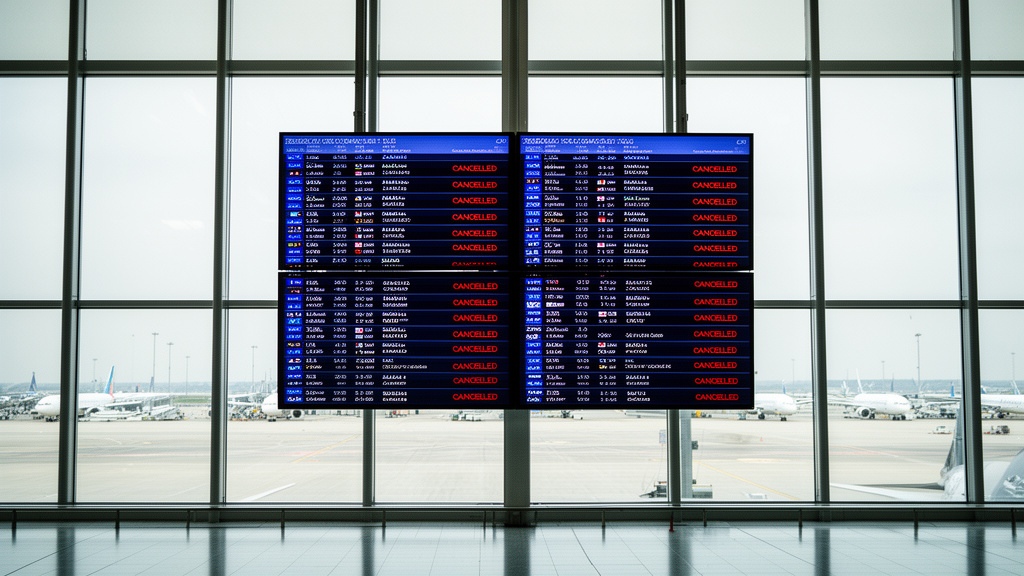
A historic IT outage, triggered by a faulty software update from the cybersecurity firm CrowdStrike, brought U.S. aviation to a complete standstill and paralyzed critical infrastructure worldwide on July 19, 2024. The failure, which affected Microsoft Windows-based hosts, forced major U.S. carriers—including Delta, United, and American Airlines—to issue immediate ground stops, leading to thousands of flight cancellations and delays. Beyond aviation, the disruption reached hospitals, emergency 911 services, banking institutions, and television networks, highlighting the extreme fragility of modern, centralized digital architecture.
Key Highlights:
- The outage was caused by a defective content update for the CrowdStrike Falcon sensor software, which targeted Windows systems, causing them to crash into the ‘Blue Screen of Death’ (BSOD) boot loop.
- Major U.S. airlines, including United, Delta, and American Airlines, initiated a nationwide ground stop for all departing flights, affecting tens of thousands of travelers.
- Critical infrastructure was severely impacted, with 911 emergency call centers reporting outages across multiple states, including Alaska, Arizona, Indiana, Minnesota, Ohio, and New Hampshire.
- CrowdStrike CEO George Kurtz issued a public apology, confirming the issue was identified and a fix had been deployed, though restoring affected systems remained a manual, laborious process for IT teams globally.
The Global IT Catastrophe: Understanding the CrowdStrike Fallout




The digital landscape faced an unprecedented stress test on July 19, 2024, when a routine update turned into a global disaster. While the headline focused on the grounding of U.S. flights, the underlying issue was a profound failure in the software supply chain. CrowdStrike, a cybersecurity giant utilized by the majority of Fortune 500 companies to protect against threats, pushed an update to its ‘Falcon’ sensor. This update, intended to enhance security, instead triggered a kernel-level conflict with Microsoft Windows, rendering millions of machines incapable of booting up. This rendered workstations, servers, and cloud infrastructure effectively ‘bricked,’ necessitating manual intervention to restore connectivity.
Aviation Paralysis: The Flight Grounding
By mid-morning, the ripple effects of the system failures were absolute within the U.S. aviation sector. The Federal Aviation Administration (FAA) reported that airlines were unable to communicate with aircraft or process flight plans due to the widespread server outages. Major hubs became centers of chaos, with passengers stranded as boarding systems, kiosks, and internal coordination software failed simultaneously. While not all airlines were impacted equally, the decision to ground fleets was a precautionary measure to prevent safety risks when critical real-time data flow was severed. The complexity of modern flight logistics—where every minute counts regarding fueling, maintenance, and crew scheduling—meant that even a two-hour system outage created a backlog that would take days, if not weeks, to fully clear.
Infrastructure Collapse: Beyond the Airport
While the aviation story dominated the news cycle, the impact on essential services was perhaps more concerning. In several U.S. states, including Alaska and Indiana, residents found themselves unable to reach 911 emergency services, forcing a return to manual routing and localized protocols. Hospitals reported the cancellation of non-emergency surgeries and the inability to access electronic medical records (EMR), delaying patient care. The financial sector also felt the sting; retail banking systems were interrupted, preventing customers from accessing accounts or processing transactions. This incident serves as a stark reminder that modern society runs on a remarkably small number of underlying software platforms, and a failure in one can cascade globally within minutes.
Corporate Responsibility and The Resilience Debate
In the immediate aftermath, CrowdStrike CEO George Kurtz took to national news outlets and social media to explain that this was not a cyberattack, but a ‘defect found in a single content update.’ However, the technical explanation offered little comfort to businesses facing millions of dollars in lost productivity. The event has ignited a massive conversation regarding ‘systemic concentration risk.’ IT security experts are now calling for a re-evaluation of how automated updates are tested and deployed. The reliance on a single, pervasive vendor for security creates a ‘single point of failure’ that can, in a heartbeat, render the world’s most sophisticated infrastructure useless. Organizations are now scrambling to implement fail-safes and localized ‘canary’ deployments to ensure that a single bad patch cannot replicate this level of catastrophe again.
FAQ: People Also Ask
1. Was this outage a cyberattack?
No. CrowdStrike officially stated that the global disruption was caused by a defect in a content update for their Falcon sensor software. It was an internal technical error, not a malicious external attack.
2. How did this affect 911 services?
Several states, including Arizona, Indiana, Minnesota, Ohio, New Hampshire, and Alaska, reported disruptions to emergency 911 dispatch centers. Localized workarounds were implemented, but it highlighted the danger of relying on cloud-based systems for critical emergency response.
3. Why did it take so long to fix?
Because the update caused the Windows machines to enter a ‘boot loop’ (the Blue Screen of Death), the devices could not receive an automatic ‘over-the-air’ fix. IT teams had to manually access each individual machine, boot it into ‘Safe Mode,’ and delete the specific problematic file, a process that proved time-consuming for large enterprise environments with thousands of devices.