The Chicago Bears have officially signaled a new era for their secondary, selecting Oregon safety Dillon Thieneman with the 25th overall pick in the 2026 NFL Draft. The decision, executed by General Manager Ryan Poles, ends a 36-year wait for the franchise, which had not selected a safety in the first round since taking Marc Carrier sixth overall in 1990. Thieneman, a standout transfer from Purdue who excelled in Eugene, brings a blend of elite speed and violent tackling that the Bears believe is the missing piece to their defensive puzzle.
Key Highlights
- Historic Selection: Thieneman is the first safety selected in the first round by the Bears since 1990, highlighting a significant shift in defensive resource allocation.
- Athletic Profile: The 6-foot, 201-pound safety recorded a 4.35-second 40-yard dash at the NFL Combine, showcasing the speed necessary for modern NFL defensive coverage.
- Versatility: Thieneman offers alignment versatility, capable of operating as a deep center fielder, a strong safety, or a nickel back, directly addressing the Bears’ need for tactical flexibility.
- Strategic Acquisition: The pick comes on the heels of the Bears’ roster turnover, filling the void left by key departures and bolstering a defense aiming to build on a successful 2025 campaign.
The Strategic Rationale: Why Thieneman Fits Chicago
The selection of Dillon Thieneman at No. 25 was not merely a reaction to a positional need; it was a calculated embrace of a specific defensive philosophy. For the Chicago Bears, the 2026 NFL Draft served as a referendum on their defensive identity. After a season that saw the team win the NFC North and advance in the playoffs, General Manager Ryan Poles identified the secondary as the unit most in need of a high-ceiling, long-term injection of talent.
Defining the ‘Violent’ Safety Archetype
During his press conference following the selection, Ryan Poles described Thieneman as a “violent football player.” This phrasing is critical. In the modern NFL, the safety position has evolved. It is no longer enough to be a deep-field coverage specialist. Teams now demand hybrid players who can tackle with the intensity of a linebacker while maintaining the fluidity of a cornerback.
Thieneman’s tape from his time at Oregon—and his foundational years at Purdue—demonstrates this duality. He is not a passive safety. He is an aggressive hunter of the football. His ability to close on ball carriers with rapid-fire instincts has drawn comparisons to elite defensive backs who prioritize momentum and collision. By choosing a player who “strikes” and brings a “knock-back element” to his tackling, the Bears are sending a message to the NFC North: the secondary will be the tone-setters for this defense.
The Versatility Advantage


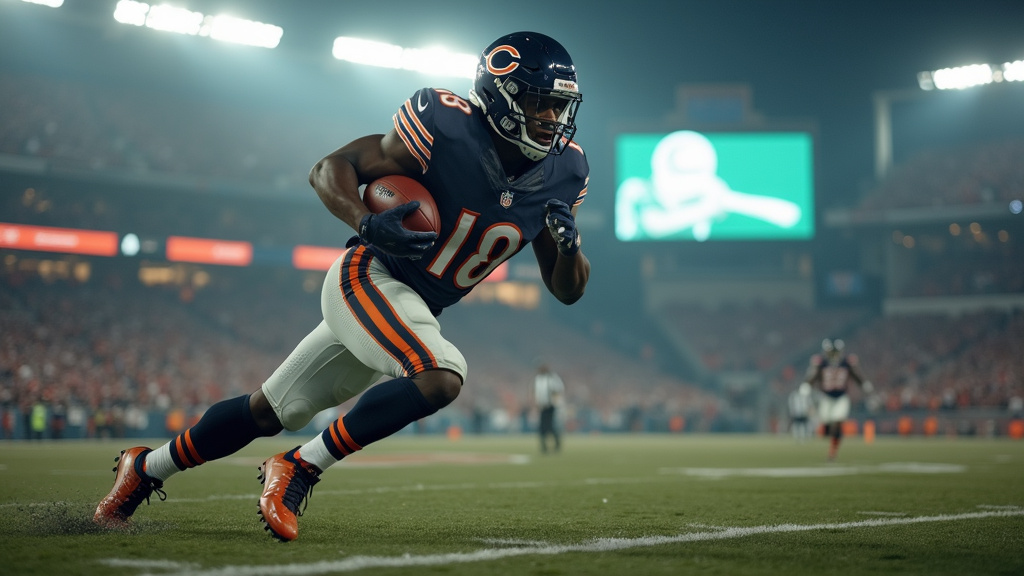
One of the most compelling aspects of Thieneman’s profile is his tactical adaptability. Modern defensive coordinators rely on disguises and late-rotation schemes to confuse quarterbacks. Thieneman’s collegiate track record suggests he is a perfect fit for such a system. He possesses the “gameplan speed” that allows him to play deep safety on one snap and drop down into a big nickel or robber position on the next.
This versatility is essential for the Bears, especially considering their recent history of signing free agents to plug gaps. By drafting a player who can move across the defensive backfield, the coaching staff gains a chess piece that can adapt to opponent-specific game plans, maximizing efficiency without requiring major roster shifts.
Impact on the 2026 Defense
Thieneman enters a defensive room that has seen significant turnover. With the departure of veteran stalwarts, the onus falls on the new generation to uphold the standards of the Chicago defense. Thieneman is expected to pair with Coby Bryant, the high-profile signee who joined the Bears on a massive three-year contract. If Thieneman can acclimate quickly, the duo could provide the most formidable safety tandem the team has seen in years. The transition from the college game to the NFL is notoriously difficult for defensive backs, but scouts point to his academic intelligence and “football character” as key indicators that he will be an immediate contributor.
FAQ: People Also Ask
1. Who is Dillon Thieneman and where did he play college football?
Dillon Thieneman is an elite safety who played two seasons at Purdue before transferring to the University of Oregon for his final season. He was a highly decorated defender, earning All-Big Ten honors and establishing himself as one of the nation’s premier DB prospects.
2. Why was the Bears’ selection of a safety at No. 25 considered historical?
It was historical because the Bears had not selected a safety in the first round of the NFL Draft since 1990, when they chose Marc Carrier out of USC. This 36-year gap emphasizes how rare it is for the Bears to invest such high draft capital into the position.
3. What are Dillon Thieneman’s standout athletic traits?
Thieneman is primarily known for his explosive speed, having run a 4.35-second 40-yard dash at the NFL Combine. Beyond speed, he is praised for his “violent” tackling style, high football IQ, and his versatility to play deep, in the box, or at the nickel position.