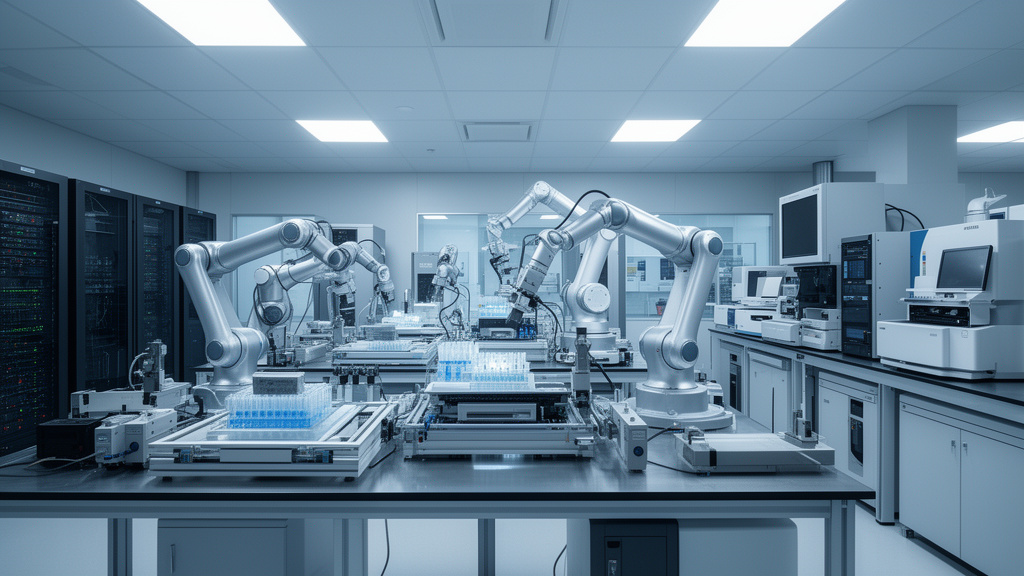
In a move that signals a tectonic shift in the race for Artificial General Intelligence (AGI), Nvidia has officially confirmed its deepened collaboration with OpenAI to accelerate large-scale data center infrastructure. This strategic alignment addresses the critical bottleneck currently stifling the industry: compute capacity. By coupling Nvidia’s bleeding-edge Blackwell GPU architecture with OpenAI’s proprietary model training requirements, this expansion aims to construct the physical foundations required to scale AI capabilities orders of magnitude beyond current limitations.
Key Highlights
- Compute Supremacy: The expansion is centered on integrating Nvidia’s Blackwell B200 GPU clusters, significantly boosting training efficiency for next-generation large language models (LLMs).
- Infrastructure Scaling: This initiative tackles the energy and thermal challenges inherent in dense data centers, utilizing advanced liquid-cooling systems and optimized network fabrics.
- The Microsoft Nexus: The collaboration remains anchored within Microsoft Azure’s ecosystem, creating a powerful tripartite alliance (Nvidia-OpenAI-Microsoft) that currently dominates the enterprise AI landscape.
- Economic Impact: This expansion represents a multi-billion dollar capital expenditure designed to secure long-term GPU supply chain priority for OpenAI.
The Silicon Backbone: Accelerating the AI Infrastructure Revolution
The trajectory of AI development has moved decisively from algorithmic breakthroughs to raw infrastructure dominance. The Nvidia-OpenAI data center expansion is not merely an increase in server count; it is a fundamental re-engineering of the compute stack. As OpenAI continues to develop models that require exponentially higher FLOPs (Floating Point Operations per second) for training and inference, the company has hit a hard ceiling defined by current rack density and interconnect speeds.
The Blackwell Advantage
At the core of this expansion is the deployment of Nvidia’s Blackwell B200 architecture. Unlike previous generations, the Blackwell platform is designed specifically for the trillion-parameter model era. With a 2x increase in inference performance and a significantly lower energy cost per token generated, the Blackwell chips represent the only viable path to scaling models like GPT-5 and beyond. By backing this specific data center expansion, Nvidia is ensuring that its hardware is the native environment for OpenAI’s research trajectory. This “hardware-first” approach minimizes the latency issues common in distributed cloud environments, allowing for a more unified training cluster that acts as a single, cohesive supercomputer.
Solving the Thermal and Energy Bottleneck
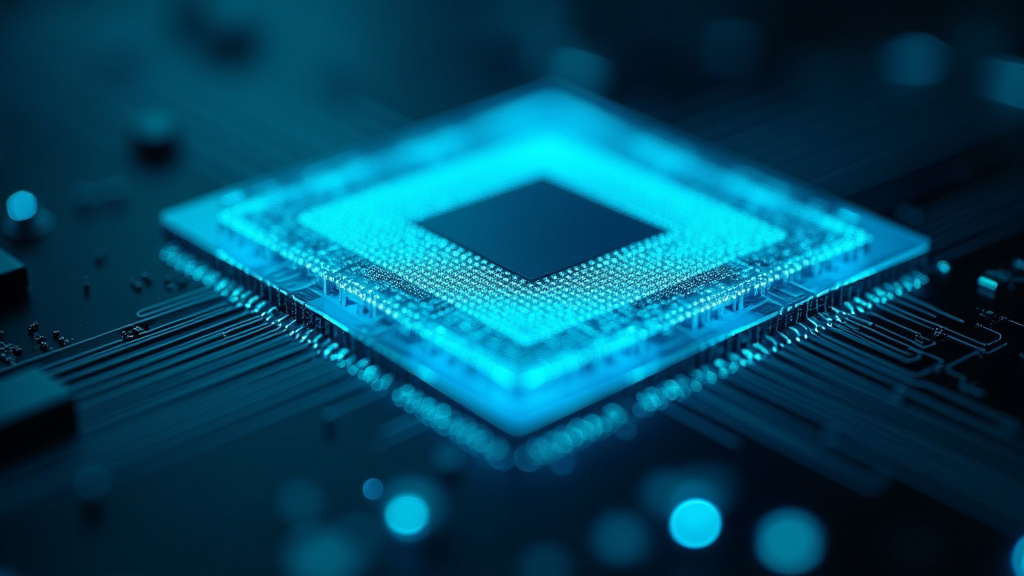



Building a supercomputer capable of hosting the next wave of AI models requires solving the massive thermal output generated by thousands of stacked H100 and B200 GPUs. The expansion plan incorporates specialized data center designs that prioritize liquid cooling over traditional air cooling. This shift is critical. Without efficient heat dissipation, even the most powerful GPU clusters are forced to throttle their performance, wasting millions of dollars in electricity and slowing research progress. The new infrastructure projects supported by Nvidia feature high-density racking systems that allow for modular growth, enabling OpenAI to add compute nodes without triggering catastrophic thermal runaway.
Strategic Market Implications
The market impact of this partnership cannot be overstated. Nvidia currently controls over 80% of the AI chip market, and by anchoring its hardware in OpenAI’s infrastructure, it creates a powerful “moat” against competitors like AMD and custom silicon initiatives from Google and Amazon. For OpenAI, the benefit is equally clear: supply chain certainty. In an environment where GPU scarcity has been the primary constraint on product rollouts, a guaranteed partnership with the primary hardware provider ensures that OpenAI can maintain its release cadence without fear of hardware shortages. This effectively insulates both entities from the volatility of the general GPU market, allowing them to focus entirely on the software-hardware co-design process.
Beyond the Server Rack: A Look Ahead
Looking toward the future, the implications of this expansion extend to the broader energy sector. To support these massive data centers, the industry is increasingly looking toward alternative energy sources, including nuclear and micro-grid solutions, to keep these facilities online 24/7. This partnership is likely to trigger a domino effect, forcing other hyperscalers—such as Meta, Google, and Oracle—to announce their own similar, large-scale infrastructure investments to remain competitive. We are witnessing the beginning of a capital-intensive arms race where the winner will be determined not just by parameter counts, but by the physical megawatts and GPU density available to train the next generation of AI.
FAQ: People Also Ask
Q: Why is Nvidia specifically backing OpenAI’s data center expansion instead of other startups?
A: Nvidia’s focus is on scaling and volume. OpenAI, through its partnership with Microsoft, currently represents the largest, most consistent demand for high-end AI compute. Backing them ensures Nvidia’s hardware remains the standard for the most advanced models in existence.
Q: Does this partnership imply a merger or exclusive acquisition?
A: No. This is a strategic infrastructure and hardware partnership. While both companies are deeply intertwined, they remain separate entities with distinct business objectives and board structures.
Q: How does this impact the general GPU market for smaller companies?
A: The massive concentration of supply going to Tier-1 players like OpenAI and Microsoft continues to keep GPU pricing high and availability low for smaller researchers and enterprises, effectively raising the barrier to entry for building large-scale models.
Q: What is the estimated timeline for this new infrastructure to come online?
A: While specific project milestones vary, these infrastructure projects typically operate on 18 to 36-month construction and deployment cycles, with the first waves of high-density clusters expected to go live incrementally throughout 2025 and 2026.