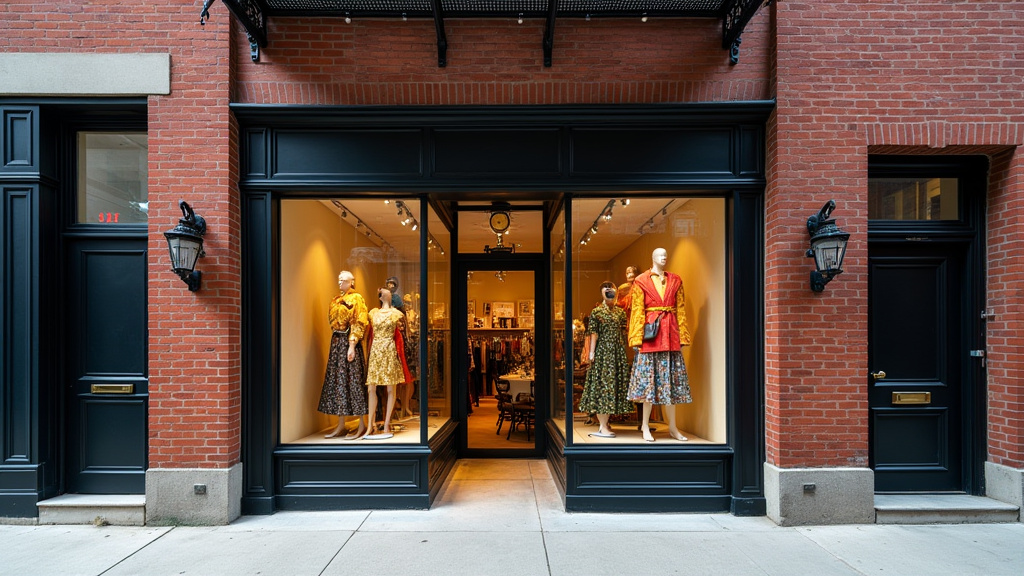
The Chicago Artisan Market, a cornerstone of the Midwest’s independent maker community, has officially returned to its Ravenswood home for its highly anticipated Spring Edition. Taking place this weekend, April 18-19, 2026, at the historic Artifact Events building, the market serves as more than just a retail destination—it is a vital convergence point for Chicago’s burgeoning creative economy. With over 100 vendors showcasing everything from avant-garde fashion to artisanal food, the event highlights a critical shift in consumer behavior: the move toward intentional, hyper-local, and sustainable consumption.
Key Highlights
- Event Dates: April 18–19, 2026, from 11:00 AM to 5:00 PM.
- Location: Artifact Events Building, 4325 N. Ravenswood Ave., Chicago.
- Scope: 100+ independent artisans featuring diverse categories, including home goods, fashion, gourmet food, and fine art.
- Accessibility: Easily reachable via the CTA Brown Line (Montrose stop) and the Metra Union Pacific North line.
- Community Impact: Focused on small-business growth and local maker support, providing a physical stage for businesses often limited to digital-only storefronts.
The Anatomy of the Modern Artisan Market
The return of the Chicago Artisan Market to the Ravenswood Industrial Corridor is not merely a seasonal occurrence; it is a barometer for the health of Chicago’s small-business sector. In an era where e-commerce giants dominate the retail landscape, events like this provide a vital, human-centric alternative known as the “slow shopping” movement. This approach emphasizes quality, provenance, and personal connection over the speed and anonymity of big-box retail.
The Shift Toward Intentional Consumption
Consumers in 2026 are increasingly discerning about the origins of their purchases. The market functions as an educational platform where shoppers can engage directly with the creators—whether it is a jeweler explaining their sourcing of recycled silver, or a confectioner detailing the provenance of their local, organic ingredients. This direct relationship builds a level of trust and emotional investment that global supply chains simply cannot replicate. For many attendees, the purchase is not just about the product; it is an endorsement of the artist’s values and a direct investment into the local neighborhood economy.
Ravenswood: An Industrial Anchor



Choosing the Artifact Events building in Ravenswood is a deliberate nod to the neighborhood’s architectural and industrial legacy. Once an area defined by heavy industry, the Ravenswood Corridor has successfully pivoted to become a hub for “maker” industries, including high-end cabinetry, art galleries, and now, curated marketplaces. This adaptive reuse of industrial space creates a unique atmosphere that bridges the gap between Chicago’s blue-collar history and its modern, creative identity. The exposed brick, expansive natural light, and sprawling, high-ceilinged layout of the venue amplify the “industrial-chic” aesthetic that has become synonymous with the Chicago Artisan Market brand.
Economic Resilience of Local Makers
Beyond the aesthetic appeal, these markets serve as a critical economic engine. For many of the 100+ vendors, the market represents their primary or secondary point of sale. By consolidating these small businesses into a high-traffic, curated event, the market reduces the friction that often hinders micro-enterprises. It allows brands to gather real-time feedback, test new product lines, and build a local following without the overhead costs of permanent brick-and-mortar storefronts. This “incubator” effect is essential for the longevity of the local creative ecosystem, enabling makers to scale their operations sustainably.
Emerging Trends in 2026
This year’s Spring Edition reflects broader shifts in artisan production. We are seeing a distinct trend toward “functional art”—items that blend aesthetic beauty with practical utility. From ceramic kitchenware that serves as dining table sculpture to slow-fashion accessories designed for durability rather than seasonal trends, the focus is squarely on longevity. Furthermore, the gourmet food section has expanded, featuring a rise in probiotic-focused foods, locally foraged ingredients, and plant-based artisanal staples. This aligns with a growing urban interest in holistic wellness and sustainable agriculture.
The Future of Urban Retail Space
As we look toward the future, the success of the Chicago Artisan Market poses an interesting question: Is the future of urban retail temporary? The rise of these pop-up, event-driven retail models suggests that consumers crave “event-based” experiences rather than passive browsing. The market offers a social experience, complete with bistro seating, live interactions, and the ability to discover new products in a vibrant, community-focused setting. This format offers a blueprint for how cities can revitalize underused industrial spaces, transforming them into nodes of commerce and social cohesion that are resilient to the whims of the digital marketplace.
FAQ: People Also Ask
Q: What is the ticket policy for the Chicago Artisan Market?
A: General admission tickets are $8 when purchased in advance online, or $10 at the door. There is also a group option of 4 tickets for $20, and a special package including a Deluxe CAM Tote for $10. Children under 12 receive free admission.
Q: Are pets allowed at the event?
A: Yes, well-behaved dogs on leashes are welcome to attend the market with their owners, making it a pet-friendly community outing.
Q: Is there parking available for attendees?
A: Yes, free street parking is available along both sides of Ravenswood Avenue, though attendees are encouraged to utilize public transportation due to the market’s close proximity to the CTA Brown Line and Metra stations.
Q: How does this market support sustainability?
A: The market emphasizes “shopping small,” which typically results in shorter supply chains, lower carbon footprints associated with shipping, and the promotion of ethically sourced, handmade goods that are designed to last, countering the “throwaway” culture of fast fashion.