The Chicago Bears’ ninth training camp practice proved to be a pivotal session, shifting the spotlight squarely onto situational football—the ultimate testing ground for roster depth and mental fortitude. As the team moves deeper into the summer, the intensity of these drills has scaled proportionally, with the coaching staff demanding perfection in high-leverage scenarios. Saturday’s session provided exactly that, with clear winners emerging from both the offensive and defensive units, providing concrete evidence of the team’s ongoing development.
The Bagent Blueprint: Executing Under Pressure
For any NFL team, the ability to execute a two-minute drill is the hallmark of a disciplined, well-prepared offense. On Saturday, quarterback Tyson Bagent provided a masterclass in this specific discipline. Leading the second-team offense, Bagent navigated the field with a measured, calm demeanor that belied the urgency of the drill. His performance was not merely about individual athletic ability; it was a demonstration of field generalship.
Bagent’s successful drive to a touchdown highlighted his growing comfort within the system. In the context of NFL training camps, where windows are tight and defensive schemes are designed to confuse, Bagent displayed the ability to process reads quickly and deliver the ball with precision. His success today serves as a stark reminder of the value of high-quality quarterback depth. While the starter commands the headlines, drives like these solidify the infrastructure of the offense, ensuring that if the call to action comes, the transition is seamless.
The Thieneman Factor: Defensive Discipline
On the other side of the ball, the defensive intensity was matched by standout individual play. Dillon Thieneman, who has been steadily carving out his reputation throughout camp, provided the signature moment of the afternoon. His interception was not a result of luck, but of disciplined pursuit and an innate understanding of route concepts. In a training camp environment, defensive players are often battling for rotation spots, and plays like this are the metrics by which coaches measure ‘game-readiness.’


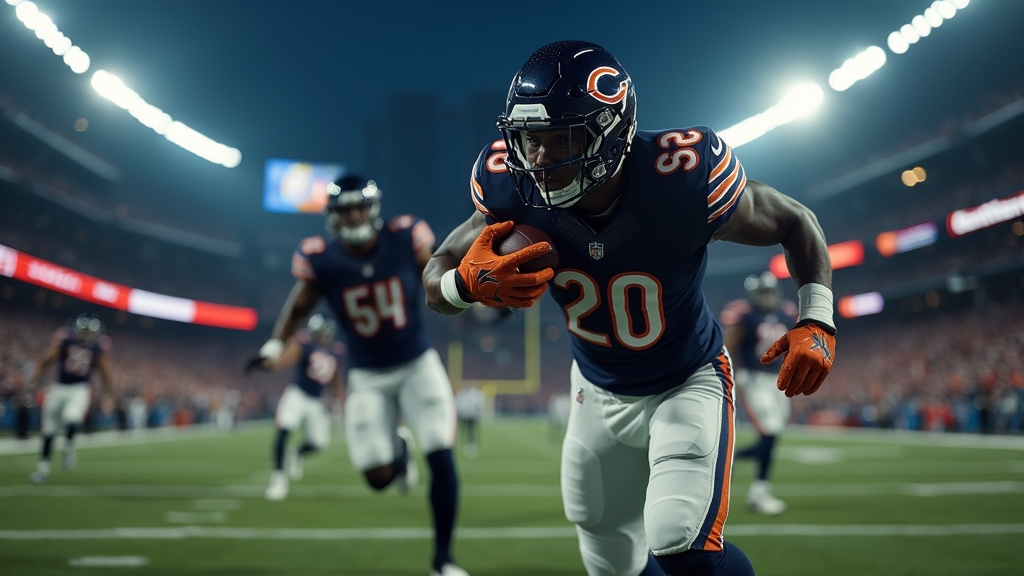
Thieneman’s interception essentially halted the momentum of the opposing unit, proving that the defense is operating with the same urgency as the offense. This ‘iron sharpens iron’ mentality is what the coaching staff has been pushing for since the start of camp. When defensive players like Thieneman can force turnovers in situational drills, it validates the defensive scheme and increases the overall competitive ceiling of the team.
Why Situational Football Matters
For fans and analysts watching the Bears’ development, the focus on ‘situational football’ is significant. It is not just a buzzword; it is a fundamental shift in how the team is preparing for the regular season. This type of practice focuses on specific game states: managing the clock, executing on third downs, red-zone efficiency, and goal-line stands.
By prioritizing these scenarios in the ninth practice, the coaching staff is ensuring that players are not just physically prepared for the long season ahead, but mentally wired to handle the chaos of a game-day environment. The success of Bagent’s drive and the impact of Thieneman’s turnover are tangible results of this philosophy. It suggests a team that is not just working on individual skills, but on the cohesive, tactical execution required to win close games in a competitive division.
The Road Ahead: Benchmarking Progress
As the Bears look toward their upcoming preseason engagements, the takeaways from Saturday are clear. The competition for roster spots is intensifying, and the gap between the first and second teams is narrowing in terms of execution. Players who can consistently demonstrate high-level play in these specific situational drills are the ones who will ultimately secure their roles as the regular season approaches.
With several weeks of camp still ahead, the challenge for both Bagent and Thieneman—and indeed the entire roster—is consistency. One successful drive or one key interception is the starting point; sustaining that level of performance when the stakes rise and the fatigue of a long season sets in is the ultimate test. For now, the ninth practice of training camp stands as a testament to the talent brewing in Chicago and a promising indicator of what this team is capable of achieving when the pressure is on.
FAQ: People Also Ask
Q: What is ‘situational football’ in an NFL training camp?
A: Situational football refers to practice segments designed to simulate specific, high-pressure game scenarios, such as two-minute drills, third-and-long conversions, red-zone execution, and goal-line stands. It forces players and coaches to make split-second, high-stakes decisions.
Q: Why was Tyson Bagent’s performance on Saturday considered significant?
A: Bagent’s ability to orchestrate a touchdown drive during a two-minute drill against a live defense demonstrates his command of the offense, his poise under pressure, and his readiness to step in as a reliable backup quarterback, which is a vital component of any playoff-caliber team.
Q: What does Dillon Thieneman’s interception indicate about the defense?
A: Thieneman’s interception is a sign of defensive awareness and discipline. It shows that defensive players are effectively studying the offensive scheme, reacting to routes in real-time, and capitalizing on opportunities to force turnovers, which is a key defensive goal for the Bears this season.
Q: How do these training camp reports influence final roster decisions?
A: Coaches and general managers closely track performance during situational drills to evaluate which players can execute under pressure. Consistent performance in these scenarios often decides the final roster spots and depth chart positioning before the regular season begins.