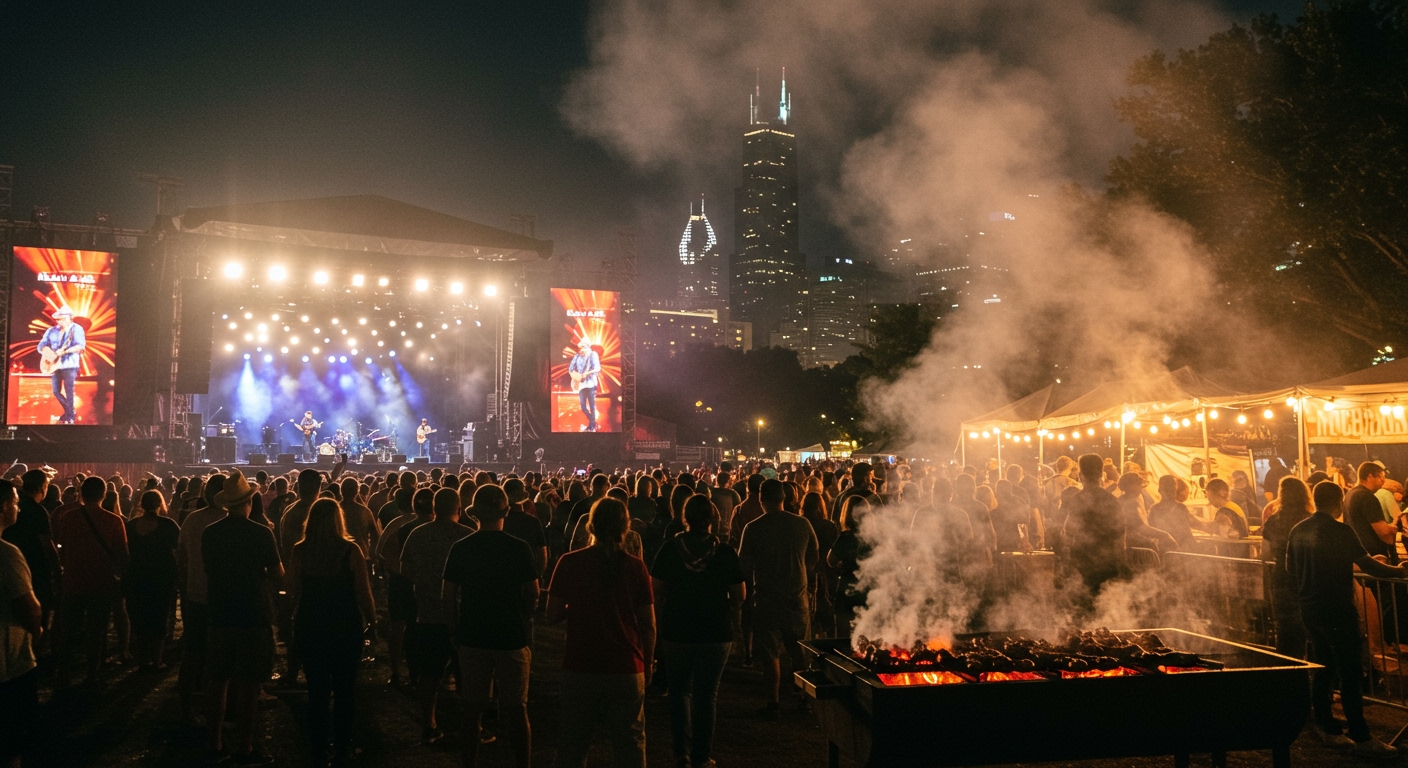
The highly anticipated Broadway in Chicago Summer Concert returns to Millennium Park’s iconic Jay Pritzker Pavilion on August 10, 2026, marking another cornerstone event in the city’s vibrant cultural calendar. Beginning at 6:15 p.m., this annual free concert serves as a grand showcase for the touring and resident productions that define Chicago’s status as one of the world’s premier theater destinations. As the city readies itself for an evening under the stars, attendees can look forward to exclusive sneak peeks, musical performances from current hits, and the unmistakable energy that only the intersection of world-class theater and Chicago architecture can provide. This year’s event is poised to draw thousands of residents and tourists alike to the heart of the Loop, highlighting a curated selection of productions that continue to shape the current theatrical landscape.
Key Highlights
- Event Date & Time: Sunday, August 10, 2026, at 6:15 p.m.
- Location: Jay Pritzker Pavilion, Millennium Park, Chicago.
- Featured Musicals: The lineup includes performances from ‘The Outsiders’, ‘The Notebook’, and Disney’s ‘The Lion King’.
- Accessibility: This is a free public event, though early arrival is highly recommended for optimal seating.
The Ultimate Guide to Chicago’s 2026 Broadway Showcase
The Broadway in Chicago Summer Concert is more than just a performance; it is a vital tradition that bridges the gap between Broadway’s elite stages and the general public. As we look toward the 2026 summer season, the lineup represents a compelling mix of classic spectacle and modern emotional storytelling. The Jay Pritzker Pavilion, designed by the world-renowned architect Frank Gehry, provides the perfect acoustic and visual setting for these performances, with its sprawling Great Lawn serving as an urban amphitheater that encourages a communal, accessible approach to high-culture entertainment.
Analyzing the 2026 Lineup: From Classics to New Hits
This year’s programming showcases the sheer diversity of theater currently captivating audiences in Chicago. Leading the charge is the high-energy, poignant adaptation of ‘The Outsiders’. Based on S.E. Hinton’s seminal novel, the musical has resonated deeply with contemporary audiences, bridging generational gaps through its exploration of youth, identity, and tribalism. Seeing elements of this production live in an outdoor setting is expected to be a major draw, offering a stark contrast to the sweeping, romantic intensity of ‘The Notebook’.
‘The Notebook’ brings a different flavor to the stage, grounding its narrative in the enduring power of memory and love. Following its success as a novel and a film, its transition to a musical has been lauded for its emotional score and delicate staging. Having these two shows—’The Outsiders’ and ‘The Notebook’—side-by-side at the pavilion illustrates the current industry trend of ‘prestige adaptation,’ where source material with built-in fanbases is elevated through sophisticated musical theater craft.

Finally, the presence of Disney’s ‘The Lion King’ provides the anchor for the evening. As a titan of the industry, ‘The Lion King’ represents the pinnacle of stage spectacle. The inclusion of numbers from this production ensures that the concert maintains its broad appeal, satisfying long-time theater enthusiasts while introducing new, younger audiences to the majesty of live performance. The technical choreography and puppetry inherent in the production remain a benchmark for theatrical design, and seeing even snippets of this work in the open-air environment of Millennium Park is a rare treat.
The Architecture of Sound: The Pritzker Pavilion Advantage
It is impossible to discuss the Broadway in Chicago Summer Concert without referencing the Jay Pritzker Pavilion itself. Opened in 2004, the venue remains a marvel of engineering. The trellis of steel pipes crisscrossing above the stage serves not only as a visual landmark of Chicago’s skyline but also supports a state-of-the-art sound system that projects clear, crisp audio across the Great Lawn. For a concert series like this, which relies heavily on vocal clarity and orchestral arrangement, the acoustic design of the pavilion is paramount. Attendees situated on the lawn often experience a surround-sound effect, thanks to the distributed audio system, ensuring that whether you are in the seated section or on the grass, the nuances of the Broadway arrangements are preserved.
Secondary Angle: The Economic Engine of Chicago Theater
Beyond the artistry, the Broadway in Chicago Summer Concert serves as a critical pulse-check for the city’s tourism economy. The theater district acts as a massive economic driver, with visitors frequently pairing their show attendance with dining, hotel stays, and retail shopping in the Loop and River North neighborhoods. By providing a free, high-profile event, organizers effectively market the entire ecosystem of downtown Chicago. This event functions as a ‘taster menu’—by showcasing the best of what is currently playing, the concert converts casual park-goers into ticket-buying patrons for the remainder of the season, directly stimulating ticket sales for the theaters.
Secondary Angle: The Evolution of Film-to-Stage Adaptations
The 2026 lineup is a masterclass in the current ‘adaptation era’ of Broadway. Examining the shift from screen to stage, it is clear that developers are looking for stories with established emotional resonance. ‘The Notebook’ and ‘The Outsiders’ are prime examples of this shift. Historically, Broadway relied on original books or revivals of classic plays, but the current economic reality favors intellectual property that audiences already recognize. The Summer Concert gives us a window into how these adaptations evolve: they must retain the ‘soul’ of the source material while finding new ways to utilize the unique capabilities of a live theater space, such as lighting, live orchestration, and the intimacy of live acting.
Secondary Angle: The Future of Urban Cultural Programming
Finally, the sustainability of events like this points to a wider shift in urban planning. Cities are increasingly viewing high-quality, free cultural programming as essential infrastructure rather than just entertainment. By activating public spaces like Millennium Park with world-class performers, Chicago is actively competing with other global cities for talent and tourism. This model—where public space meets elite performance—is becoming a gold standard for how to maintain a vibrant, active downtown in a post-pandemic world, where the office-centric economy has shifted toward a more hybrid, experience-driven model.
FAQ: People Also Ask
Q: Are there tickets required for the Broadway in Chicago Summer Concert?
A: No, the event is completely free to the public. There is no ticketing system for the Great Lawn; however, seating on the lawn is available on a first-come, first-served basis, so arriving early is highly recommended.
Q: Can I bring my own food and drinks to Millennium Park?
A: Yes, Millennium Park allows visitors to bring their own food and beverages. However, be mindful of the park’s specific regulations regarding glass containers and alcohol consumption. There are also several concession options available nearby in the park.
Q: What happens if it rains on the night of the concert?
A: The Broadway in Chicago Summer Concert is an outdoor event. While the Pritzker Pavilion stage is covered, the Great Lawn is not. In the event of inclement weather, check the official Broadway in Chicago and Millennium Park websites or social media channels for updates regarding potential delays or cancellations.