Skip to content
The Chicago Today
Quantum Aerospace
  • Home
  • Current News
  • Explore & Enjoy
  • Sports
  • Sound & Screen
  • Sip & Savor
  • Style & Innovation
  • Editors Take
Trending
September 13, 2026ARC Music Festival 2026: Lessons Learned from Ambitious Expansion September 12, 2026Grichuk’s Ninth-Inning Blast Propels White Sox to 6-5 Win September 12, 2026Streaming Guide: Top Picks for Sept 12-13, 2026 September 12, 2026Bears Secure Swift: $33.75M Extension Locks in RB Through 2029 September 11, 2026Lisa Says Gah! Hits Chicago: Inside the Wicker Park Pop-Up September 11, 2026Carín León Confirms 2027 Sphere Return After Historic Run September 11, 2026Chicago Honors 25th Anniversary of 9/11 with Solemn Tributes September 11, 2026White Sox Swept: AL Central Lead Dwindles After 2-0 Loss September 11, 2026Ravenswood ArtWalk: Chicago’s Industrial Corridor Reimagined September 11, 2026Brainerd Schools Overhaul Student Support After Summer Tragedies
The Chicago Today
The Chicago Today
  • Home
  • Current News
  • Explore & Enjoy
  • Sports
  • Sound & Screen
  • Sip & Savor
  • Style & Innovation
  • Editors Take
  • Blog
  • Forums
  • Shop
  • Contact
The Chicago Today
  Editors Take  ARC Music Festival 2026: Lessons Learned from Ambitious Expansion
Editors Take

ARC Music Festival 2026: Lessons Learned from Ambitious Expansion

Kevin DavidsonKevin Davidson—September 13, 20260
FacebookX TwitterPinterestLinkedInTumblrRedditVKWhatsAppEmail

ARC Music Festival’s ambitious 2026 expansion to a four-day format at Chicago’s Union Park successfully delivered a powerhouse house and techno lineup, yet simultaneously exposed critical operational stress points that left both organizers and attendees demanding a reassessment of the festival’s infrastructure. While the music remained the primary draw, the logistical hurdles—ranging from persistent sound bleed between stages to crowd density management—offered a masterclass in the complexities of scaling a boutique festival within a dense, historic urban environment.

Key Highlights

  • Four-Day Expansion: The festival extended its duration, testing the limits of Union Park’s capacity and the endurance of local infrastructure.
  • Operational Friction: Reviewers and attendees noted significant sound bleed between stages, particularly during peak sets.
  • Layout Constraints: The existing festival footprint struggled to accommodate the increased density and four-day traffic flow.
  • Lineup Excellence: Despite logistical critiques, the curatorial vision for house and techno remained peerless, reinforcing ARC’s reputation as a genre heavyweight.

The Anatomy of the 4-Day Expansion

The decision by Auris Presents to push ARC Music Festival into a four-day window was widely viewed as a bold, if not precarious, step forward. For years, ARC has been celebrated for its “no-filler” approach to lineups, bringing legendary house and techno acts to the historic Union Park. However, expanding the festival footprint and duration created a unique pressure cooker.

Logistically, adding the fourth day wasn’t merely about booking more talent; it was about shifting the operational burden. Chicago’s Union Park, while iconic, is not a purpose-built festival ground like Grant Park. It is a neighborhood asset. The expansion effectively meant that the “load” on the local grid, the neighborhood quiet hours, and the park’s surface integrity reached new thresholds. While the revenue potential of the additional day is obvious, the overhead—both financial and logistical—revealed that growth cannot occur in a vacuum.

Acoustic Realities: Battling the Sound Bleed

One of the most immediate and recurring criticisms of the 2026 edition was the issue of sound bleed. With four stages packed into the limited acreage of Union Park, the sonic bleed became more than just a nuisance; it was an interruption. During the overlapping sets of major headliners, the low-end frequencies from the main stage frequently collided with the more intricate, melodic structures of the secondary stages.


More stories

Chicago Funeral Home Shut Down After 56 Decomposing Bodies Found

August 8, 2026
Grocery Chains Enter the Pharmacy Battle: Could Giant Eagle Offer Relief Amid Soaring Prescription Costs and Closures?

Grocery Chains Enter the Pharmacy Battle: Could Giant Eagle Offer Relief Amid Soaring Prescription Costs and Closures?

July 6, 2025

Alarming Shingles Vaccination Gap Revealed in Emergency Departments, Study Suggests EDs as Key Intervention Point

October 29, 2025
energy

Understanding the Energy Crisis: Causes, Impacts, and Solutions for a Sustainable Future

September 24, 2024

In the context of house and techno—genres that rely heavily on sonic clarity, bass texture, and rhythmic precision—this acoustic interference is a significant detractor. Audio engineers on-site were tasked with a near-impossible challenge: contain high-decibel club music in an open-air park surrounded by residential architecture. The solution for 2027 will likely necessitate a fundamental shift in stage orientation or a reduction in total concurrent sound pressure, forcing organizers to decide whether they prioritize more stages or higher quality audio fidelity.

Crowd Flow and Spatial Logistics

Beyond the acoustics, the physical flow of 2026 attendees highlighted the limitations of the Union Park layout. With the festival running for an extra day, the accumulation of foot traffic placed immense strain on the venue’s pinch points. High-traffic areas, particularly near the main thoroughfares connecting the primary stages, became points of severe congestion.

Effective crowd management is the backbone of any large-scale event, and at ARC 2026, the bottlenecks slowed the experience down. When the density of the crowd exceeds the venue’s capacity for comfortable navigation, it increases fatigue and diminishes the “premium” experience that the festival aims to cultivate. For a festival that bills itself as a premier destination for dance music enthusiasts, the flow of movement between stages is as vital as the music itself.

The Future of ARC and Chicago’s Legacy

Chicago is the birthplace of house music, and ARC serves as the city’s annual pilgrimage for the genre’s global community. This adds a layer of cultural responsibility that extends beyond simple event management. The festival acts as a steward of a global culture, and the challenges faced in 2026 are ultimately growing pains for an event that has clearly outgrown its “boutique” label.

To continue its upward trajectory, the organizing team will need to leverage the data harvested from this expansion to optimize the physical site map. This may include limiting capacity on specific days, introducing “smart” scheduling to stagger peak crowds, or investing in advanced directional audio technology to mitigate the bleed. The 2026 edition proved that the audience demand is there, but the infrastructure must evolve to match that fervor.

FAQ: People Also Ask

Q: Will ARC Music Festival continue to be a four-day event in future years?
A: While organizers have not officially confirmed the format for 2027, the operational challenges faced in 2026 suggest that a return to three days or a significant restructuring of the four-day schedule is possible to address capacity concerns.

Q: Why is sound bleed such a problem at Union Park?
A: Union Park is a relatively compact urban park surrounded by residential areas. The proximity of the stages to one another and the necessity of containing sound within specific boundaries creates acoustic interference that is difficult to manage without significantly lowering stage volume.

Q: How does the location affect the festival’s growth?
A: Being located in a dense neighborhood limits the festival’s ability to expand its footprint geographically. Any growth must be managed through logistical efficiency rather than physical expansion, which places high pressure on site planning.

Q: What is the primary focus of ARC Music Festival?
A: ARC is dedicated almost exclusively to house and techno, aiming to curate lineups that feature both legendary pioneers and rising stars of the genre, maintaining a high level of “no-filler” musical integrity.

Related coverage

  • Economic Toll: How ‘Hunkering Down’ Costs Cook County Millions
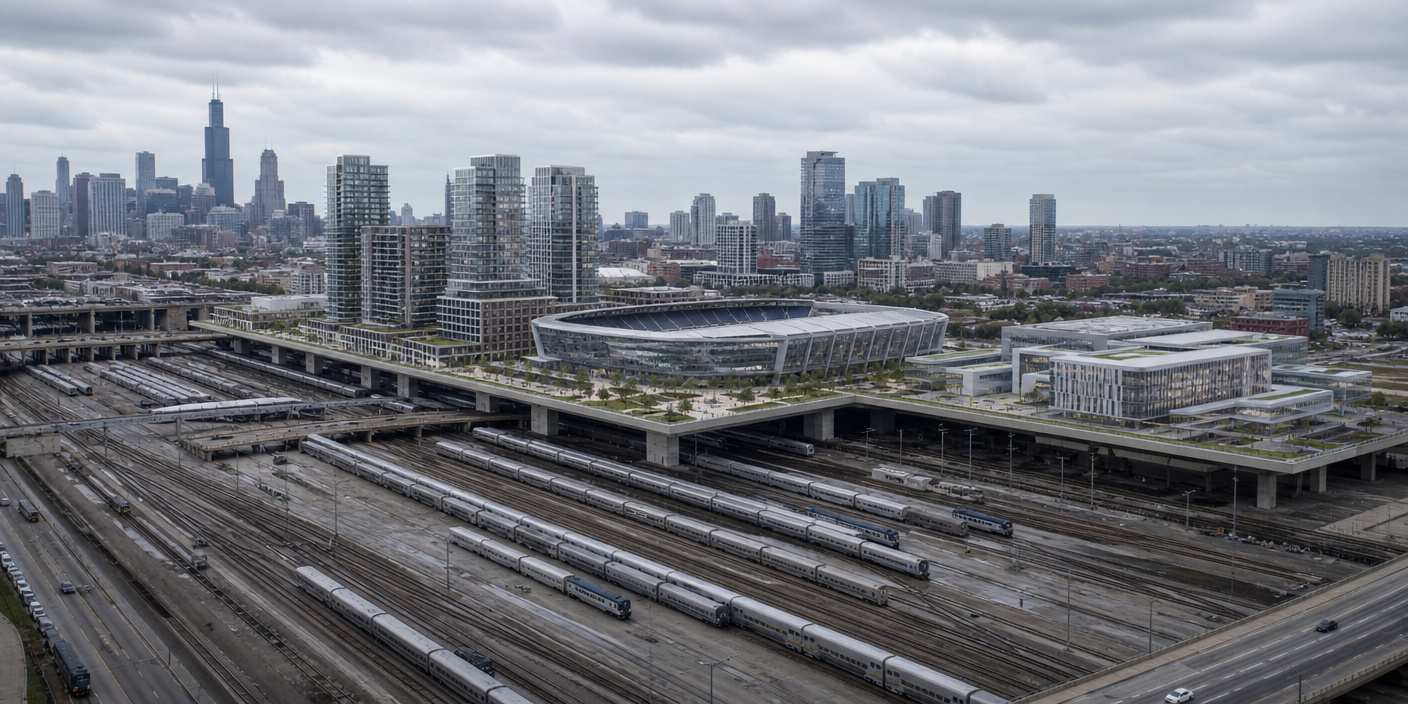
  • The Railyards: Inside the Massive Chicago Development Plan
  • Chicago Readies for APTA 2026: A Transit Renaissance
FacebookX TwitterPinterestLinkedInTumblrRedditVKWhatsAppEmail

Kevin Davidson

Kevin Davidson is a journalist who navigates the evolving landscapes of music and streaming media, connecting readers to the tracks, platforms, and artists shaping our listening habits. His work looks beyond the billboard charts, delving into the creative processes behind new releases and exploring how emerging tech reshapes the way we discover, share, and appreciate sound. Whether he’s reviewing a groundbreaking album, profiling a future hitmaker, or analyzing the latest streaming trends, Kevin offers insights that strike a chord with both longtime fans and curious newcomers. Off the clock, you might find him curating playlists, testing out the latest audio gear, or swapping recommendations in local record shops. Wherever music is moving next, Kevin’s there to tune you in.

Grichuk’s Ninth-Inning Blast Propels White Sox to 6-5 Win
Related posts
  • Related posts
  • More from author
Editors Take

Economic Toll: How ‘Hunkering Down’ Costs Cook County Millions

September 8, 20260
Editors Take

The Railyards: Inside the Massive Chicago Development Plan

September 5, 20260
Editors Take

Chicago Readies for APTA 2026: A Transit Renaissance

September 1, 20260
Load more
Read also
Headlines

Grichuk’s Ninth-Inning Blast Propels White Sox to 6-5 Win

September 12, 20260
Sound & Screen

Streaming Guide: Top Picks for Sept 12-13, 2026

September 12, 20260
Sports

Bears Secure Swift: $33.75M Extension Locks in RB Through 2029

September 12, 20260
Style & Innovation

Lisa Says Gah! Hits Chicago: Inside the Wicker Park Pop-Up

September 11, 20260
Sound & Screen

Carín León Confirms 2027 Sphere Return After Historic Run

September 11, 20260
Featured

Chicago Honors 25th Anniversary of 9/11 with Solemn Tributes

September 11, 20260
Load more
Recent Posts
  • ARC Music Festival 2026: Lessons Learned from Ambitious Expansion September 13, 2026
  • Grichuk’s Ninth-Inning Blast Propels White Sox to 6-5 Win September 12, 2026
  • Streaming Guide: Top Picks for Sept 12-13, 2026 September 12, 2026
  • Bears Secure Swift: $33.75M Extension Locks in RB Through 2029 September 12, 2026
  • Lisa Says Gah! Hits Chicago: Inside the Wicker Park Pop-Up September 11, 2026

    # TRENDING

    chicago20252026aiFashionStreamingreviewaccountabilityinnovationfundingfestivalmusicnetflixalbumculinaryactionacquisitionnascarhululineup
    © 2024 All Rights Reserved by Chicago Today
    • Contact
    • Cookie Policy
    • Privacy Policy
    The Chicago Today
    Manage Consent
    To provide the best experiences, we use technologies like cookies to store and/or access device information. Consenting to these technologies will allow us to process data such as browsing behavior or unique IDs on this site. Not consenting or withdrawing consent, may adversely affect certain features and functions.
    Functional Always active
    The technical storage or access is strictly necessary for the legitimate purpose of enabling the use of a specific service explicitly requested by the subscriber or user, or for the sole purpose of carrying out the transmission of a communication over an electronic communications network.
    Preferences
    The technical storage or access is necessary for the legitimate purpose of storing preferences that are not requested by the subscriber or user.
    Statistics
    The technical storage or access that is used exclusively for statistical purposes. The technical storage or access that is used exclusively for anonymous statistical purposes. Without a subpoena, voluntary compliance on the part of your Internet Service Provider, or additional records from a third party, information stored or retrieved for this purpose alone cannot usually be used to identify you.
    Marketing
    The technical storage or access is required to create user profiles to send advertising, or to track the user on a website or across several websites for similar marketing purposes.
    • Manage options
    • Manage services
    • Manage {vendor_count} vendors
    • Read more about these purposes
    View preferences
    • {title}
    • {title}
    • {title}