Governments from leading economies concluded a significant week-long summit today, marking a pivotal moment in the global effort to govern artificial intelligence. The high-level gathering culminated in an agreement on a foundational international framework for AI regulation. This accord represents an unprecedented level of consensus among major global powers regarding the necessity and approach to overseeing the rapidly evolving field of AI. The framework aims to establish common principles and guidelines to navigate the complex challenges and opportunities presented by advanced AI models, ensuring that their development proceeds in a manner that is safe, equitable, and beneficial for societies worldwide. The conclusion of the summit today underscores the urgency felt by international leaders to address the societal and economic impacts of AI before potential risks become unmanageable.
The Pillars of the Proposed Framework



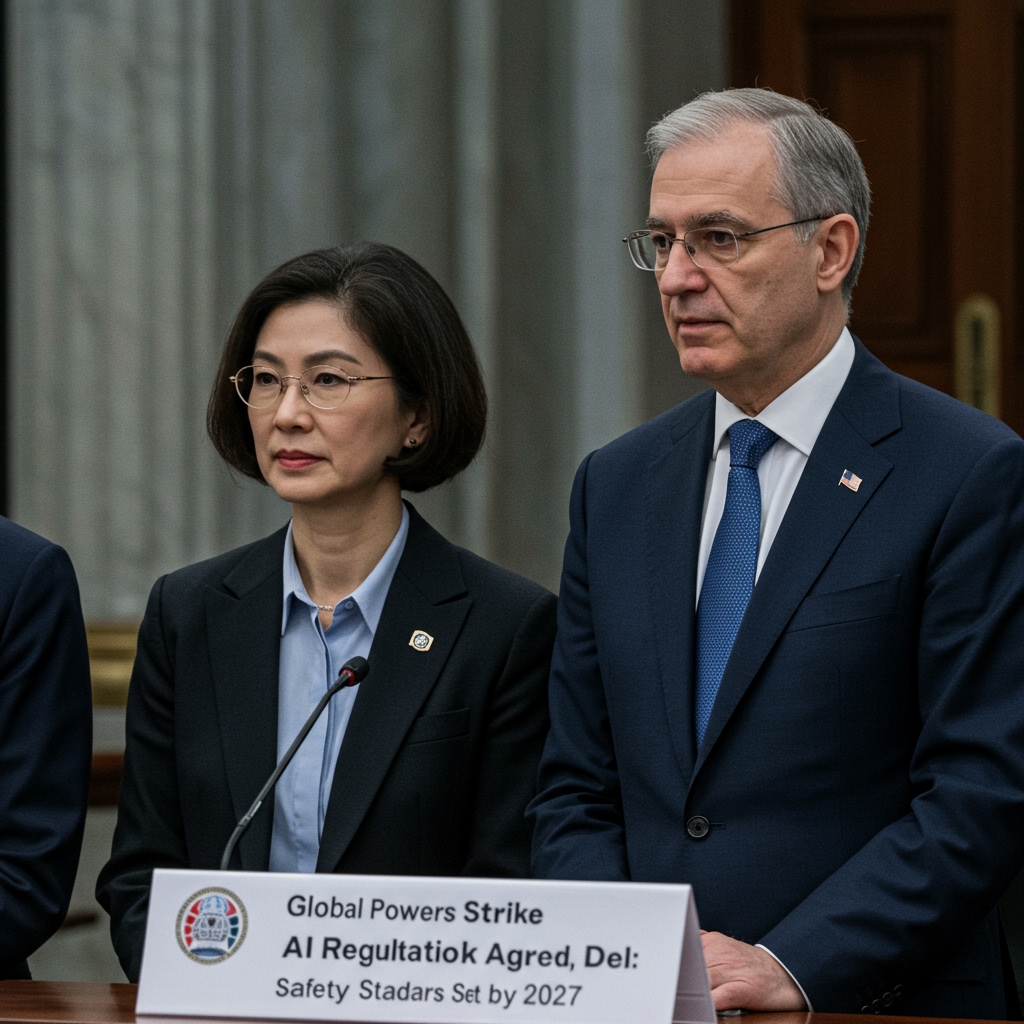
The core tenets of the proposed regulatory framework are centered on three critical areas: ensuring transparency, mitigating bias, and establishing robust safety standards. Recognizing the ‘black box’ nature of some advanced AI systems, the framework emphasizes the need for greater transparency in how AI models are developed, trained, and deployed. This includes demands for clarity on data sources, algorithmic decision-making processes, and the intended use cases of AI applications. The goal is to make AI more understandable and accountable, allowing for scrutiny and trust. Mitigating bias is another central pillar, acknowledging that AI systems can perpetuate or even amplify existing societal biases present in their training data. The framework calls for methodologies and standards to identify, measure, and reduce unfair biases in AI outcomes, particularly in applications affecting critical areas like hiring, lending, and criminal justice. Furthermore, establishing stringent safety standards for advanced AI models is paramount. This involves developing protocols for testing, validation, and risk assessment to prevent unintended harmful behaviors, ensure reliability, and build safeguards against malicious use or catastrophic failures. The framework sets an ambitious target, aiming for these foundational guidelines on transparency, bias mitigation, and safety standards to be substantially implemented by 2027. This timeline reflects both the rapid pace of AI advancement and the significant undertaking required to develop and adopt global standards.
A Coalition of Key Global Players
The summit brought together delegates from a diverse yet influential group of nations and economic blocs. Key participants included representatives from the United States, the European Union, China, and India. The presence and agreement of these major global players are particularly significant, representing economies and technological hubs that are at the forefront of AI research, development, and adoption. Despite potentially divergent national approaches to technology governance, these participants emphasized a shared recognition of the profound impact of AI and the imperative for global cooperation. Discussions highlighted the dual challenge of managing the inherent risks associated with powerful AI technologies while simultaneously fostering the innovation needed to harness AI’s potential for economic growth, scientific discovery, and societal progress. The consensus reached by this group signals a collective acknowledgment that uncoordinated national regulations could hinder innovation and create loopholes, necessitating a harmonized international approach. Their joint commitment provides significant momentum to the global governance of AI.
Establishing Mechanisms for Ongoing Governance
Crucially, the framework is designed to be adaptable and responsive to the fast-changing nature of AI technology. To ensure this, the agreement establishes a new joint working group operating under the auspices of the UN technology committee. This dedicated group will be tasked with the continuous monitoring of AI development worldwide. Its mandate includes tracking technological advancements, identifying emerging risks, and assessing the effectiveness of the established framework. A key function of this working group will be to recommend updates to the guidelines and standards annually. This provision for regular review and revision acknowledges that the regulatory landscape must evolve alongside the technology itself, preventing the framework from becoming quickly outdated in such a dynamic field. The placement under the UN technology committee provides a recognized international platform for this ongoing work, facilitating broader participation and legitimacy over time.
Looking Ahead: Finalizing the Details
While the summit successfully laid the foundational international framework, participants acknowledged that significant work remains to translate principles into actionable policies. Details regarding crucial aspects such as enforcement mechanisms and specific liability rules were not finalized in this initial agreement. These complex issues, which will determine how the framework is practically implemented and what consequences arise from non-compliance or AI-related harms, are expected to be finalized in subsequent meetings scheduled later this year. These follow-up discussions will delve into the practicalities of monitoring adherence to the standards, the legal responsibilities of developers and deployers of AI, and mechanisms for international cooperation in enforcing the regulations. The phased approach reflects the complexity of these issues and the need for careful deliberation to ensure that the final rules are effective, fair, and globally applicable where possible.
Context and Significance of the Agreement
The agreement reached today represents a landmark step in the global governance of artificial intelligence. Against a backdrop of rapid AI advancements – from large language models to autonomous systems – and increasing public and governmental concern about potential misuse, job displacement, and ethical dilemmas, the need for concerted international action has become undeniable. Different countries and regions have begun developing their own regulatory approaches, raising the prospect of a fragmented global landscape that could stifle innovation and exacerbate disparities. This foundational international framework seeks to provide a common reference point, encouraging alignment among national regulations and promoting a shared understanding of best practices. By prioritizing transparency, bias mitigation, and safety, the framework aims to steer AI development towards outcomes that are beneficial, trustworthy, and aligned with human values. The collaboration between the United States, European Union, China, and India, facilitated by the summit and institutionalized through the new UN working group, signals a growing recognition that the challenges and opportunities of AI are inherently global, requiring a coordinated, multilateral response. While the path to comprehensive global AI governance is still long, the agreement reached today provides a crucial foundation and positive momentum for future efforts.