Skip to content
The Chicago Today
Quantum Aerospace
  • Home
  • Current News
  • Explore & Enjoy
  • Sports
  • Sound & Screen
  • Sip & Savor
  • Style & Innovation
  • Editors Take
Trending
June 10, 2026WMG Buys Sureel AI for Artist Protection June 10, 2026Chicago Park Sees Burning Cross: Police Probe Hate Crime June 10, 2026Chicago Park Burning Cross Sparks Police Investigation June 10, 2026Chicago Hit by Heatwave & Fierce Storms June 10, 2026Montgomery’s MLB Debut: Walk-off Homer Stuns Braves June 10, 2026Chicago’s Nightlife Heats Up: Your Ultimate Guide June 10, 2026Apple’s Siri Gets Major AI Upgrade at WWDC June 10, 2026Schaumburg’s Secret: A Thriving Hub! June 10, 2026Prime Video’s June 2026 Lineup Revealed! June 8, 2026New Music Unleashed: June 8th’s Hottest Releases
The Chicago Today
The Chicago Today
  • Home
  • Current News
  • Explore & Enjoy
  • Sports
  • Sound & Screen
  • Sip & Savor
  • Style & Innovation
  • Editors Take
  • Blog
  • Forums
  • Shop
  • Contact
The Chicago Today
  Style & Innovation  US Senate Delivers Decisive Blow to Big Tech, Overwhelmingly Rejects 10-Year Ban on State AI Regulation
Style & Innovation

US Senate Delivers Decisive Blow to Big Tech, Overwhelmingly Rejects 10-Year Ban on State AI Regulation

Tyreek WashingtonTyreek Washington—July 1, 20250
FacebookX TwitterPinterestLinkedInTumblrRedditVKWhatsAppEmail

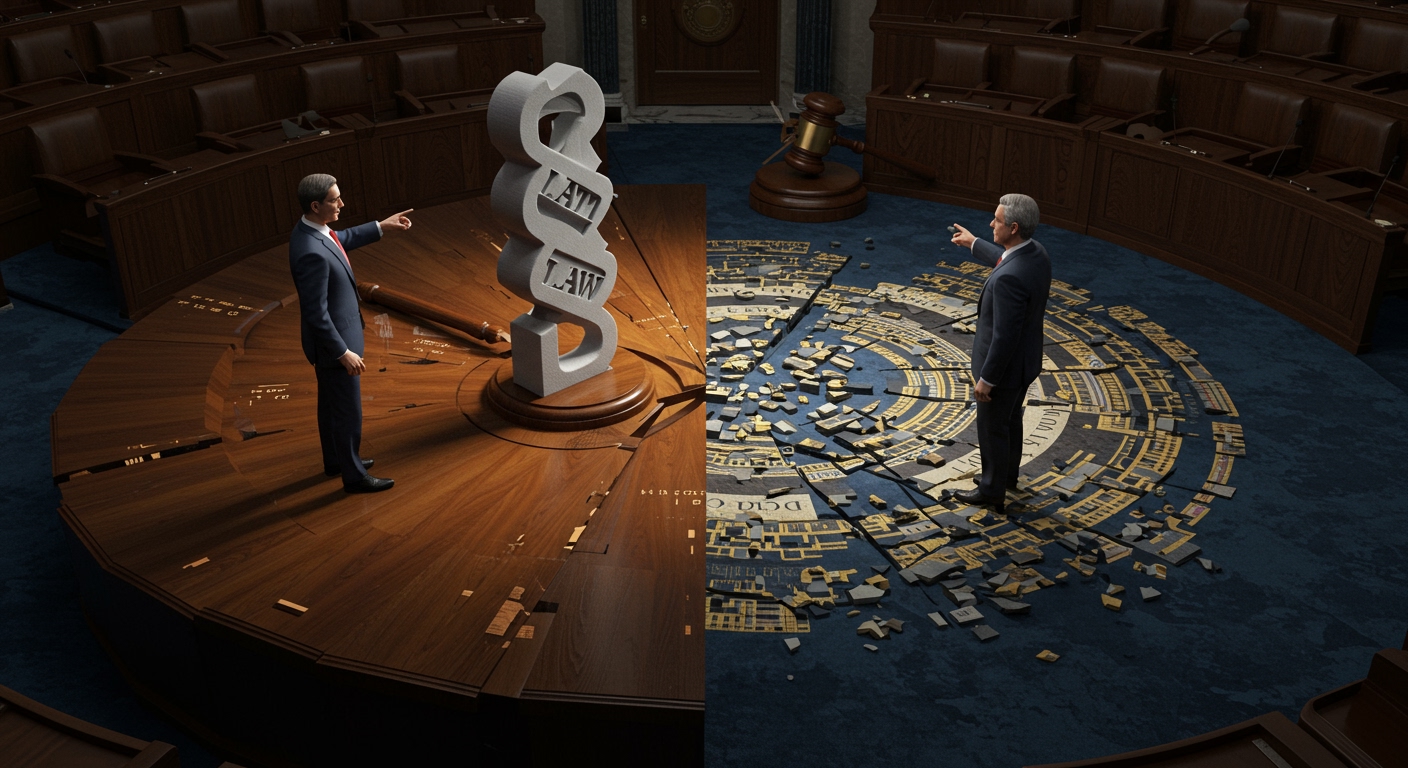
Washington, DC – In a significant legislative maneuver striking a blow to the ambitions of major technology companies, the United States Senate voted overwhelmingly early Tuesday, July 1, 2025, to remove a controversial provision that would have imposed a 10-year moratorium on state-level regulation of artificial intelligence. The vote, a striking 99-1 margin, occurred during an overnight session on Capitol Hill as part of deliberations over President Trump’s expansive legislative package, dubbed the “One Big Beautiful Bill.”

The excised provision, which had been quietly inserted into the sprawling bill, was seen by many in the tech industry as a means to prevent a potentially complicated and fragmented regulatory landscape across different states. Companies such as OpenAI and Google were among those that had reportedly lobbied intensely for the inclusion of the decade-long ban, arguing that a single, clear federal framework would be preferable for fostering innovation and ensuring consistent compliance standards.

The Core Issue: Federal vs. State Control

The debate over AI regulation has rapidly intensified as the technology becomes more sophisticated and integrated into various aspects of daily life, from healthcare and finance to transportation and national security. While there is broad consensus on the need for some form of oversight, there remains significant disagreement on who should hold the primary regulatory authority – the federal government, individual states, or a combination of both.

The proposed 10-year ban on state action effectively sought to grant the federal government exclusive jurisdiction over AI regulation for the next decade, creating a regulatory vacuum at the state level. Critics of the provision argued vehemently against it, highlighting the perceived slow pace and historical difficulties Congress has faced in passing comprehensive technology legislation. They contended that relying solely on potential future federal action, while prohibiting states from addressing pressing issues like algorithmic bias, data privacy, and the societal impact of AI, would effectively leave the technology largely unregulated for a significant period.

Overnight Senate Action
More stories
GOP Rift Conservative Pressure Sink Federal Ban on State AI Regulation in Senate Vote

GOP Rift, Conservative Pressure Sink Federal Ban on State AI Regulation in Senate Vote

July 5, 2025

NASA Artemis II: The Historic Moon Mission Timeline

April 2, 2026

Apple Taps Google Gemini AI for Next-Gen Siri Upgrade

January 13, 2026
Chicago Fashion Week Returns October 9 19 2025 Citywide Celebration of Style and Design Unveiled

Chicago Fashion Week Returns October 9-19, 2025: Citywide Celebration of Style and Design Unveiled

June 6, 2025

The move to strip the ban from the “One Big Beautiful Bill” was initiated through an amendment tabled by Republican Senator Marsha Blackburn of Tennessee. The swift adoption of her amendment during the overnight session in Washington, DC, underscored the bipartisan opposition to preventing states from developing their own regulatory frameworks for AI. The lopsided 99-1 vote tally is a rare display of near-unanimity in the often-divided Senate, signaling a strong preference among senators to preserve or empower states’ ability to address the evolving challenges posed by artificial intelligence within their borders.

Senator Blackburn and other proponents of the amendment argued that states often serve as crucial laboratories for policy innovation and that preventing them from acting on AI could stifle important regulatory experimentation and adaptation to local needs and concerns.

Implications for AI Regulation

The removal of the 10-year moratorium has immediate and long-term implications. Most significantly, it clears the path for individual states to begin considering or enacting their own laws and regulations concerning artificial intelligence. This could lead to a diverse set of rules governing everything from how AI is used in hiring and lending decisions to its deployment in autonomous vehicles and critical infrastructure.

While this prospect excites advocates for state-level flexibility and responsive governance, it raises concerns among technology companies about navigating a complex, potentially inconsistent patchwork of 50 different state regulatory regimes. This fragmentation, they argue, could increase compliance costs, complicate product development and deployment, and potentially disadvantage American tech companies globally compared to competitors operating under more unified national rules.

Industry Reaction and Lobbying Efforts

The defeat in the Senate represents a notable setback for the powerful technology lobby. Tech giants and industry associations had invested considerable resources in advocating for the preemption clause, emphasizing the benefits of regulatory certainty and the potential for conflicting state laws to hinder innovation.

Companies like OpenAI and Google, at the forefront of AI development, had championed the federal-only approach as essential for scaling their technologies responsibly and efficiently across the nation. The 99-1 vote, however, demonstrates that their arguments did not resonate with the vast majority of senators, suggesting a prevailing view that states should not be sidelined in the critical task of AI governance.

Path Forward in Congress

With the provision stripped from the Senate version of President Trump’s “One Big Beautiful Bill,” the focus may now shift to the House of Representatives. While House Republicans might theoretically attempt to reintroduce the AI regulatory ban provision during potential conference committee negotiations or future legislative efforts, current reports indicate that their legislative priorities are presently focused on other significant issues, including addressing the federal deficit and pursuing reforms or cuts to Medicaid programs. This suggests that, for the immediate future, the door appears open for states to take the lead in developing AI regulations, absent clear and decisive action at the federal level.

The Senate’s decisive vote early on July 1, 2025, marks a pivotal moment in the burgeoning debate over artificial intelligence governance in the United States, emphatically rejecting a proposed federal power grab and potentially ushering in an era of varied state-level AI regulatory approaches.


author avatar
Tyreek Washington
Tyreek Washington is a music and tech writer from Chicago, whose early love for music drove him to self-teach technology skills so he could afford to make digital music. His journey led him to earn a programming degree and secure positions as a soundboard manager at prominent recording studios and music festivals, as well as a programmer for Amazon. Craving a shift from the corporate routine, Tyreek turned to journalism, where he now combines his self-taught tech savvy and profound musical knowledge to report on the latest trends and innovations in both fields. His articles, rich with insight and expertise, establish him as a respected voice in the music and technology industries, connecting deeply with his audience.
See Full Bio
FacebookX TwitterPinterestLinkedInTumblrRedditVKWhatsAppEmail

Tyreek Washington

Tyreek Washington is a music and tech writer from Chicago, whose early love for music drove him to self-teach technology skills so he could afford to make digital music. His journey led him to earn a programming degree and secure positions as a soundboard manager at prominent recording studios and music festivals, as well as a programmer for Amazon. Craving a shift from the corporate routine, Tyreek turned to journalism, where he now combines his self-taught tech savvy and profound musical knowledge to report on the latest trends and innovations in both fields. His articles, rich with insight and expertise, establish him as a respected voice in the music and technology industries, connecting deeply with his audience.

Grammarly Boosts AI Push with Acquisition of Email Productivity Startup Superhuman
Chicago Tipped Workers See Historic Wage Hike as ‘One Fair Wage’ Ordinance Advances
Related posts
  • Related posts
  • More from author
Style & Innovation

Apple’s Siri Gets Major AI Upgrade at WWDC

June 10, 20260
Style & Innovation

Blck Solstice Elevates: Music and Community Thrive

June 8, 20260
Style & Innovation

SpaceX Secures Major Google AI Deal

June 6, 20260
Load more
Read also
Sound & Screen

WMG Buys Sureel AI for Artist Protection

June 10, 20260
Headlines

Chicago Park Sees Burning Cross: Police Probe Hate Crime

June 10, 20260
Featured

Chicago Park Burning Cross Sparks Police Investigation

June 10, 20260
Editors Take

Chicago Hit by Heatwave & Fierce Storms

June 10, 20260
Sports

Montgomery’s MLB Debut: Walk-off Homer Stuns Braves

June 10, 20260
Sip & Savor

Chicago’s Nightlife Heats Up: Your Ultimate Guide

June 10, 20260
Load more
Recent Posts
  • WMG Buys Sureel AI for Artist Protection June 10, 2026
  • Chicago Park Sees Burning Cross: Police Probe Hate Crime June 10, 2026
  • Chicago Park Burning Cross Sparks Police Investigation June 10, 2026
  • Chicago Hit by Heatwave & Fierce Storms June 10, 2026
  • Montgomery’s MLB Debut: Walk-off Homer Stuns Braves June 10, 2026

    # TRENDING

    chicago20252026aiFashionStreamingreviewaccountabilityinnovationfundingfestivalmusicnetflixalbumculinaryactionacquisitionnascarhululineup
    © 2024 All Rights Reserved by Chicago Today
    • Contact
    • Cookie Policy
    • Privacy Policy
    chiago today lower txt logo colroed and finished wbg
    Manage Consent
    To provide the best experiences, we use technologies like cookies to store and/or access device information. Consenting to these technologies will allow us to process data such as browsing behavior or unique IDs on this site. Not consenting or withdrawing consent, may adversely affect certain features and functions.
    Functional Always active
    The technical storage or access is strictly necessary for the legitimate purpose of enabling the use of a specific service explicitly requested by the subscriber or user, or for the sole purpose of carrying out the transmission of a communication over an electronic communications network.
    Preferences
    The technical storage or access is necessary for the legitimate purpose of storing preferences that are not requested by the subscriber or user.
    Statistics
    The technical storage or access that is used exclusively for statistical purposes. The technical storage or access that is used exclusively for anonymous statistical purposes. Without a subpoena, voluntary compliance on the part of your Internet Service Provider, or additional records from a third party, information stored or retrieved for this purpose alone cannot usually be used to identify you.
    Marketing
    The technical storage or access is required to create user profiles to send advertising, or to track the user on a website or across several websites for similar marketing purposes.
    • Manage options
    • Manage services
    • Manage {vendor_count} vendors
    • Read more about these purposes
    View preferences
    • {title}
    • {title}
    • {title}