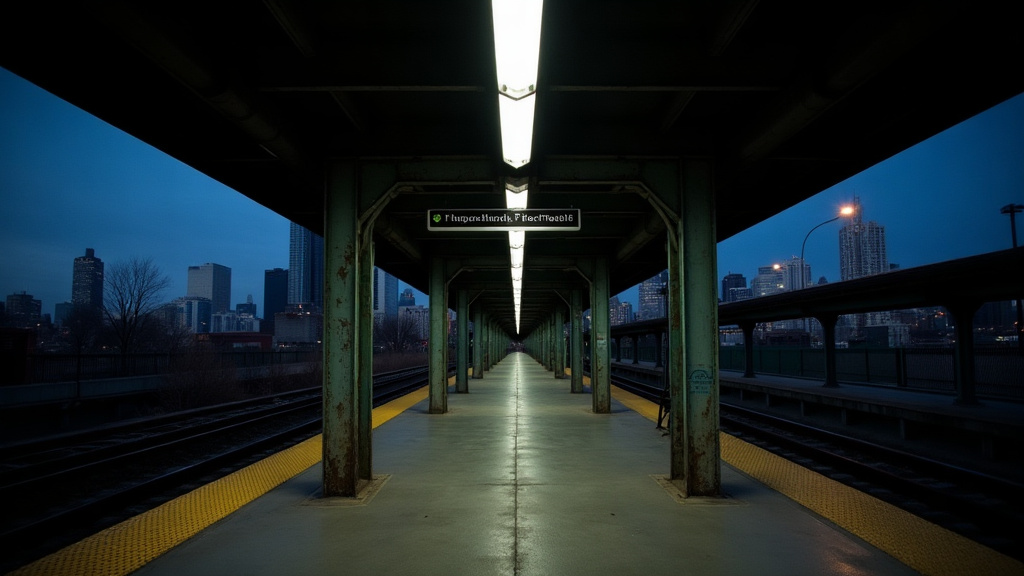
A critical ground radar system malfunction at Chicago O’Hare International Airport (ORD) has triggered a mandatory ground stop and caused widespread flight delays, severely disrupting travel plans for thousands during the high-volume Thanksgiving holiday period. The outage, which impacts the airport’s ability to safely manage ground traffic and approach patterns, has forced the Federal Aviation Administration (FAA) to implement strict flow control measures, resulting in a cascade of delays that are reverberating across the national airspace system.
Key Highlights
- Immediate Operational Halt: A malfunction in ground radar systems at the Elgin Terminal Radar Approach Control (TRACON) facility has initiated a ground stop, preventing aircraft from departing for or arriving at O’Hare.
- Holiday Travel Impact: The incident occurred during the peak Thanksgiving travel window, historically the busiest time of year for US aviation, exacerbating the impact on passengers.
- Cascading Delays: Beyond the Chicago hub, the radar outage is causing ripple-effect delays across the national network as aircraft scheduled to cycle through ORD remain grounded.
- FAA Oversight: Federal authorities have deployed technical teams to troubleshoot the infrastructure failure, though a timeline for full operational recovery remains fluid.
Anatomy of an Airspace Crisis
The infrastructure failure at Chicago O’Hare serves as a stark reminder of the fragility inherent in the United States’ air traffic control (ATC) network. O’Hare is consistently one of the busiest airports in the world, functioning as a primary hub for major carriers like United Airlines and American Airlines. When the ground radar systems—the digital eyes of the air traffic controllers—fail, the margin for error effectively vanishes.
The Role of Elgin TRACON
At the center of this technical failure is the Elgin TRACON, the facility responsible for managing the complex airspace surrounding Chicago. This facility coordinates the flow of aircraft into and out of O’Hare, Midway, and several smaller reliever airports. Unlike en-route radar, which tracks planes at high altitudes, ground radar provides the necessary situational awareness for the final approach, landing, and taxiing phases. When this system goes offline, controllers are forced to switch to procedural separation, a legacy method that drastically increases the distance required between aircraft. This reduction in throughput capacity creates an immediate backlog, turning an efficient, high-frequency airport into a bottleneck.
The Cost of Congestion
For the average traveler, the terminology of an “ATC delay” often obscures the gravity of the situation. In reality, these delays represent a complex logistical failure. As aircraft sit on the tarmac awaiting clearance, crews approach their maximum “duty time” limits set by the FAA. Once a crew times out, the flight must be canceled or delayed significantly until a replacement crew can be sourced. This creates a secondary layer of operational chaos, turning a technical radar issue into a multi-day recovery effort for major airlines. The economic impact is profound: with thousands of flights delayed, the cost of fuel, crew repositioning, and passenger compensation mounts rapidly, placing an immense strain on carrier balance sheets during their most profitable season.
Infrastructure Vulnerability and Modernization


This incident highlights the ongoing challenges of the NextGen (Next Generation Air Transportation System) integration. While the FAA has been working to modernize ATC facilities with digital, satellite-based communication and navigation tools, the transition from legacy analog systems to a fully digital, resilient network has been plagued by implementation delays.
Critics of current aviation infrastructure argue that the reliance on aging, localized hardware at key hubs like Chicago creates single points of failure. The radar system malfunction exposes a critical need for redundancy. While air traffic control is inherently safety-first, the lack of immediate, seamless failover mechanisms in ground radar systems suggests that current modernization efforts may not be keeping pace with the demands of modern air travel. For the flying public, this means that even minor technical glitches can lead to system-wide failures.
Secondary Angles: Understanding the Aftermath
The Passenger Rights Landscape
In the wake of such a malfunction, passengers are often left in a state of confusion regarding their rights. Because this outage is classified as an “ATC delay,” it falls under the category of events beyond the airline’s direct control. However, under recent Department of Transportation (DOT) enforcement initiatives, airlines are increasingly pressured to provide meal vouchers, hotel accommodations, and, in some cases, rebooking guarantees, even when the delay is caused by ATC infrastructure. Travelers are advised to monitor the DOT’s airline customer service dashboard to understand the specific commitments made by their respective carriers regarding such systemic disruptions.
The Ripple Effect on Downstream Airports
Air traffic management is an interconnected web; a failure in Chicago creates immediate bottlenecks at feeder airports across the country. Aircraft scheduled to depart from secondary markets like Charlotte, Denver, or Seattle are held at their gates because the “slot” they were assigned at O’Hare has vanished. This results in a “ground delay program” that can keep passengers sitting on planes in other states, unaware that their hold is the result of a server rack failure hundreds of miles away in Illinois. The recovery time for such disruptions is rarely 1:1; it often takes 24 to 48 hours for the flight schedule to fully normalize once the technical issue is resolved.
Future-Proofing the Skies
The long-term solution lies in the acceleration of remote tower technology and enhanced cybersecurity for ATC networks. As threats to aviation infrastructure evolve—ranging from cyber-attacks to aging hardware degradation—the FAA is under increasing congressional pressure to expedite the deployment of robust, redundant systems. Future airport design may move toward “dark hubs” where radar is augmented by a redundant matrix of surface surveillance technologies, ensuring that the loss of a single sensor or processing unit does not result in a total cessation of flight operations.
FAQ: People Also Ask
What is a ground stop?
A ground stop is an air traffic control measure that keeps aircraft on the ground at their departure airports because of a problem at their destination, such as radar failure, extreme weather, or runway issues. It is a safety measure to prevent airspace congestion and ensure planes do not arrive at an airport that cannot safely land them.
Are passengers entitled to compensation during a radar outage?
Generally, technical malfunctions causing ATC delays are considered “controllable” or “uncontrollable” depending on federal regulation interpretations, but since it is an ATC issue, airlines are often exempt from providing direct cash compensation. However, they are frequently required to provide rebooking assistance, hotel vouchers for overnight delays, and meal vouchers.
Why does Chicago O’Hare experience these issues more often than other airports?
O’Hare is one of the highest-volume airports in the world. Its sheer complexity, combined with a dense network of intersecting runways and a high density of regional and long-haul traffic, means that any technical failure has an outsized, systemic impact compared to smaller airports with less traffic density.