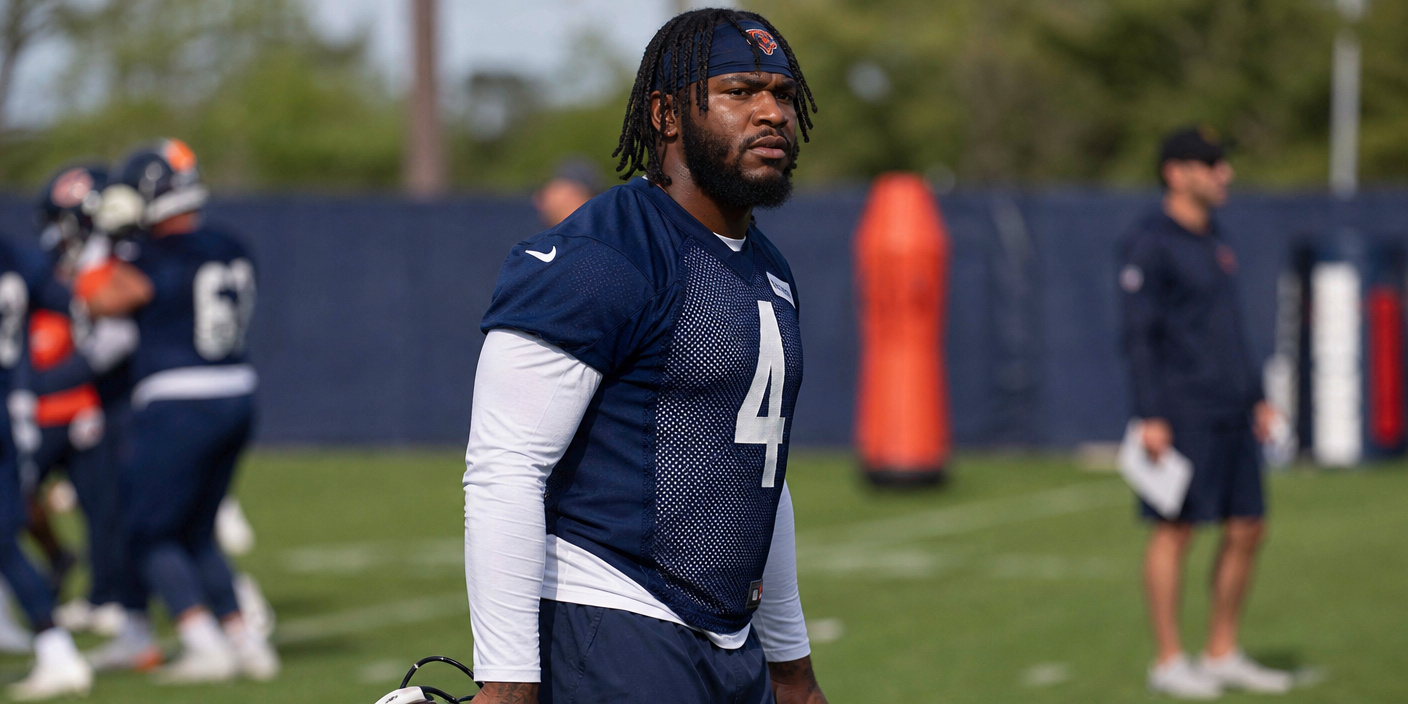
Thursday, July 30, marked a pivotal session for the Chicago Bears at training camp, serving as a masterclass in offensive timing and rookie poise. With the coaching staff emphasizing rhythm over raw volume, quarterback Caleb Williams delivered his most compelling performance of the summer to date. The non-contact practice format, designed to simulate game-speed decision-making without the physical toll of live tackling, proved to be the perfect environment for Williams to showcase his improved command of the playbook.
Key Highlights
- The Deep Connection: Caleb Williams completed a spectacular 54-yard touchdown pass to newcomer Kalif Raymond, showcasing impressive arm strength and ball placement.
- Mastering the Scheme: Williams demonstrated high-level accuracy and timing, hitting receivers in stride throughout the duration of the non-contact drills.
- Non-Contact Efficiency: The practice focused on route depth and coverage recognition, with Williams effectively checking down and making reads when the primary target was covered.
Precision and Potential: The New Bears Offense
The narrative surrounding the Chicago Bears’ offseason has been one of transformation, particularly within the offensive backfield. As the team pushes deeper into training camp, the focus has shifted from installing the offense to refining the subtle details that separate good units from championship-caliber ones. Thursday’s session provided a tangible snapshot of that evolution. For a quarterback in his formative years, the ability to operate effectively during non-contact drills—where the onus is entirely on footwork, anticipation, and release time—is critical. Caleb Williams displayed exactly these traits, moving through his progressions with a composure that suggested he is comfortable with the nuances of the Bears’ current system.
Analyzing the 54-Yard Deep Ball
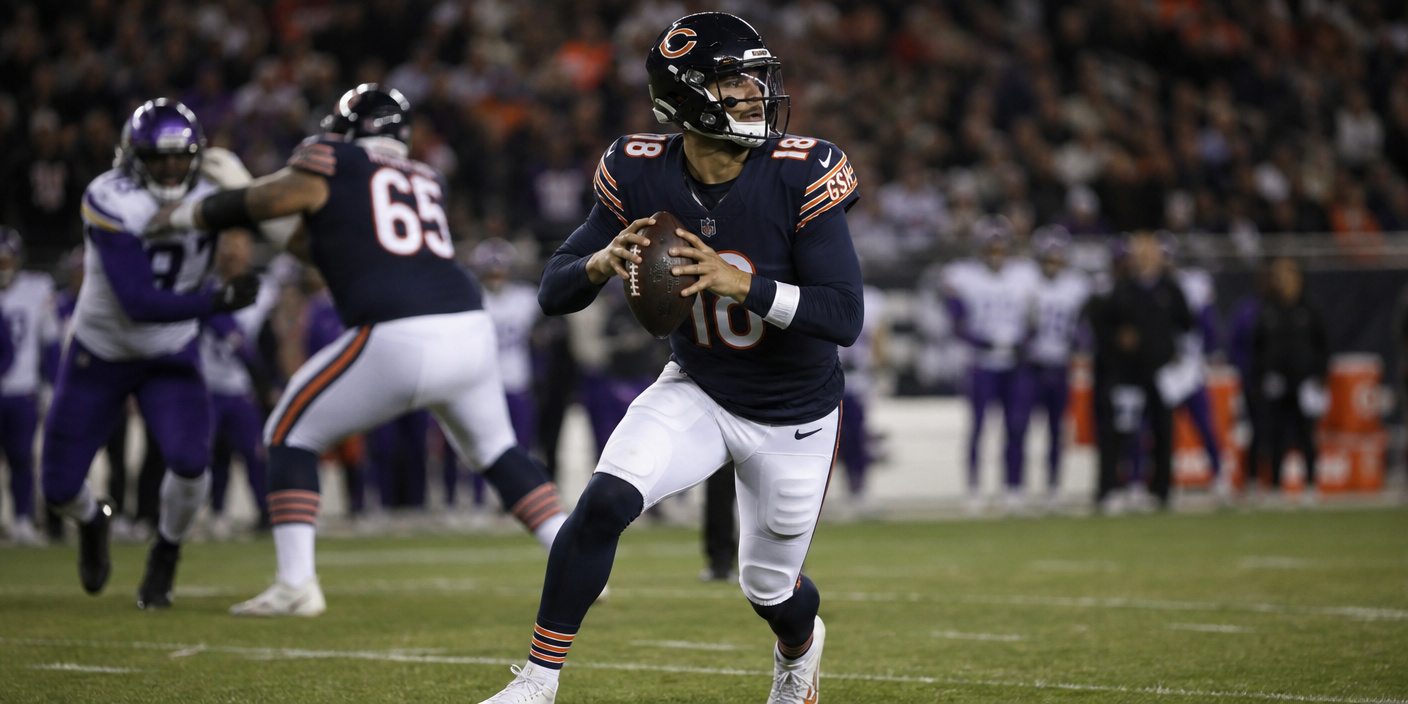
The standout moment of the afternoon occurred during a simulated red-zone and long-yardage transition drill. Recognizing a slight vulnerability in the secondary’s deep safety coverage, Williams launched a perfectly arced pass down the right sideline. Kalif Raymond, a recent addition whose speed has been a topic of discussion since his arrival, managed to gain a step on his defender. The ball dropped precisely over the shoulder of the receiver, hitting him in stride for what would have been a 54-yard touchdown. This play was significant not just for its length, but for the anticipation involved; Williams released the ball before Raymond had fully cleared the coverage, a clear indicator of the growing chemistry between the two.
The Evolution of Williams’ Pocket Presence
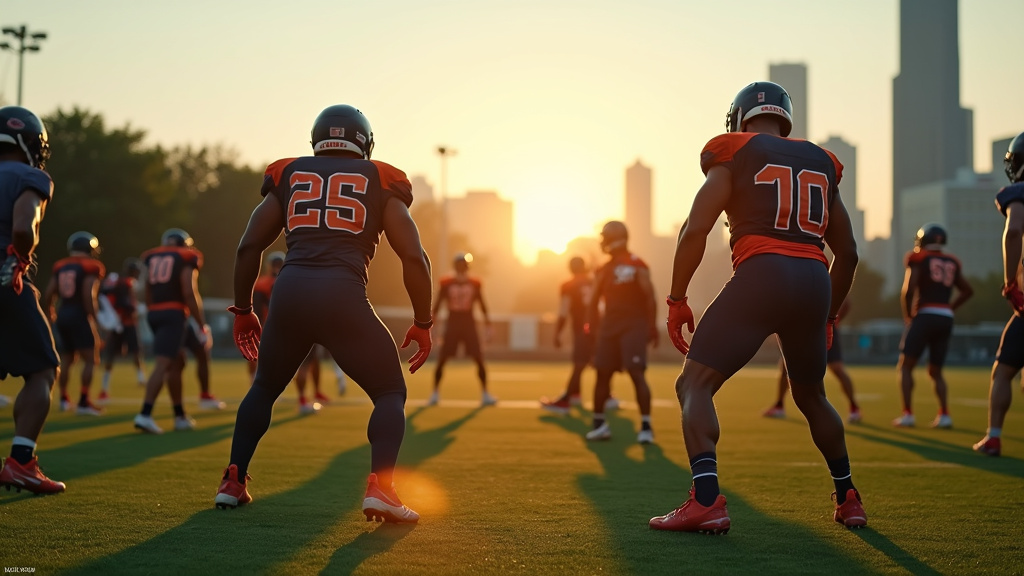
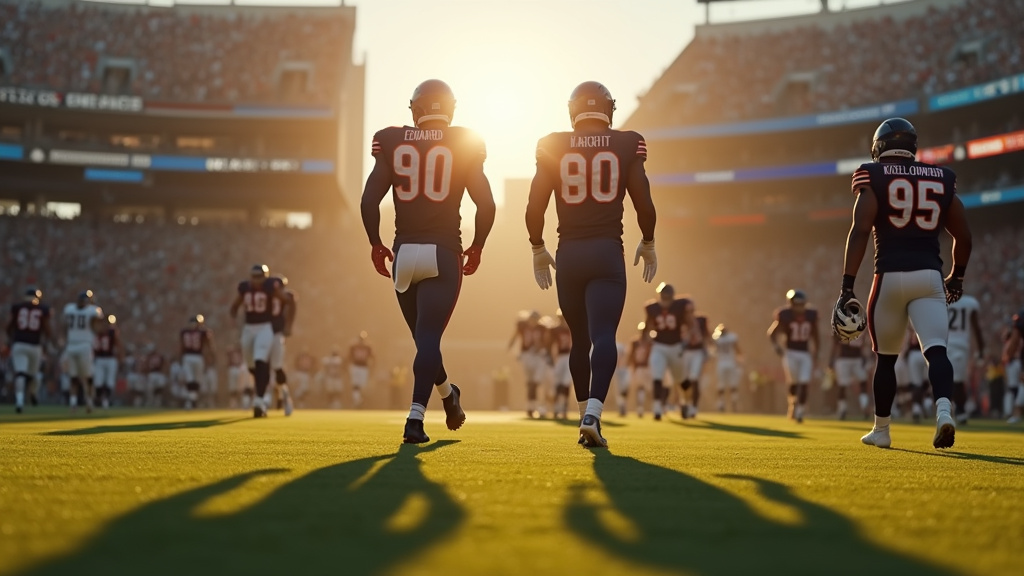


Beyond the headline-grabbing deep ball, Williams exhibited a refined pocket presence. Throughout the afternoon, he was decisive with his ball distribution. In previous sessions, there were instances of holding the ball slightly too long, a common habit for young quarterbacks transitioning to the NFL speed. On Thursday, those hesitations were absent. He utilized his eyes to manipulate the safeties, effectively clearing out passing lanes for underneath routes before electing to take his shot downfield. This level of manipulation is often the final hurdle for rookies, and seeing it appear early in camp suggests an accelerated development curve.
Integrating Kalif Raymond and the Receiving Core
The integration of newcomer Kalif Raymond into the Bears’ offensive tapestry is a subplot to watch closely. Raymond’s ability to stretch the field is well-documented, but his utility in this specific system lies in his adaptability. Thursday’s practice showed that the coaching staff is experimenting with creative ways to use him, including motion and slot alignments that force linebackers to make tough decisions in coverage. When Williams connects with a receiver like Raymond, it forces the defense to honor the deep ball, which in turn opens up the run game and the intermediate passing lanes. It creates a domino effect that makes the entire offense significantly harder to defend.
Defensive Adjustments and Training Camp Realities
It is important to contextualize the day’s success within the broader framework of training camp. While the offense had the upper hand during the drill that produced the touchdown, the defensive secondary remained competitive, forcing Williams into check-downs on several other snaps. This back-and-forth is the lifeblood of a successful camp. The Bears’ defense, known for its aggressive pressure schemes, was clearly testing Williams with disguised blitzes and zone rotations. His ability to diagnose these looks, audible at the line of scrimmage, and eventually find the explosive play suggests that the mental game is catching up to the physical talent.
FAQ: People Also Ask
Q: How did Caleb Williams perform during the July 30th practice?
A: Caleb Williams performed at a high level, displaying excellent accuracy and timing. His highlight of the day was a perfectly executed 54-yard touchdown pass to Kalif Raymond.
Q: Why was the practice described as ‘non-contact’?
A: Non-contact practices in the NFL are used to emphasize technique, footwork, and scheme installation without risking player injury. It allows quarterbacks and receivers to work on timing and route precision at full speed.
Q: Is the chemistry between Williams and Raymond a new development?
A: Yes, as a newcomer, Kalif Raymond is still integrating into the offensive scheme. However, Thursday’s performance shows that the two are developing a strong rapport, particularly on deep routes.
Q: What does this practice tell us about the Bears’ offensive strategy?
A: The focus on deep passing and progression reads suggests the Bears are looking to be more aggressive and vertical in their passing attack this season, relying on the quarterback’s ability to manipulate coverage.