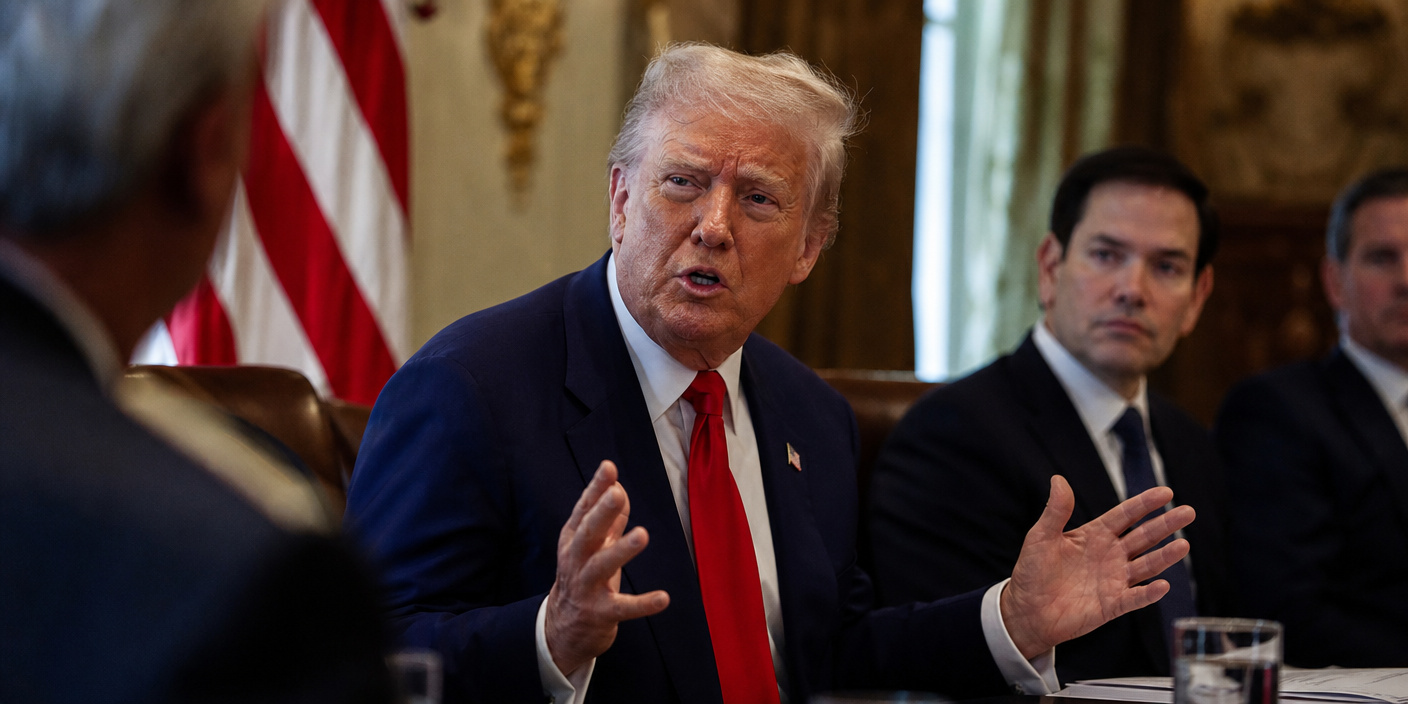
Former President Donald Trump has declared a “great settlement” with Iran, stating that “documents are in pretty final shape.” This announcement, made during a campaign rally, signals a potential shift in international relations concerning Iran’s nuclear program and regional influence.
Key Highlights:
- Trump claims a “great settlement” with Iran is nearing finalization.
- He asserts that the relevant “documents are in pretty final shape.”
- The statement was made during a campaign rally, indicating a political dimension to the announcement.
- The specifics of the alleged settlement remain undisclosed.
A New Diplomatic Horizon
Donald Trump’s recent assertion of a “great settlement” with Iran has sent ripples through the international community, sparking both optimism and skepticism. Speaking to supporters at a rally, the former president detailed that the “documents are pretty final shape,” suggesting a significant diplomatic breakthrough could be imminent. This declaration, however, lacks concrete details regarding the terms of the proposed agreement, leaving many to speculate on its potential implications for global stability and the Iranian nuclear program.
Unpacking the ‘Great Settlement’
The term “great settlement” is notably ambiguous. In the context of Iran, past negotiations have primarily revolved around its nuclear activities, specifically the Joint Comprehensive Plan of Action (JCPOA). The Trump administration withdrew the United States from the JCPOA in 2018, reimposing stringent sanctions on Iran. If Trump is indeed referring to a new deal, it could signal a dramatic reversal of his previous policy or an entirely new framework designed to address broader security concerns in the Middle East. The emphasis on “final shape” implies that while not yet signed, the core elements of an agreement have been ironed out, potentially involving concessions from both sides.
Entities and Stakeholders



Several key entities are intrinsically linked to any potential US-Iran settlement. The International Atomic Energy Agency (IAEA) would likely play a crucial role in verifying any nuclear-related provisions, as it has historically done under the JCPOA. The Iranian government, led by its supreme leader and president, would be the other principal signatory, its willingness to negotiate contingent on its economic and political priorities. Beyond these direct parties, European allies, such as the United Kingdom, France, and Germany (collectively known as the E3), have consistently advocated for a diplomatic resolution and may be involved in brokering or endorsing the deal. Furthermore, regional powers like Saudi Arabia and Israel, who view Iran’s influence with concern, would be critical stakeholders whose reactions could significantly impact the agreement’s long-term viability. The United States Congress would also be a factor, particularly if the settlement requires legislative approval or faces opposition from either party.
Secondary Angles: A Geopolitical Chessboard
Historical Context: The path to any US-Iran agreement is paved with decades of complex and often adversarial relations. The 1979 Iranian Revolution, the subsequent hostage crisis, and various proxy conflicts have shaped a deep-seated mistrust between the two nations. Trump’s previous withdrawal from the JCPOA and his administration’s “maximum pressure” campaign further complicated diplomatic efforts. Any new settlement would need to navigate this fraught history, building a fragile bridge over troubled waters.
Economic Ramifications: A comprehensive settlement could have profound economic consequences. For Iran, the lifting of sanctions could unlock vital oil revenues, boost foreign investment, and stabilize its struggling economy, potentially leading to improved living standards for its citizens. For the United States and its allies, a de-escalation of tensions could lead to increased trade opportunities and reduced defense spending in the volatile Middle East. However, the specifics of sanctions relief would be a major point of contention, with potential impacts on global energy markets and specific industries.
Future Predictions and Potential Hurdles: The biggest hurdle remains the actual substance of the agreement. Will it be a revival of the JCPOA with modifications, or a completely novel framework? Will it address Iran’s ballistic missile program or its regional proxy activities, issues that were largely outside the scope of the original deal? The political landscape in both countries is also a significant variable. A change in administration in either the US or Iran could jeopardize the agreement. Moreover, hardliners within both nations could seek to undermine any deal. Success will likely hinge on the clarity, verifiability, and mutual benefit enshrined in the final documents.
FAQ: People Also Ask
What was the Joint Comprehensive Plan of Action (JCPOA)?
The JCPOA, commonly known as the Iran nuclear deal, was an agreement reached in 2015 between Iran and the P5+1 countries (the United States, the United Kingdom, France, Russia, China, and Germany) plus the European Union. It aimed to limit Iran’s nuclear program in exchange for sanctions relief.
Why did the US withdraw from the JCPOA under Trump?
President Trump withdrew the US from the JCPOA in May 2018, arguing that the deal was insufficient to prevent Iran from developing nuclear weapons and did not address its ballistic missile program or regional activities. He subsequently reimposed and intensified sanctions on Iran.
What are the potential benefits of a new settlement with Iran?
A new settlement could lead to a de-escalation of regional tensions, prevent Iran from developing nuclear weapons, and potentially improve Iran’s economic situation through sanctions relief. It could also open avenues for greater international cooperation on security issues in the Middle East.
What are the main challenges in negotiating with Iran?
Challenges include deep-seated mistrust stemming from decades of adversarial relations, differing political and security interests, the complex verification of nuclear and other security commitments, and the influence of hardline factions within both countries who may oppose compromise.