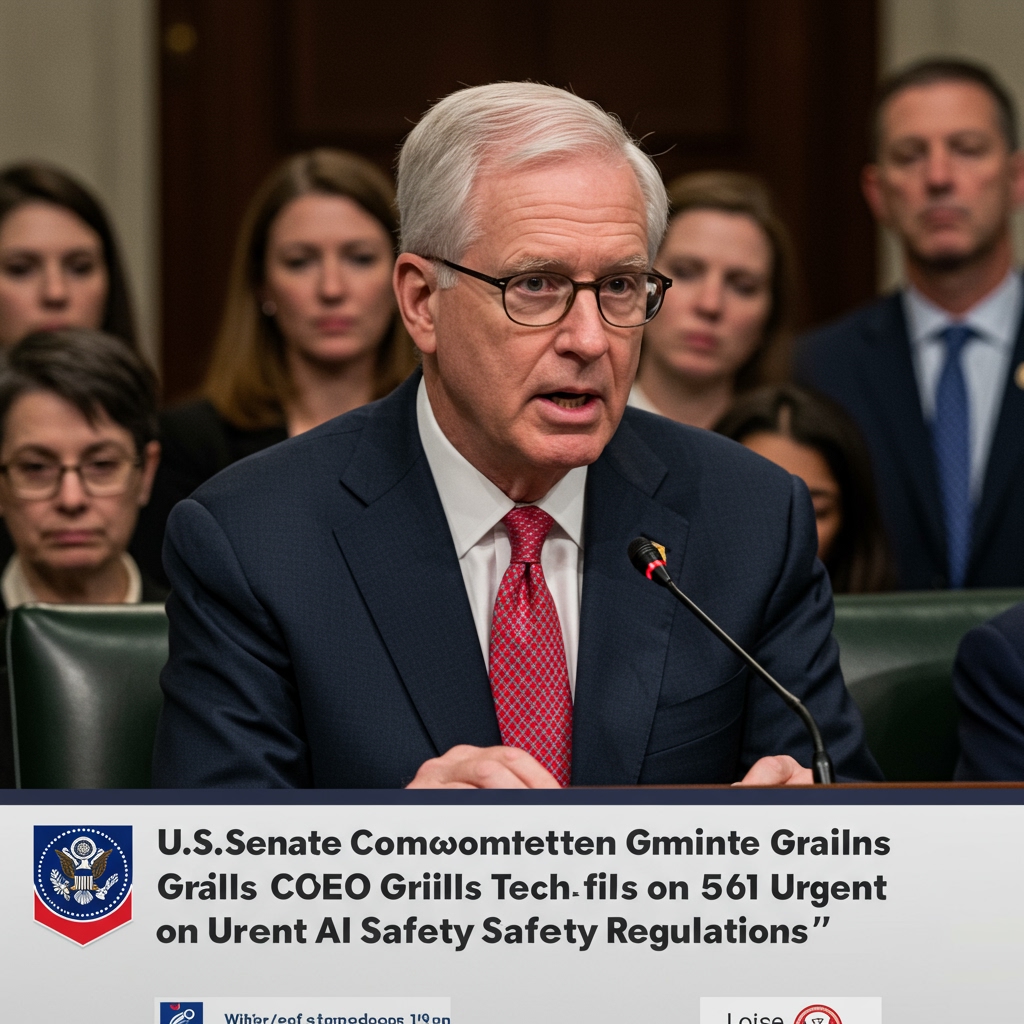
A bipartisan group of senators on the Senate Commerce, Science, and Transportation Committee introduced significant legislation today aimed at establishing a federal framework for regulating artificial intelligence. Titled the Artificial Intelligence Accountability Act of 2025, the proposed bill seeks to create comprehensive standards for AI systems deployed across a wide array of sectors within the United States. The introduction of this bill represents a notable step in the ongoing effort by policymakers to address the rapidly evolving landscape of AI technology and its potential societal impacts.
A Framework for Artificial Intelligence Accountability
The core purpose of the Artificial Intelligence Accountability Act of 2025 is to provide a much-needed federal structure for AI governance. As AI technologies become increasingly integrated into critical services, industries, and daily life, proponents of the bill argue that a consistent, nationwide approach is essential. This framework is intended to supplant a potential patchwork of differing state-level regulations, which could stifle innovation or leave significant gaps in oversight. The bill’s scope is deliberately broad, targeting AI applications in “various sectors,” acknowledging the technology’s pervasive nature from healthcare and finance to transportation and employment.
The legislation is built around the principle that while AI offers immense potential for economic growth and societal advancement, its development and deployment must be accompanied by safeguards to mitigate potential harms. The bipartisan nature of the bill’s sponsors underscores a growing consensus across the political spectrum regarding the urgency of addressing AI risks proactively.
Key Provisions: Mandating Risk Assessments and Transparency
Two of the most significant provisions within the Artificial Intelligence Accountability Act of 2025 center on mandatory risk assessments and transparency requirements.



Firstly, the bill proposes requiring mandatory risk assessments for AI applications deemed “high-impact.” While the precise definition of “high-impact” would be detailed within the legislation, discussions around AI regulation typically define such systems as those that could significantly affect individuals’ safety, rights, opportunities, or access to critical services. This could include AI used in medical diagnosis, loan applications, hiring processes, criminal justice, or the operation of critical infrastructure. The requirement would place a burden on developers and deployers of these systems to proactively identify potential risks, such as algorithmic bias leading to discriminatory outcomes, safety failures in autonomous systems, or privacy violations. These assessments would likely involve evaluating the potential likelihood and severity of these harms and developing concrete strategies for mitigation before the AI system is widely deployed. This provision aims to move beyond reactive measures, pushing for a proactive approach to identifying and addressing potential negative consequences at the design and implementation stages.
Secondly, the bill mandates clear labeling or watermarking for AI-generated content. This transparency requirement is directly aimed at combating the rise of misinformation and disinformation spread through synthetic media, such as deepfakes. As AI tools become more sophisticated at generating realistic text, images, audio, and video, it is increasingly difficult for the public to distinguish between authentic and fabricated content. The bill proposes requiring developers and platforms to implement mechanisms – which could range from visible labels (“AI-generated content”) to invisible digital watermarks embedded in the content’s metadata – that clearly signal when content has been produced or substantially modified by AI. This measure is intended to empower users with the knowledge necessary to evaluate the authenticity of the information they encounter online and elsewhere, thereby helping to preserve the integrity of public discourse.
Empowering the Federal Trade Commission
A crucial element of the Artificial Intelligence Accountability Act of 2025 is the proposal to grant new oversight authority to the Federal Trade Commission (FTC). The FTC, known for its role in consumer protection and competition enforcement, is identified as the primary agency responsible for enforcing the standards set forth by this bill.
This new authority would empower the FTC to ensure compliance with the mandatory risk assessment and transparency provisions. This could involve investigating AI systems and their developers\/deployers, auditing risk assessment processes, verifying the implementation of labeling or watermarking standards, and taking enforcement actions against entities found to be in violation of the Act. Such actions could potentially include requiring remediation, imposing fines, or seeking injunctions to halt non-compliant practices. Granting this authority to an established regulatory body like the FTC leverages its existing expertise and infrastructure for investigating complex market practices and enforcing regulations across various industries. It signals a serious intent to back the new AI standards with meaningful enforcement power.
Balancing Innovation and Risk Mitigation
The senators behind the Artificial Intelligence Accountability Act of 2025 have stated that a central objective of the legislation is to find a crucial balance between fostering continued innovation in artificial intelligence and effectively mitigating the potential harms associated with the technology. The United States is a global leader in AI research and development, and policymakers are keen to maintain this competitive edge. However, there is a growing recognition that unchecked AI development could lead to significant societal problems.
The bill attempts to navigate this complex terrain by implementing targeted regulations focused on accountability and transparency, rather than broad restrictions that could impede technological progress. By requiring risk assessments for high-impact systems, the legislation aims to ensure that safety, fairness, and privacy are considered throughout the development lifecycle, potentially preventing harmful outcomes before they occur. Similarly, transparency through labeling is framed as a tool to build trust and media literacy in an age of synthetic content, rather than censoring AI-generated material entirely.
Proponents argue that establishing clear rules of the road can actually promote responsible innovation by providing developers with regulatory certainty and by building public confidence in AI technologies. Mitigating harms like bias, which can perpetuate societal inequalities, and misinformation, which can destabilize democratic processes, is presented not as a hurdle to innovation, but as a necessary foundation for AI to be deployed safely and ethically for the benefit of society. The bill reflects the view that accountability and transparency are essential components of trustworthy AI systems.
Path Forward for the Legislation
The introduction of the Artificial Intelligence Accountability Act of 2025 marks the beginning of its journey through the legislative process. As a proposal from the Senate Commerce, Science, and Transportation Committee, the bill will now be subject to committee hearings, where senators will deliberate on its provisions, hear testimony from experts and stakeholders, and potentially propose amendments. If it advances out of committee, it would then be considered by the full Senate. The process allows for further debate and refinement of the proposed federal AI framework. Its bipartisan nature may enhance its chances of passage, but significant discussion and negotiation are still anticipated as policymakers grapple with the specifics of regulating such a transformative technology.