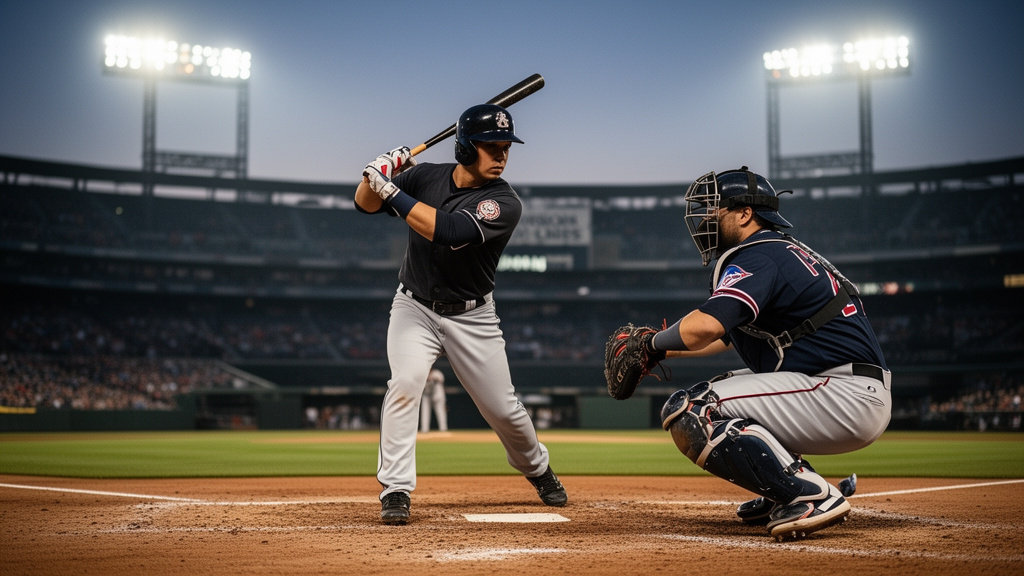
In an electrifying showdown at Wrigley Field on August 17, 2026, the Chicago Cubs secured a hard-fought 7-5 victory over the Chicago White Sox. The game, a staple of the annual Crosstown Classic, reached a crescendo in the final inning when outfielder Pete Crow-Armstrong launched a dramatic walk-off home run, sealing the win and etching his name into the annals of Chicago baseball history. Beyond the immediate joy of a cross-town triumph, the moment served as the backdrop for a milestone performance: Crow-Armstrong officially became the first Chicago Cubs player in franchise history to record back-to-back 30/30 seasons, a rare feat requiring both 30 home runs and 30 stolen bases within a single campaign.
Key Highlights
- Walk-Off Heroics: Pete Crow-Armstrong hit the game-deciding home run in the bottom of the ninth to defeat the White Sox 7-5.
- Historic Milestone: With this performance, Crow-Armstrong solidified his legacy, becoming the first Cubs player ever to achieve consecutive 30/30 seasons.
- Crosstown Dominance: The win at Wrigley Field provides a significant morale boost for the Cubs during their late-season push.
- Elite Company: By joining the 30/30 club for the second consecutive year, Crow-Armstrong further cements his status as a premier dual-threat player in Major League Baseball.
The Evolution of the 30/30 Standard
The “30/30 club” is one of baseball’s most prestigious marks, representing a player who possesses the rare combination of power and speed. For years, the Chicago Cubs have been defined by legendary hitters—Ernie Banks, Ryne Sandberg, and Billy Williams—yet none of these iconic figures achieved back-to-back 30/30 seasons during their tenure. Pete Crow-Armstrong’s accomplishment on August 17, 2026, fundamentally shifts the narrative regarding what constitutes the modern “Cubs Superstar.”
This achievement is not merely a statistical curiosity; it is a testament to the evolution of the game. In an era where defensive shifting and advanced pitching analytics dominate, maintaining such high-level production across two distinct statistical categories is increasingly difficult. Crow-Armstrong’s ability to drive the ball out of the park while simultaneously being a constant threat on the basepaths has made him the engine of the Cubs’ offense. His approach requires a dual-track mental discipline: the patience to wait for a power pitch and the baserunning instinct to capitalize on the slightest lapse in a pitcher’s focus.
Analyzing the Crosstown Impact
The rivalry between the Chicago Cubs and the Chicago White Sox is arguably one of the most intense in professional sports. Unlike geographically distant rivalries, the Crosstown Classic is played in a city where the fan base is divided by neighborhoods, generations, and personal loyalties. A win at Wrigley Field holds weight far beyond the standard “W” in the standings; it dictates the bragging rights for the remainder of the year.




In this particular matchup, the intensity was palpable from the first pitch. The White Sox offense displayed resilience, pushing back against the Cubs’ starting rotation and keeping the game deadlocked deep into the late innings. However, the energy inside the stadium shifted significantly in the final frame. As Crow-Armstrong stepped up to the plate, the tension was visceral. When the ball cleared the outfield fence, the explosion of noise from the Cubs faithful confirmed not just a team victory, but a moment of personal triumph that fans in attendance will recall for decades.
Building the Future: The Cubs’ Strategic Trajectory
Looking at the broader implications of the 2026 season, the Cubs’ ability to secure wins in high-pressure games like this is critical for their playoff trajectory. A 7-5 result, while a narrow margin, reflects the depth of the roster. Contributions across the lineup, paired with standout moments from franchise anchors like Crow-Armstrong, suggest that the organization has successfully transitioned from a rebuilding phase to a competitive window.
Secondary factors supporting this success include the team’s improved baserunning metrics and disciplined defensive play. By prioritizing speed-driven offense—typified by the 30 stolen bases component of the 30/30 feat—the Cubs have forced opposing pitchers to operate under constant duress. This tactical pressure often forces mistakes, which in turn leads to the high-leverage scoring opportunities that decide close games.
The Historical Significance of August 17
Sports historians often look for specific dates that define an era. August 17, 2026, will likely be cataloged as the day the Cubs solidified a new standard of excellence. While the box score records a 7-5 win, the narrative importance lies in the sustainability of elite performance. Many players hit 30 homers in a season, and many steal 30 bases, but very few sustain that duality over a multi-year period. By achieving this in consecutive seasons, Crow-Armstrong has entered the conversation regarding the most productive offensive players in Cubs history. As the regular season winds down and the postseason looms, the momentum gained from this victory, combined with the psychological boost of witnessing history, provides the Cubs with a formidable tailwind.
FAQ: People Also Ask
What does the 30/30 club signify in MLB?
It is an exclusive statistical milestone for players who hit at least 30 home runs and steal at least 30 bases in the same regular season, highlighting a player’s power and speed combination.
Has any other Cubs player ever had back-to-back 30/30 seasons?
No. Pete Crow-Armstrong is the first player in the history of the Chicago Cubs franchise to achieve consecutive 30/30 seasons, setting a new benchmark for the club.
Why was the August 17th game against the White Sox considered so significant?
Beyond being a fierce Crosstown Classic rivalry game at Wrigley Field, the victory was cemented by a walk-off home run that clinched a historic individual achievement for Crow-Armstrong, making the game a landmark event for both the team and the player’s legacy.
How many home runs and stolen bases did Pete Crow-Armstrong have in this game?
While the 30/30 season milestone is a cumulative seasonal statistic, the game on August 17th resulted in a 7-5 Cubs win, with Crow-Armstrong hitting the decisive, game-ending home run.