Skip to content
The Chicago Today
Quantum Aerospace
  • Home
  • Current News
  • Explore & Enjoy
  • Sports
  • Sound & Screen
  • Sip & Savor
  • Style & Innovation
  • Editors Take
Trending
July 31, 2026Chicago’s Silent Crisis: Why the Critical Blood Shortage Demands Immediate Action July 31, 2026CPD Misses Court-Mandated 2025 Use-of-Force Reporting Deadline July 31, 2026Lollapalooza 2026: Chicago’s Iconic Festival Returns July 31, 2026Trump Claims Breakthrough: Hamas Disarmament & Gaza Exit July 30, 2026Williams Ignites Bears Camp with 54-Yard Strike to Raymond July 29, 2026TeraLink: NASA and Northeastern’s 6G Satellite Race July 29, 2026Chicago Gourmet 2026: 18-Day ‘Dine Around’ Set to Transform City Dining July 29, 2026Chicago Oversight Body Criticized for Misconduct ‘Vacuum’ July 29, 2026Evanston Eyes New Fiscal Strategy for Northwestern’s Commercial Interests July 29, 2026Regional Tinderbox: Jordan Intercepts Missiles as US & Saudi Strike Iraq
The Chicago Today
The Chicago Today
  • Home
  • Current News
  • Explore & Enjoy
  • Sports
  • Sound & Screen
  • Sip & Savor
  • Style & Innovation
  • Editors Take
  • Blog
  • Forums
  • Shop
  • Contact
The Chicago Today
  Editors Take  Chicago’s Crime Reality: Is Political Messaging Missing the Mark?
Editors Take

Chicago’s Crime Reality: Is Political Messaging Missing the Mark?

Malcom GreenMalcom Green—September 3, 20250
FacebookX TwitterPinterestLinkedInTumblrRedditVKWhatsAppEmail

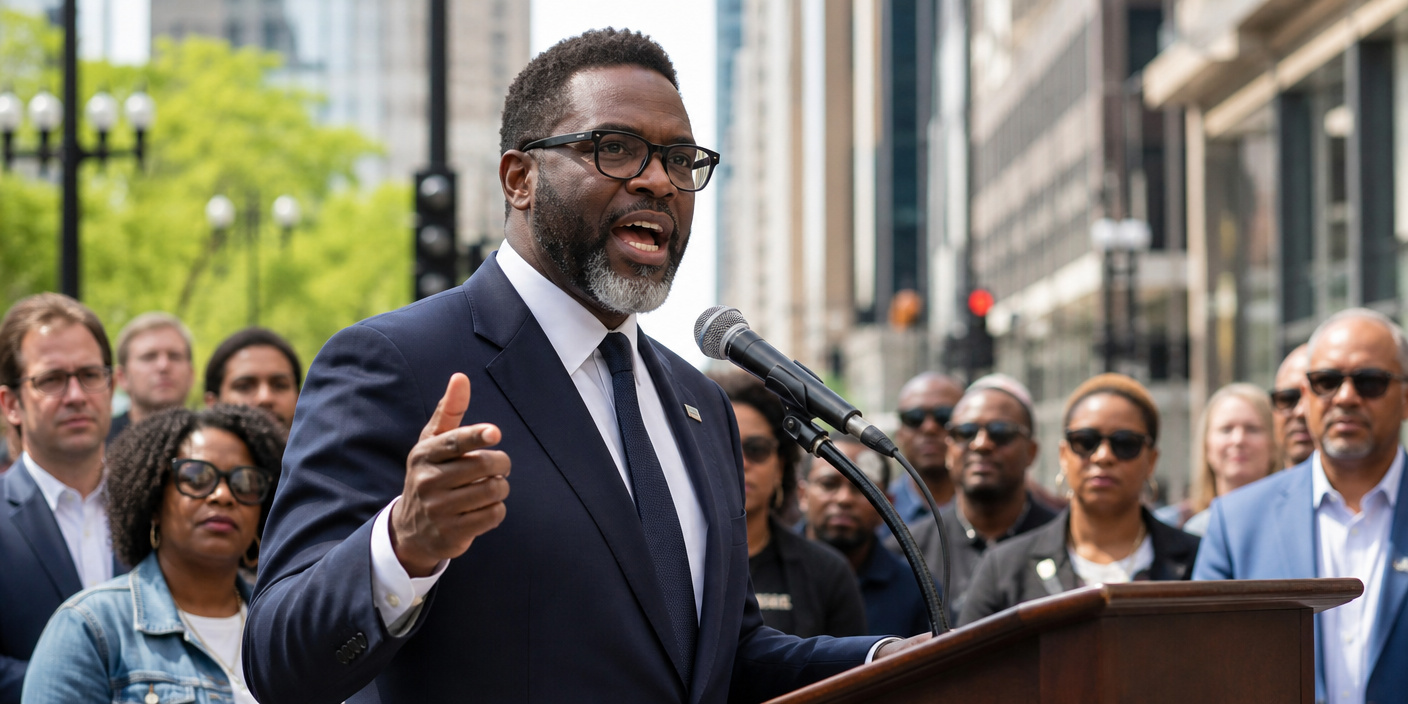
Chicago, a city perpetually grappling with the complex and often brutal realities of urban crime, finds itself in a continuous cycle of policy debates and public concern. While Mayor Brandon Johnson champions a vision rooted in community investment and violence prevention, and Governor J.B. Pritzker touts statewide initiatives, a pointed editorial has ignited renewed discussion. The central argument, amplified by groups like Wirepoints, is stark: the city’s persistent violent actors apparently have not received, nor heeded, the “memo” from city and state leaders, suggesting a significant disconnect between political rhetoric and the lived experience of Chicago’s ongoing struggle with crime.

The Enduring Shadow of Chicago Crime

More stories
Four Dead in 'Suspicious' Chicago Apartment Fire: Austin Neighborhood Rocked by Deadly Early Morning Blaze

Four Dead in ‘Suspicious’ Chicago Apartment Fire: Austin Neighborhood Rocked by Deadly Early Morning Blaze

June 28, 2025

Chicago’s Grassroots Fight: Communities Reclaim Food Access on South and West Sides

December 18, 2025
Illinois in Focus: Federal Bill Impact, Chicago Crime Spike, and Macon Shooting Footage Analyzed

Illinois in Focus: Federal Bill Impact, Chicago Crime Spike, and Macon Shooting Footage Analyzed

July 7, 2025

Chicago Art Show “Brushes With Cancer” Returns to Champion Survivorship and Connection

March 8, 2026

Wirepoints, a research organization known for its deep dives into Chicago’s public safety data, consistently portrays a city facing immense challenges. Chicago frequently ranks as the nation’s “murder capital,” a title it has held for over a decade. While official statements from Mayor Johnson’s and Governor Pritzker’s administrations highlight reductions in specific crime categories, such as homicides and shootings, critics argue these statistics often paint an incomplete picture. Wirepoints data indicates that beyond homicides, other major crimes, including robberies and carjackings, remain alarmingly high, contributing to a pervasive sense of insecurity. The organization suggests a “revolving door” justice system where offenders are not consistently deterred, reinforcing the notion that the city’s “war zone” conditions persist despite official efforts.

Divergent Strategies, Shared Goals?

Both Mayor Johnson and Governor Pritzker have articulated distinct, yet arguably complementary, strategies for tackling crime. Mayor Johnson’s approach prioritizes systemic change, focusing on “investing in people and places.” His administration’s plan emphasizes community violence intervention programs, expanded youth employment opportunities, robust mental health services, and addressing the historical roots of violence stemming from disinvestment. Johnson has frequently cited decreases in homicides and shootings as evidence that his administration’s long-term, community-centered approach is beginning to yield positive outcomes.

Governor Pritzker, on his part, has championed statewide efforts through initiatives like the Reimagine Public Safety Act (RPSA), directing significant funding towards evidence-based violence prevention programs. His administration has also focused on legislative measures, such as banning “ghost guns” and cracking down on organized retail crime. Pritzker has consistently linked these efforts to broader reductions in violent crime across Illinois, advocating for a multi-faceted strategy that includes law enforcement support alongside community initiatives.

The “Memo” That Isn’t Landing

The core of the recent news and the referenced editorial lies in its critical assessment of the impact of these policies. The assertion that “Chicago’s gunmen did not get Pritzker and Johnson’s memo” succinctly captures the argument that the city’s violent individuals are unmoved by political statements or stated policy goals. It implies that the underlying drivers of crime—or the perceived lack of immediate consequences—remain potent forces, rendering the leaders’ messages ineffective. For the editorial’s proponents, the persistence of high crime rates, particularly for many residents, demonstrates that the intended deterrent or preventative effect of the administration’s policies has not yet materialized, or perhaps never will, if the fundamental issues of accountability and deterrence are not addressed more directly.

Political Firestorm: Federal Intervention and Local Resistance

The debate over Chicago’s crime situation has been significantly amplified by former President Donald Trump’s recurring threats to deploy federal troops or National Guard units into the city. Both Mayor Johnson and Governor Pritzker have strongly opposed these proposals, framing them as political grandstanding and a misunderstanding of the situation. They have countered Trump’s characterizations of Chicago as a lawless “disaster” by highlighting the reported crime reductions, arguing that federal militarization would be counterproductive and potentially exacerbate tensions. Governor Pritzker has specifically cited legal arguments, asserting that such deployments would violate constitutional principles like the Posse Comitatus Act without local consent. However, this stance has drawn criticism from some quarters, including local officials like Alderman Raymond Lopez, who deems the resistance to potential federal assistance “asinine” and advocates for greater collaboration with federal agencies to combat crime.

A Persistent Disconnect

As Chicago continues to navigate its complex public safety landscape, the contrast between official pronouncements and the ongoing reality of crime remains a central point of contention. While Mayor Johnson and Governor Pritzker emphasize their strategic investments and claim progress, the sentiment captured by the editorial—that the city’s criminals remain undeterred by political discourse—resonates with many who feel the impact of violence daily. This enduring disconnect between political messaging and the perceived efficacy of safety strategies poses a significant challenge, leaving residents to question whether the intended impact of policies is truly reaching those who need to be deterred, or if the city is still waiting for an effective response to its deep-seated crime issues.

FacebookX TwitterPinterestLinkedInTumblrRedditVKWhatsAppEmail

Malcom Green

Malcolm Green is a versatile journalist who covers a wide range of subjects, including technology, culture, current events, and lifestyle trends. With his work featured in numerous reputable publications, Malcolm brings insightful analysis and engaging storytelling to every topic he explores. His ability to break down complex issues into accessible narratives makes his writing both informative and compelling for a diverse audience. Malcolm’s passion for uncovering the stories behind the headlines drives him to stay ahead of emerging trends and deliver content that resonates with readers. Whether he’s delving into the latest tech innovations, exploring cultural phenomena, or reporting on significant global events, Malcolm ensures his work is both relevant and thought-provoking. Outside of his professional pursuits, Malcolm enjoys traveling, reading, and exploring local cuisines, which often inspire his creative approach to journalism. Connect with Malcolm on LinkedIn or follow him on Twitter to stay updated on his latest articles and insights.

Brave Pink, Hero Green: Indonesia’s Social Media Campaign for Justice and Hope
Daley Plaza to Host National Spoken Word Month Poetry Concert Featuring Top Artists
Related posts
  • Related posts
  • More from author
Editors Take

Evanston Eyes New Fiscal Strategy for Northwestern’s Commercial Interests

July 29, 20260
Editors Take

Chicago’s All-Star Glow: Inside the 2026 WNBA Takeover

July 25, 20260
Editors Take

Climate Vanguard: Aspen Institute Summit Charts Future in Chicago

July 21, 20260
Load more
Read also
Headlines

Chicago’s Silent Crisis: Why the Critical Blood Shortage Demands Immediate Action

July 31, 20260
Featured

CPD Misses Court-Mandated 2025 Use-of-Force Reporting Deadline

July 31, 20260
Explore & Enjoy

Lollapalooza 2026: Chicago’s Iconic Festival Returns

July 31, 20260
Current News

Trump Claims Breakthrough: Hamas Disarmament & Gaza Exit

July 31, 20260
Sports

Williams Ignites Bears Camp with 54-Yard Strike to Raymond

July 30, 20260
Style & Innovation

TeraLink: NASA and Northeastern’s 6G Satellite Race

July 29, 20260
Load more
Recent Posts
  • Chicago’s Silent Crisis: Why the Critical Blood Shortage Demands Immediate Action July 31, 2026
  • CPD Misses Court-Mandated 2025 Use-of-Force Reporting Deadline July 31, 2026
  • Lollapalooza 2026: Chicago’s Iconic Festival Returns July 31, 2026
  • Trump Claims Breakthrough: Hamas Disarmament & Gaza Exit July 31, 2026
  • Williams Ignites Bears Camp with 54-Yard Strike to Raymond July 30, 2026

    # TRENDING

    chicago20252026aiFashionStreamingreviewaccountabilityinnovationfundingfestivalmusicnetflixalbumculinaryactionacquisitionnascarhululineup
    © 2024 All Rights Reserved by Chicago Today
    • Contact
    • Cookie Policy
    • Privacy Policy
    The Chicago Today
    Manage Consent
    To provide the best experiences, we use technologies like cookies to store and/or access device information. Consenting to these technologies will allow us to process data such as browsing behavior or unique IDs on this site. Not consenting or withdrawing consent, may adversely affect certain features and functions.
    Functional Always active
    The technical storage or access is strictly necessary for the legitimate purpose of enabling the use of a specific service explicitly requested by the subscriber or user, or for the sole purpose of carrying out the transmission of a communication over an electronic communications network.
    Preferences
    The technical storage or access is necessary for the legitimate purpose of storing preferences that are not requested by the subscriber or user.
    Statistics
    The technical storage or access that is used exclusively for statistical purposes. The technical storage or access that is used exclusively for anonymous statistical purposes. Without a subpoena, voluntary compliance on the part of your Internet Service Provider, or additional records from a third party, information stored or retrieved for this purpose alone cannot usually be used to identify you.
    Marketing
    The technical storage or access is required to create user profiles to send advertising, or to track the user on a website or across several websites for similar marketing purposes.
    • Manage options
    • Manage services
    • Manage {vendor_count} vendors
    • Read more about these purposes
    View preferences
    • {title}
    • {title}
    • {title}