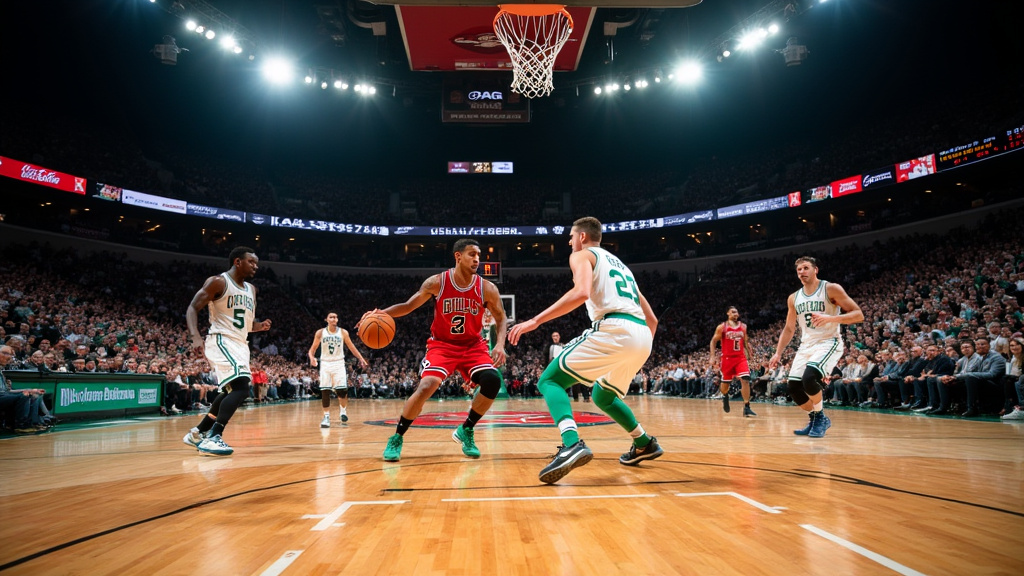
The Chicago Bulls face a daunting challenge on October 26, 2026, as they travel to Boston to confront the formidable Celtics. Currently, oddsmakers have pegged the Celtics as heavy 13.5-point favorites, reflecting both Boston’s championship-caliber roster and the Bulls’ shaky 1-2 start to the early season.
Key Highlights
- Significant Spread: Boston Celtics enter the contest as 13.5-point favorites, signaling high confidence in their home dominance.
- Early Season Struggles: The Bulls enter the game with a 1-2 record, looking to find their rhythm against an elite Eastern Conference opponent.
- Tactical Disparity: Analysis points toward a focus on defensive efficiency and transition play as key differentiators.
- High-Stakes Atmosphere: This matchup highlights the contrasting early-season trajectories of two prominent NBA franchises.
Analytical Breakdown of the October 26 Clash
The NBA regular season is defined by narrative arcs, and on October 26, 2026, the Chicago Bulls find themselves at a critical junction. Facing the Boston Celtics in their home arena is never an easy assignment, but doing so while grappling with a 1-2 record amplifies the pressure on the Chicago coaching staff and roster. The 13.5-point spread established by the betting markets is not merely a number; it is a statement on the perceived chasm between the two organizations at this specific point in the calendar.
The Odds: Understanding the 13.5-Point Spread
In the world of professional sports handicapping, a 13.5-point spread is substantial. It suggests that the oddsmakers view the Celtics not just as the favorites, but as a team capable of a blowout victory. This spread implies a combination of factors: Boston’s superior net rating, their depth, and, crucially, the venue factor of TD Garden. When betting markets set a line this wide, they are factoring in the Bulls’ inconsistency on offense, which has plagued them throughout their first three games. For Chicago to cover, or even potentially upset, they must control the pace of the game, limiting Boston’s fast-break opportunities and neutralizing the Celtics’ perimeter shooting.
Bulls’ Struggles: A Search for Consistency
The Bulls’ 1-2 start to the season has been characterized by defensive lapses and stagnant half-court execution. In their losses, Chicago has struggled to generate consistent scoring outside of their primary options. To remain competitive against a team like Boston, the Bulls need to see elevated efficiency from their bench units and a sharper decision-making process from their veteran leaders. Early-season games are often about roster chemistry; the Bulls are currently in a phase of experimentation, trying to find lineups that can sustain defensive intensity for all 48 minutes.
Celtics’ Dominance: Why They Remain the Team to Beat



Conversely, the Boston Celtics enter this matchup with the confidence of an established contender. Their system, built on high-volume three-point shooting and switchable defensive versatility, makes them notoriously difficult for teams like Chicago to prepare for in a short window. Boston’s ability to maintain high defensive pressure while keeping their offense fluid creates a ‘pressure cooker’ environment for opposing teams. Their 2026 roster composition, emphasizing length and playmaking at every position, forces the Bulls to play a perfect game just to keep the score within single digits.
Tactical Matchups: Frontcourt vs. Backcourt
The game will likely be decided by how Chicago handles Boston’s frontcourt versatility. If the Bulls’ big men can be pulled away from the basket by Boston’s spacing, the lane will open up for Celtics slashers. Defensively, Chicago needs to force Boston into difficult, contested mid-range shots rather than allowing open looks from beyond the arc. On the other end, Chicago’s guards will need to navigate through Boston’s elite perimeter defense, which is historically adept at disrupting ball handlers and forcing turnovers that lead to easy transition points.
Secondary Angles
1. The Betting Market Dynamics: One of the most compelling aspects of this game is the movement of the ‘sharp’ money. While the public often gravitates toward the favorite, professional bettors look for value in the underdog when the spread reaches double digits. Monitoring the live line movement as the game approaches will provide insight into how the professional gambling community evaluates Chicago’s potential for a backdoor cover.
2. Coaching Adaptations: This game serves as an early-season test for Chicago’s head coach. With a 1-2 record, there is pressure to make rotational adjustments. Seeing how the coaching staff tweaks the rotation to combat Boston’s depth could signal the team’s identity for the remainder of the season. Will they lean on veterans to provide stability, or will they trust youth to provide the energy needed to spark an upset?
3. Psychological Impact of Early Losses: For the Bulls, this is more than just a regular-season game. A loss puts them at 1-3, which creates a negative momentum cycle. Conversely, even a competitive loss that covers the spread could provide the team with the necessary confidence to build on. The mental resilience of the locker room will be tested under the bright lights of a nationally televised or high-profile matchup.
FAQ: People Also Ask
Q: What does a 13.5-point spread mean for bettors?
A: If you bet on the Celtics -13.5, they must win by 14 points or more for your bet to win. If you bet on the Bulls +13.5, your bet wins if the Bulls win outright or lose by 13 points or fewer.
Q: Why are the Bulls starting the season 1-2?
A: The early-season record is attributed to a mix of inconsistent offensive efficiency, defensive lapses in transition, and the challenges of integrating new rotation pieces into the system.
Q: Is this game significant for playoff standings?
A: While it is early in the season, every game counts toward the final seeding. A win against a contender like Boston would be a significant tie-breaker advantage and a massive confidence booster for Chicago.
Q: Where is the game taking place?
A: The game is scheduled to be played at the Boston Celtics’ home arena, TD Garden, creating a hostile environment for the visiting Bulls.