At the 2026 DTW Ignite event, Netcracker Technology secured the prestigious TM Forum Open Innovation Catalyst award, a significant milestone that underscores the potential for Communications Service Providers (CSPs) to transition from simple connectivity providers to active participants in the nascent Physical AI ecosystem. The award highlights a ground-breaking collaborative project that bridges the gap between high-speed 5G edge computing and physical world navigation, providing real-time, AI-driven assistance to visually impaired individuals. By integrating advanced robotics with network-integrated AI, this initiative sets a new industry standard for how telecommunications infrastructure can be leveraged to solve complex societal challenges while unlocking new, high-value monetization streams.
Key Highlights
- Award Recognition: Netcracker Technology was honored with the 2026 TM Forum Open Innovation Catalyst award at the industry-leading DTW Ignite event.
- Collaborative Powerhouse: The initiative was developed in partnership with industry titans AT&T, China Mobile, and Red Hat, showcasing the strength of cross-industry cooperation.
- Physical AI Focus: The project demonstrated the practical application of ‘Physical AI’—utilizing robotics and 5G edge computing to assist visually impaired individuals with real-time navigation.
- Strategic Shift: The award validates the critical role CSPs play in the evolving Physical AI ecosystem, moving beyond traditional connectivity models toward value-added digital services.
Driving the Future of Physical AI and Network Innovation
Bridging Robotics and Telco Networks
The fundamental challenge of Physical AI lies in the requirement for extremely low latency and high-bandwidth processing to manage real-time physical world interactions. Unlike traditional artificial intelligence that operates within a digital vacuum, Physical AI—such as the navigational systems showcased by Netcracker and its partners—requires an immediate and constant feedback loop between sensors, edge compute resources, and the physical device. The project utilized the robust architecture provided by 5G edge computing to process visual data streams from navigational robotics instantaneously.
By offloading heavy computation from the robotic hardware to the network edge, the team was able to maintain lightweight, energy-efficient devices while providing heavy-duty AI processing. This architecture is crucial for the visually impaired user, as it ensures that the navigational guidance—be it auditory cues, haptic feedback, or obstacle detection—arrives with zero perceptible delay. The collaboration with Red Hat allowed for a containerized, cloud-native approach, ensuring that these services could be deployed flexibly across various network environments, from dense urban centers to more remote locations, effectively creating a ‘Network-as-a-Service’ model for AI robotics.
The Collaboration Architecture
The success of this initiative is a direct result of the unique strengths brought to the table by each collaborator. Netcracker acted as the orchestrator of the ecosystem, managing the complex lifecycle of the AI services and ensuring interoperability across disparate network elements. AT&T provided the high-density 5G infrastructure required to handle the traffic, while China Mobile contributed insights into massive-scale network deployment and optimization. Red Hat provided the underlying hybrid cloud platform, ensuring security, scalability, and performance consistency.


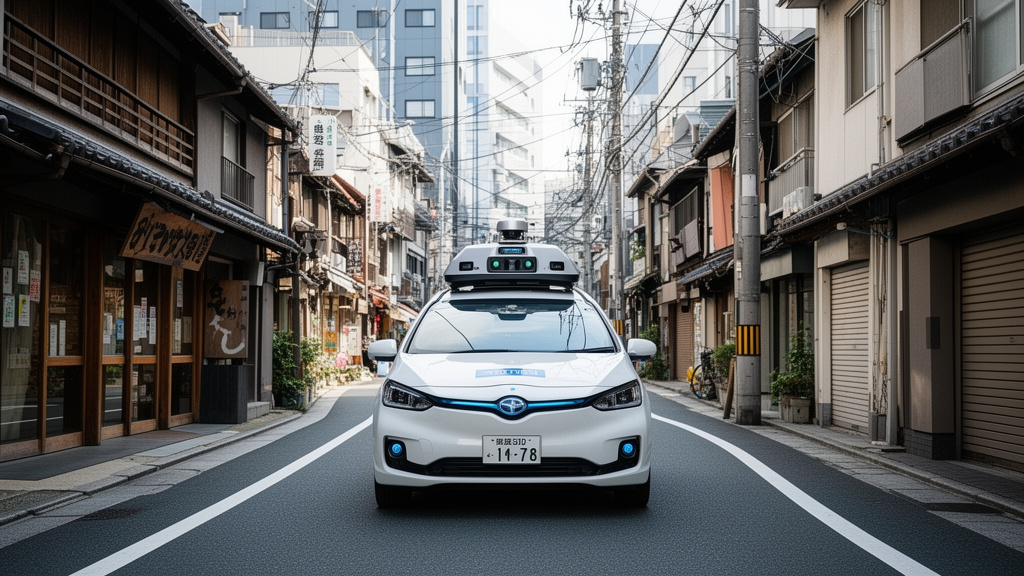

This Catalyst project serves as a blueprint for future industrial AI applications. It demonstrates that the path to successful Physical AI monetization is not through siloed product development but through deep integration within the telecommunications fabric. By treating the network as the brain and the robot as the body, these organizations have created a scalable framework that can be adapted for autonomous drones, smart city infrastructure, and automated logistical systems.
Monetizing the Edge: The Economic Impact
One of the primary goals of this project was to move beyond the technical proof-of-concept and address the economic reality of the 5G era: the need for new revenue streams. CSPs have long been searching for ways to capitalize on the massive investment poured into 5G deployment. This project provides a clear path forward. By offering ‘AI-as-a-Service’ packages to enterprise customers, CSPs can monetize the high-performance edge computing nodes they have deployed.
For a visually impaired user, the value is immediate and life-changing. For the CSP, the value is in the recurring service revenue derived from AI-enhanced connectivity. The project illustrates how to bundle network connectivity, compute, and AI services into a cohesive, monetizable package. This ‘Physical AI Monetization’ model is expected to become a cornerstone of telecommunications strategy through the late 2020s, as the demand for intelligent, mobile, and autonomous systems continues to explode.
Future Implications: Beyond Navigation
While the current focus of this award-winning project is on navigation assistance, the underlying technology has far broader implications. The shift toward Physical AI signifies a move toward a more responsive, context-aware network. We are approaching a future where the network is not just a pipe for data but an intelligent participant in the physical world.
Industries such as healthcare, logistics, and manufacturing are already looking toward the frameworks established by this Catalyst project. As we look ahead, the ability for robots to ‘outsource’ their intelligence to the edge, enabled by 5G, will reduce costs and improve performance across every sector that utilizes automation. This award from the TM Forum is not just a recognition of a single project; it is an endorsement of a new architecture for the internet of the future.
FAQ: People Also Ask
1. What is Physical AI and why is it important for the future of connectivity?
Physical AI refers to artificial intelligence systems that are integrated into physical machines—like robots, drones, and autonomous vehicles—enabling them to interact with and navigate the real world. It is important because it relies on the extreme low latency and high-speed processing capabilities of 5G edge computing to function in real-time, making it a critical driver for the next phase of telecommunications industry growth.
2. How does the Netcracker collaboration with AT&T and China Mobile change the 5G narrative?
This collaboration shifts the focus of 5G from mere ‘download speeds’ to ‘intelligent application performance.’ By working together, these industry leaders demonstrate how CSPs can offer specialized, high-performance computing services that go far beyond standard connectivity, effectively transforming the network into a critical component of the Physical AI value chain.
3. Why is this specific navigation project significant for the visually impaired community?
The project uses AI-powered robotics combined with 5G to provide real-time environmental awareness. This allows for more precise and reliable navigation assistance compared to current solutions, which may rely solely on local processing or GPS, often resulting in higher latency or lower accuracy. This technology can provide greater independence and safety for the visually impaired.
4. What does ‘Monetization’ mean in the context of this award?
In this context, monetization refers to the ability of Communications Service Providers (CSPs) to generate new revenue by selling ‘AI-as-a-Service’ (AIaaS) and edge computing capacity. Instead of just charging for data usage, CSPs can charge for the high-performance network intelligence that powers third-party robotics and autonomous devices.