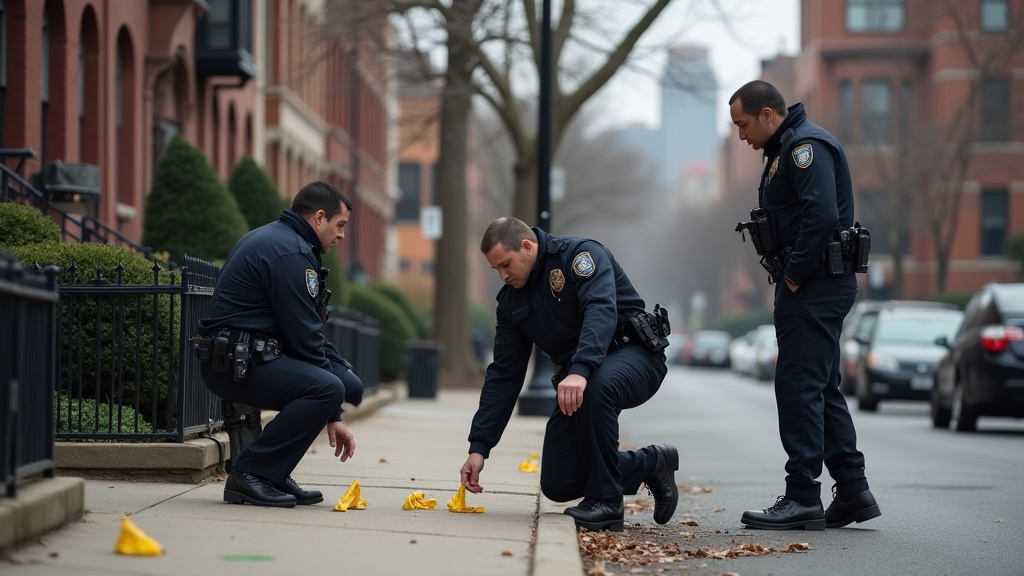
The legal landscape surrounding the Nolan Wells case shifted dramatically this week as a renowned crime scene analyst stepped forward with a comprehensive re-interpretation of the primary evidence. This expert testimony, while not yet fully integrated into the official court record, has already begun to ripple through the legal community, challenging long-held assumptions about the incident that has kept the public’s attention fixed on the proceedings for months.
The Forensic Pivot
The core of the new analysis centers on the re-examination of the timeline established during the initial investigation. By utilizing advanced spatial reconstruction techniques, the expert—whose background in Forensic Pathology and Crime Scene Reconstruction (CSR) is extensive—argues that the sequence of events provided by the prosecution may contain critical inconsistencies.
“The primary issue,” the expert noted in a preliminary briefing, “is not merely the presence of physical trace evidence, but the spatial relationship between these artifacts and the environmental conditions at the time of the incident.” This pivot towards a more nuanced understanding of the environment has forced both the defense and the prosecution to scramble, potentially necessitating a review of the entire chain of custody regarding the evidence collected.
Deconstructing the Evidence Chain




For months, the Nolan Wells case has been defined by a specific narrative, one that now appears vulnerable to the scrutiny of modern forensic standards. The expert’s breakdown focuses on three key pillars:
1. Trajectory Analysis: New digital modeling suggests that the positioning of objects at the scene contradicts the ballistic or physical movement patterns previously accepted by investigators.
2. Digital Footprint: By cross-referencing mobile device metadata with the reconstructed timeline, the expert claims there is a gap in the timeline that the prosecution failed to account for during the discovery phase.
3. Environmental Factors: The expert highlights how ambient lighting and surface reflectivity may have resulted in optical illusions for the initial responding officers, casting doubt on their eyewitness reports.
These findings suggest that what was once considered ‘settled’ evidence may in fact be a mosaic of misinterpretations. This is not necessarily an allegation of malice on the part of the original investigators, but rather an assertion of procedural oversight—a common, yet catastrophic, pitfall in high-profile legal battles.
The Legal and Procedural Ripple Effect
In the wake of this expert analysis, the legal ramifications are beginning to mount. Defense teams are reportedly preparing to file motions to suppress specific pieces of evidence, citing the new forensic interpretation as a basis for reasonable doubt. Conversely, the prosecution is under immense pressure to either refute these findings with their own expert testimony or pivot their strategy entirely.
This cycle of expert vs. expert is the hallmark of modern high-stakes litigation. It forces a courtroom showdown where the ‘truth’ is defined not by the facts themselves, but by which expert can most compellingly interpret those facts for the jury.
The Court of Public Opinion
Beyond the courtroom, the Nolan Wells case has become a focal point for digital discourse. Social media sleuths and legal commentators have latched onto the expert’s report, dissecting every detail in threads that generate millions of impressions daily. This high level of public interest creates a unique, pressure-cooker environment for the judicial system. When the public perceives an injustice or a flaw in the system, the fallout is rarely contained within the four walls of the courtroom; it spills over into media narratives that can influence everything from jury pool sentiment to the political landscape of local law enforcement agencies.
Secondary Angles: Future Implications
As we look forward, three secondary angles to this story warrant close observation:
- The Rise of Independent Forensics: The Nolan Wells case is becoming a bellwether for the increasing necessity of independent forensic audits in all felony cases. We are likely to see a shift in how defendants prioritize budget allocation, moving funds away from procedural motions and toward forensic consultancy.
- Technological Evolution: This case underscores how quickly forensic science is advancing. The tools used by the expert—specifically, LiDAR scanning and predictive trajectory modeling—are becoming standard, and legal protocols are struggling to keep pace with the granularity of this data.
- Impact on Law Enforcement Training: Regardless of the trial’s outcome, the criticism of the initial crime scene processing is likely to spur reforms in local police training programs. There is a clear mandate now for officers to treat every scene as a potential point of technical failure, encouraging more cautious and thorough initial documentation.
As the Nolan Wells case continues to unfold, one thing is certain: the era of relying solely on standard investigator reports is coming to a close. Forensic integrity is now the primary battleground, and for the Nolan Wells team, the fight has only just begun.