Travelers across the United States are facing severe disruptions today, April 28, 2026, as Chicago O’Hare International Airport (ORD) reports a staggering 1,228 flight delays, marking the single most significant operational failure of the year. The massive backlog has cascaded through the national airspace system, leaving thousands of passengers stranded and prompting emergency response protocols from major air carriers and federal regulators.
Key Highlights
- Over 1,228 flight delays recorded, impacting nearly 45% of daily traffic at the hub.
- FAA implements ground delay programs, creating a ripple effect across domestic and international routes.
- Airport authorities are managing terminal overcrowding as ground crews struggle to maintain turnaround times.
- Airlines are issuing unprecedented travel waivers for passengers impacted by the gridlock.
- The disruption stems from a combination of adverse weather patterns and cascading technical scheduling errors.
The Anatomy of a Systemic Failure
The events unfolding at Chicago O’Hare today represent a textbook case of systemic fragility in modern aviation. By the early hours of the morning, reports of software glitches in ground handling coordination were compounded by unseasonable severe weather patterns moving across the Midwest. What began as localized congestion quickly devolved into a full-scale operational paralysis, catching airport management and airline controllers off guard. The complexity of managing one of the world’s busiest hubs requires precise synchronization; today, that synchronization fractured.
The Perfect Storm: Technology and Weather
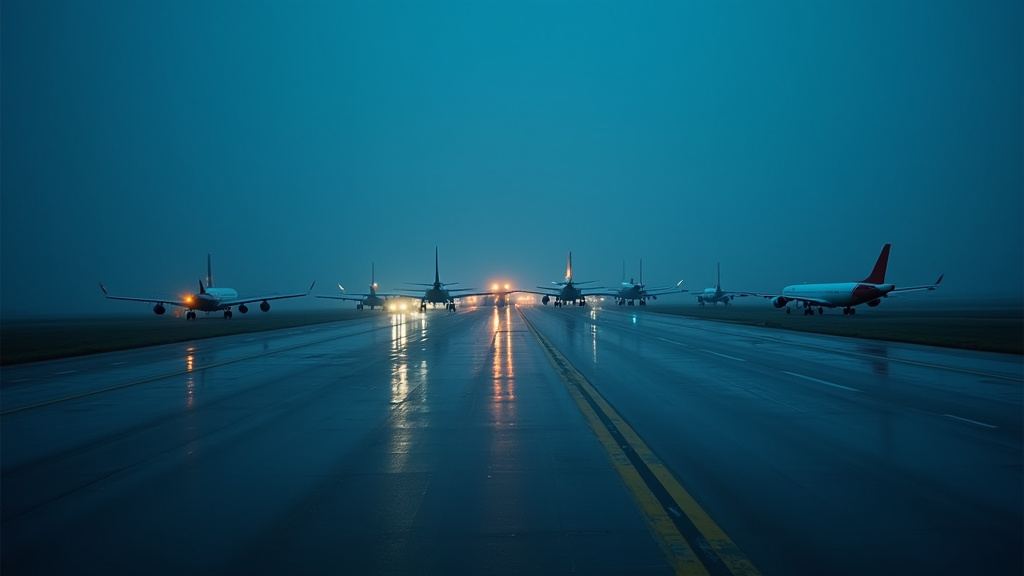



While weather is often the scapegoat for aviation delays, the situation at O’Hare is complicated by the intersection of legacy infrastructure and modern scheduling demands. Sources within the Federal Aviation Administration (FAA) suggest that while storm cells impacted visibility and ramp safety, a critical error in the automated ground handling software—which coordinates baggage and refueling crews—significantly extended the turnaround time for aircraft. When aircraft cannot be serviced on time, they occupy gates longer than scheduled, creating a chain reaction that prevents arriving flights from docking. This phenomenon, known as ‘gate-blocking,’ is the primary driver behind the 1,228 reported delays.
The Ripple Effect: National Airspace Impact
O’Hare is more than just a local transit point; it is a critical node in the global aviation network. When ORD experiences a disruption of this magnitude, the impact is felt instantly in hubs like Hartsfield-Jackson Atlanta, Dallas-Fort Worth, and Los Angeles International. Air Traffic Control (ATC) has been forced to enact rigorous ground delay programs, effectively throttling the flow of incoming traffic to prevent terminal saturation. This means that even flights completely unrelated to the Chicago weather or infrastructure issues are being held on tarmacs or at departure gates across the country to maintain safety spacing in the national airspace. The economic cost of these delays is projected to be in the millions, considering lost productivity, rebooking expenses, and the logistical burden on supply chains that rely on air cargo movement.
Passenger Experience and Crisis Management
Inside the terminals, the scene is one of organized chaos. Passengers are being advised to check their flight status digitally before arriving at the airport, as airline kiosks and customer service counters are currently overwhelmed. Terminal seating areas are at capacity, and the demand for rebooking services has crashed several airline mobile applications. Airport management has deployed additional customer support staff and local law enforcement to manage the crowding, urging travelers to remain patient as airlines work to clear the backlog. The priority remains safely managing the influx of grounded aircraft while maintaining the minimum viable throughput to prevent complete station closure.
Future-Proofing: Can O’Hare Recover?
The frequency of such events in 2026 has reignited the debate surrounding airport modernization. Analysts argue that the current infrastructure is not built to handle the intensity of modern flight schedules during periods of even minor environmental stress. The integration of artificial intelligence into traffic management, while intended to solve these issues, appears to have created new, complex points of failure. Experts suggest that a fundamental overhaul of how scheduling data is synchronized across airline, airport, and ATC platforms is necessary to prevent a recurrence of today’s crisis. Until then, Chicago O’Hare remains a vulnerable nexus point, susceptible to the exact brand of disruption currently unfolding.
FAQ: People Also Ask
1. Is it safe to fly out of Chicago O’Hare today?
Yes, the airport remains operational. However, safety protocols remain in place, and the primary issue is delay, not cancellation or safety-related grounding of the airspace. Travelers should expect significant wait times.
2. How are airlines compensating passengers for these delays?
Compensation varies by airline policy and the specific cause of the delay. Most major carriers are offering rebooking at no cost and, in some cases, vouchers for meals if the delay is deemed within the airline’s control. Passengers should check their specific carrier’s contract of carriage.
3. Will these delays continue into tomorrow?
While operational teams are working to clear the backlog, the ripple effect of 1,228 delays will likely persist for the next 24 to 48 hours as aircraft and flight crews are repositioned to their home bases. Travelers flying on April 29th should remain vigilant for follow-on disruptions.