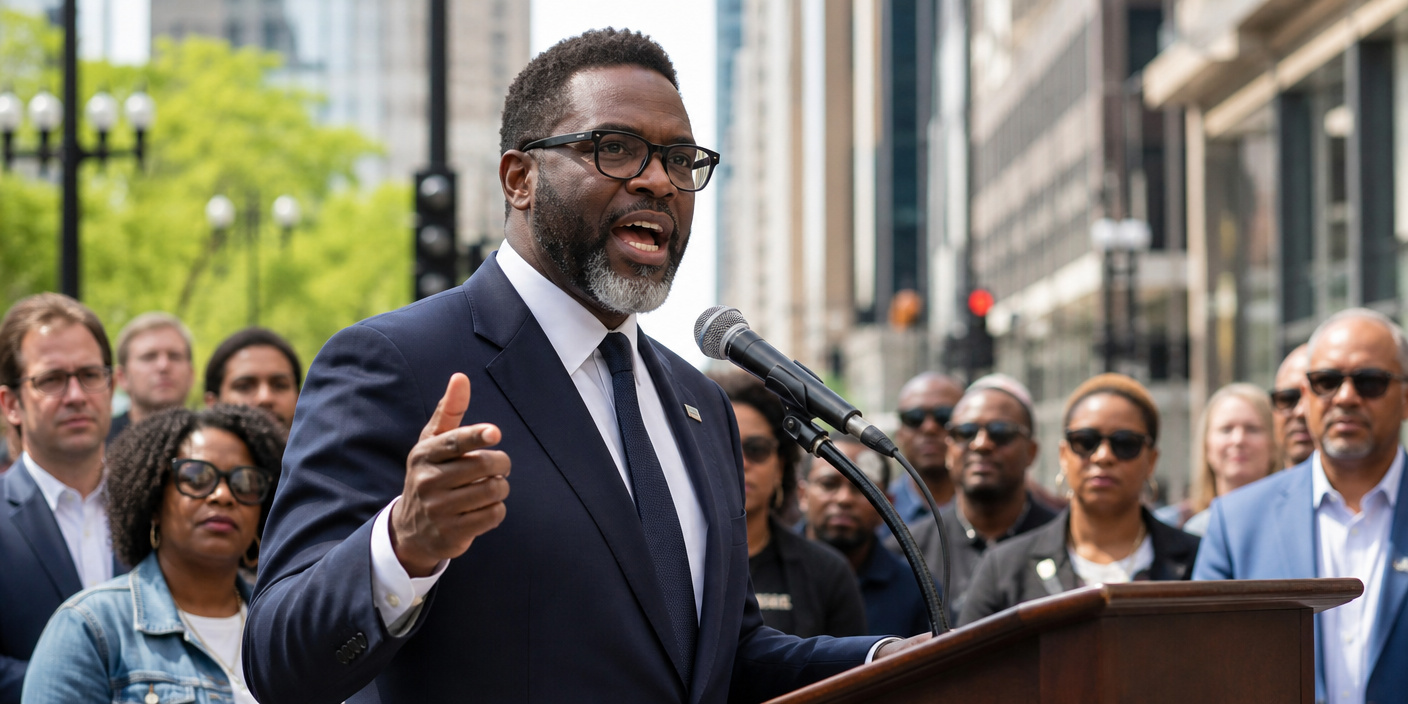
Chicago’s ongoing economic tug-of-war reached a pivotal stalemate this week as the City Council failed to secure the votes necessary to override Mayor Brandon Johnson’s veto on a proposal to freeze the city’s contentious tipped minimum wage phaseout. The 30-19 vote fell four short of the required threshold, effectively ensuring that the incremental march toward eliminating the tip credit will proceed as planned. For the local hospitality sector, the decision marks a significant setback in their multi-year effort to retain the traditional compensation model, while for labor advocates and the mayor’s administration, it represents a steadfast commitment to ensuring equitable pay across the city’s service industry workforce.
Key Highlights
- Override Failure: The Chicago City Council voted 30-19 to override Mayor Brandon Johnson’s veto, failing to reach the required two-thirds majority of 34 votes needed to halt the tip credit phaseout.
- Status Quo Remains: The existing ordinance, passed in 2023, remains in effect. The tip credit will continue to decrease annually until it is fully eliminated by July 1, 2028.
- Industry Backlash: The Illinois Restaurant Association and local small business owners argue the rising wage costs have forced menu price hikes and contributed to recent closures of independent establishments.
- Administration Stance: Mayor Johnson remains firm, framing the policy as a moral imperative to ensure all workers earn a consistent, living wage, regardless of tips.
- Future Outlook: With the city-level path blocked, focus is shifting to the Illinois State House, where potential legislative action could intervene to standardize tipped wage policy statewide.
The Economic and Legislative Deadlock
The failure to override the veto is more than a procedural disappointment for the restaurant industry; it is the latest chapter in a long-standing ideological battle over the future of labor in one of America’s most prominent culinary cities. When the Chicago City Council passed the “One Fair Wage” ordinance in 2023, it set a timeline that was meant to align the earnings of tipped workers with the city’s standard minimum wage. Proponents of the measure, led by Mayor Johnson and progressive allies, have consistently championed the policy as a necessary step to decouple server pay from the unpredictable and often inequitable nature of customer tipping.
However, the reality on the ground has been far more complex. As the phaseout progressed, with the tipped wage rising annually—currently at 76% of the city’s standard hourly wage—the restaurant industry began to sound the alarm. Throughout the deliberation process leading up to this week’s vote, owners of independent cafes, diners, and fine-dining establishments have shared harrowing accounts of narrowing margins, rising operational costs, and the need to increase menu prices to cover the mandated labor hikes. The Illinois Restaurant Association has been a central entity in this narrative, citing data that suggests hundreds of independent establishments have shuttered their doors since the ordinance’s inception. For these owners, the override vote was viewed as a life raft for a beleaguered sector.
The Human Cost vs. The Moral Imperative



At the heart of this conflict lies a fundamental disagreement over what constitutes a “fair” wage. On one side, the administration and labor organizers argue that the reliance on tips creates a caste system within the hospitality workforce, leaving servers vulnerable to economic volatility and, at times, discriminatory tipping practices. Mayor Johnson’s rhetoric throughout this debate has remained consistent, characterizing the attempt to freeze the wage hike as “tone-deaf” and dismissive of the struggles faced by the working class. The administration posits that providing a guaranteed, non-subsidized wage is a foundational right, not a luxury that should depend on the whims of diners.
Conversely, the opposition within the City Council—spearheaded by aldermen like Gil Villegas—argues that the policy is having the exact opposite of its intended effect. The argument is that by mandating costs that small, neighborhood-based restaurants cannot bear, the city is inadvertently accelerating the displacement of the very workers it seeks to protect. They point to “empty storefronts” as the visual evidence of a policy that, while noble in its intent, is failing in its execution within the harsh realities of the post-pandemic economy. This creates a challenging paradox: how can a city support its workers if the businesses that employ them are rendered insolvent by the policies designed to aid them?
The Shifting Terrain of Governance
This week’s legislative action has also highlighted a growing rift in how Chicago governs. As the city becomes increasingly polarized on economic policy, the Mayor’s ability to maintain a voting bloc, even when facing significant opposition from traditional business stakeholders, signals a recalibration of power. Despite losing the override, the opposition did manage to secure enough momentum to ensure the issue remains in the public eye, with some aldermen already hinting at alternative compromises. The proposal to pause the increase for two years, while currently sidelined, indicates that there is still an appetite among a significant portion of the council to revisit the timeline of the phaseout, even if they cannot yet overturn the mayor’s veto.
Furthermore, the political fallout of this vote may extend beyond City Hall. As mentioned in recent council discussions, there is growing chatter about taking the fight to Springfield. If the Illinois General Assembly were to step in, it would signify a massive jurisdictional shift, potentially stripping Chicago of its autonomy to manage tipped wages and setting a uniform standard across the state. Such a move would be a major disruption, pitting the city’s progressive agenda against more conservative or business-friendly leanings of the broader state legislature. For now, however, the status quo prevails, and the city’s restaurant owners are left to calculate their next moves in an environment that is becoming increasingly cost-prohibitive.
FAQ: People Also Ask
Q: What is the current status of the tipped minimum wage in Chicago?
A: As of April 2026, the tipped minimum wage continues to follow the phase-out schedule established in 2023. It is currently at 76% of the city’s standard minimum wage, with plans to reach 100% (the full minimum wage) by July 1, 2028.
Q: Why did the City Council want to freeze the phase-out?
A: Many aldermen and restaurant industry representatives argued that the rapidly increasing labor costs have put an unsustainable strain on small, independent businesses, leading to menu price hikes and widespread restaurant closures.
Q: Does the failure to override the veto mean the issue is settled forever?
A: No. While the immediate effort to freeze the phase-out has failed, there is ongoing pressure within the City Council to find compromises. Additionally, there are active discussions about potential state-level legislation that could override the city’s policy, potentially setting a uniform tipped wage standard across Illinois.
Q: How does Mayor Brandon Johnson justify maintaining the phase-out?
A: Mayor Johnson maintains that the policy is a moral commitment to working people. He argues that eliminating the subminimum wage is essential for long-term equity and that it protects workers from the volatility and potential discrimination inherent in a tip-dependent income model.