CHICAGO — Two separate but deeply intertwined legal battles are unfolding in Chicago federal courts, bringing intense scrutiny to the tactics of federal agents and the conditions within a key detention facility. These cases are putting a spotlight on Federal Agent Misconduct, with judges set to weigh explosive allegations of excessive force used against protesters and journalists, while simultaneously examining claims of “inhumane” and “unnecessarily cruel” treatment of detainees at a Chicago-area immigration processing center. These unfolding court proceedings are capturing widespread attention, making them a trending topic in national news regarding Federal Agent Misconduct.
Judicial Review of Federal Agent Misconduct and Excessive Force Claims
A preliminary injunction hearing is focusing on allegations that federal immigration agents have employed excessive force during demonstrations in the Chicago area, a significant aspect of Federal Agent Misconduct. This legal challenge stems from a lawsuit filed by a coalition of news organizations and protesters who contend that agents have used undue force, including tear gas, against civilians and media personnel, representing clear civilian rights violations. U.S. District Judge Sara Ellis has already taken steps to address these concerns, previously ordering agents to wear badges and prohibiting the use of certain riot-control techniques, such as tear gas, against peaceful demonstrators and journalists. Such actions are central to understanding Federal Agent Misconduct.

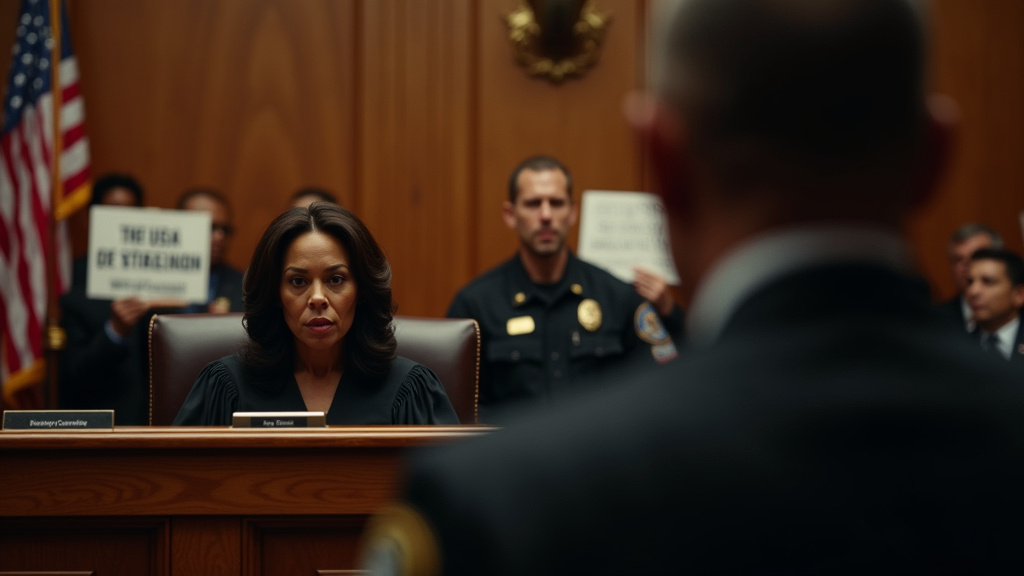
Judge Ellis has expressed frustration with federal officials’ compliance with her orders, leading her to require body cameras for agents. The current hearing is examining deposition testimony, including that of senior Border Patrol official Gregory Bovino, who acknowledged deploying tear gas and being struck by a rock during a confrontation in the Little Village neighborhood. Attorneys representing the plaintiffs also aim to call witnesses, such as a pastor who was allegedly hit by a chemical agent container while praying outside the Broadview facility, and protesters who claim injuries from devices like flash-bang grenades. In a significant development, an appeals court recently intervened, blocking Judge Ellis’s order for daily briefings from Bovino, a move that government lawyers argued was “extraordinarily disruptive” to executive functions, yet still within the purview of investigating Federal Agent Misconduct.
Detainees Detail ‘Disgusting’ Immigration Detention Conditions at Broadview Facility
In parallel, U.S. District Judge Robert Gettleman is presiding over a class-action lawsuit alleging dire immigration detention conditions at the Broadview, Illinois, immigration facility. Detainees have provided harrowing public accounts of their experiences, describing overcrowded cells, overflowing toilets, and water that “tasted like sewer.” Testimony has detailed allegations of sleeping on concrete floors amid “urine and dirty water,” being denied basic hygiene products, medicine, and adequate food and water, and suffering from sleep deprivation due to constant lighting. The Broadview facility lawsuit is bringing these conditions to light, often citing instances of inhumane treatment detainees endure.
Attorneys argue that federal authorities have created a “black box” by blocking access to detainees from attorneys, family, and the outside world. This alleged isolation, coupled with the purported inhumane conditions, reportedly coerces detainees into unknowingly signing documents that waive their legal rights, thereby expediting deportation processes. Judge Gettleman has not minced words, describing the alleged conditions as “disgusting” and “unnecessarily cruel,” directly addressing the core of the Broadview facility lawsuit. He is reportedly considering issuing a temporary restraining order to mandate changes at the Broadview site, which has become a flashpoint for protests concerning Federal Agent Misconduct.
A Legal Crossroads for Immigration Enforcement Tactics and Federal Agent Misconduct
These legal proceedings highlight the escalating tensions surrounding the Trump administration’s “Operation Midway Blitz” and its aggressive immigration enforcement tactics across the Chicago area. The Broadview facility, intended for short-term processing, has allegedly been used to hold individuals for days, straining its capacity and exacerbating the alleged inhumane conditions. While government attorneys have defended operations, stating improvements have been made and that claims are being investigated, advocates assert that the situation remains dire and violates constitutional rights, further detailing Federal Agent Misconduct.
The Department of Homeland Security has denied many of the allegations, with one official stating that detainees receive three meals a day, water, and have access to phones. However, legal advocates and detainees paint a starkly different picture, citing a lack of basic necessities and access to counsel. The government has also argued that granting a temporary restraining order to close the facility could “halt the government’s ability to enforce immigration law in Illinois,” a stance that has been challenged in the context of excessive force claims and judicial review federal oversight.
Broad Impact and Future Proceedings on Federal Agent Misconduct
The dual legal challenges in Chicago are drawing significant public and media interest, reflecting a growing concern over the treatment of immigrants and the conduct of federal agents. The outcomes of these hearings are expected to have far-reaching implications, potentially setting precedents for immigration enforcement practices, accountability measures for Federal Agent Misconduct, and the protection of civil liberties in the region and beyond. The news surrounding these cases continues to be popular and widely discussed as the courts grapple with these critical allegations. The coming days will reveal how these significant legal battles will proceed and what immediate changes, if any, will be mandated for federal immigration operations and detention centers in Chicago, especially concerning Federal Agent Misconduct.